Sensient Technologies (SXT): Customer Relationships and What They Signal for Investors
Sensient Technologies is a global manufacturer and marketer of colors, flavors and specialty ingredients that monetizes through the sale of finished and intermediate products to food, beverage, pharmaceutical and industrial customers worldwide. The firm generates recurring, transaction-based revenue recognized at shipment and benefits from scale in formulation and global manufacturing, while capturing margin through product mix and specialty offerings; Sensient reported TTM revenue of $1.655 billion and EBITDA of $294 million, giving investors a clear view into a cash-generative, specialty-chemical business with diversified end markets. For quick access to the platform that underpins this relationship research, visit https://nullexposure.com/.
Executive thesis: predictable, product-led revenue with supplier-style commercial relationships
Sensient operates as a supplier-of-record to downstream manufacturers rather than a branded consumer-facing company; it monetizes via unit sales and long-running supply arrangements (purchase orders governed by master sales or supply agreements), which produce stable, contract-linked revenue streams with modest working-capital volatility. The company’s financial profile — operating margin ~15%, profit margin ~8.7%, and a forward P/E ~22.7 — positions it as a specialty supplier where customer continuity, formulation lock-in and regulatory compliance are primary defensibilities.
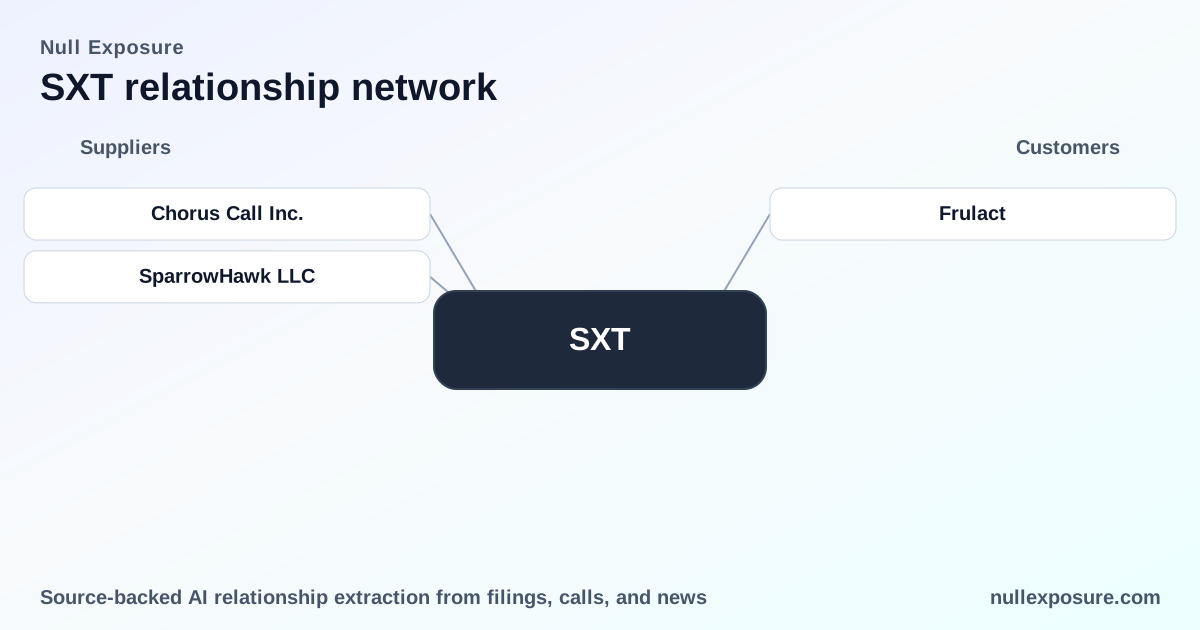
One disclosed customer relationship: Frulact named Sensient a core supplier
- Frulact: Sensient will be named a core supplier of flavors, colors and other related products used by Frulact in its fruit preparation business, reflecting a formalized supplier role tied to a specific product line. According to a Prepared Foods report dated March 10, 2026, the transaction establishes Sensient as a core input provider for Frulact’s fruit preparations business (https://www.preparedfoods.com/articles/124035-sensient-technologies-corp-to-sell-yogurt-fruit-preparations-line-to-frulact).
What the Frulact relationship means for revenue quality and operations
The Frulact announcement indicates recurring, product-specific supply into a contract-manufacturing workflow rather than one-off spot sales. That supplier designation implies ongoing order flow, formulation support and likely service-level commitments that support mid- to long-term revenue visibility and cross-selling potential into other fruit-prep SKUs. The deal also underscores Sensient’s competitive positioning in food ingredient supply chains where consistency, regulatory documentation and traceability are critical.
Company-level constraints that shape customer relationships
Sensient’s public filings and corporate disclosures reveal several operating constraints and business-model signals that govern how customer relationships translate into cash flow and risk:
- Framework contracting posture. The company treats customer purchase orders as contracts and frequently operates under master sales or supply agreements with purchase order acceptances, which implies standardized terms and predictable commercial cadence across customers. This contracting posture reduces transactional friction and supports revenue predictability.
- Wide counterparty mix. Sensient’s customer base spans small entrepreneurial businesses to major international manufacturers, indicating both a broad addressable market and a dispersion of counterparty profiles that lowers single-customer concentration risk while increasing commercial complexity.
- Geographic reach with U.S. concentration. The business is global, with manufacturing and sales across North America, Europe, Asia, Australia, South America and Africa; however, the United States is a material market — U.S. sales were $781.9 million in 2025 (Sensient’s FY2025 filings), underscoring a meaningful domestic revenue base alongside international exposure.
- Regional go-to-market specialization. Sensient maintains dedicated regional groups such as an Asia Pacific Group focused on the Pacific Rim and India, which supports localized product development and faster commercial execution in high-growth food markets.
- Dual commercial posture (seller and buyer). Public disclosures show Sensient acts primarily as a seller of formulated ingredients while also engaging in intersegment transactions and procurement activity; revenue recognition is at transfer of control, typically at shipment.
- Active, mature customer relationships. Consolidated revenue reporting and the company’s recognition policies indicate active, ongoing commercial relationships rather than transient one-off contracts, consistent with a manufacturing business that sells finished and intermediate goods to repeat buyers.
- Manufacturing-centric segment. Sensient is fundamentally a manufacturing company, and its supplier role necessitates operational discipline around quality control, supply continuity and regulatory compliance.
Each of the above is drawn from Sensient’s public statements and filings describing revenue recognition, geographic sales splits and company organization.
Risks and concentration dynamics for investors
- Operational criticality to customers is high but diffuse. As a core supplier in categories like colors and flavors, Sensient’s products are often critical inputs, which supports pricing power and stickiness; at the same time, a wide customer base dilutes single-counterparty leverage.
- Currency and international exposure. The company explicitly reports exposure to foreign currency movements given global manufacturing and sales, which introduces earnings volatility even when local volumes are stable.
- Margin sensitivity to raw materials and mix. Specialty ingredients command premiums, but margins are sensitive to input costs and product mix; Sensient’s operating margin (
15%) and gross profit ($566 million TTM) indicate strong underlying economics that still require disciplined cost management.
Financial context that frames customer relationship value
Sensient’s public metrics give a valuation and profitability backdrop to customer dynamics: market capitalization ~$4.87 billion, revenue TTM ~$1.655 billion, EBITDA ~$294 million, trailing P/E ~33.4 and forward P/E ~22.7. These figures show a market that values Sensient for durable specialty margins and growth potential in ingredient markets; investors should view customer wins like Frulact as incremental proof-points of product-market fit and recurring revenue capture.
How operators and investors should monitor customer signals
- Track announcements of core supplier designations and product-line supply deals (like Frulact) for evidence of deeper commercial integration and recurring order flow.
- Monitor quarterly disclosures for geographic revenue shifts and commentary on Asia Pacific or other regional growth fronts, which will indicate whether regional investments convert to durable customer adoption.
- Watch margins and FX commentary in filings; supplier economics are tightest when input costs and currency swings are managed proactively.
Bottom line
Sensient’s customer posture is that of a mature, manufacturing-led supplier with a contracting model anchored in master agreements and purchase orders, a geographically diversified footprint with meaningful U.S. revenue, and the ability to secure core-supplier roles that convert into recurring business. The Frulact relationship is a tangible example of that supplier role and validates Sensient’s strategic positioning in food-ingredient supply chains. For a centralized view of this and other customer relationship signals, visit https://nullexposure.com/.
Key takeaway: Customer wins that create "core supplier" status are high-value signals for recurring revenue and margin stability in Sensient’s specialty-ingredients business.