SXTC: Institutional Trading Signals and What They Tell Investors About Customer Exposure
China SXT Pharmaceuticals (SXTC) manufactures and sells Traditional Chinese Medicine tablets in China and monetizes through product sales and incremental capital raises; revenue is small relative to volatility in its market cap and liquidity, and the company relies on periodic equity financings to fund operations. Investor activity in SXTC over FY2026 shows concentrated, short-term speculative flows from quantitative and asset managers rather than long-term strategic holders, a factor that changes how one values customer stability and counterparty reliability. For a direct view of our platform and more issuer coverage, visit https://nullexposure.com/.
How SXTC runs the business and why institutional trades matter
China SXT Pharmaceuticals operates in a low-margin, consumer-health corner of the Chinese pharmaceutical industry, focused on Traditional Chinese Medicine Tablets. The public profile is small: TTM revenue of $1.538 million and a heavily negative EBITDA underscore that the company is still loss-making while retaining a modest gross profit pool. According to company disclosures (latest quarter reported 2025-06-30), SXTC’s balance sheet and operating metrics create sensitivity to short-term funding events and to investor sentiment around small-cap Chinese healthcare names.
That funding sensitivity explains the trading patterns seen in FY2026: institutional movers were overwhelmingly hedge funds, quant desks, and asset managers executing concentrated position changes around a registered direct offering announcement. Those flows increase short-term volatility in the stock and can pressure liquidity for counterparties and customers who use market value as a credit signal.
What the institutional flow data shows — headline takeaways
- Trading is dominated by tactical reallocations: large percentage changes in positions (both buys and sells) signal opportunistic behavior rather than long-term accumulation.
- Ownership concentration and low institutional penetration create outsized impact from a few trades; institutional ownership is minimal at roughly 0.07% per public reporting.
- Equity financings matter more than product cycles for immediate credit and counterparty risk — SXTC’s capital structure and ability to raise equity are central to operational continuity.
Relationship roll call: every institutional name in the record
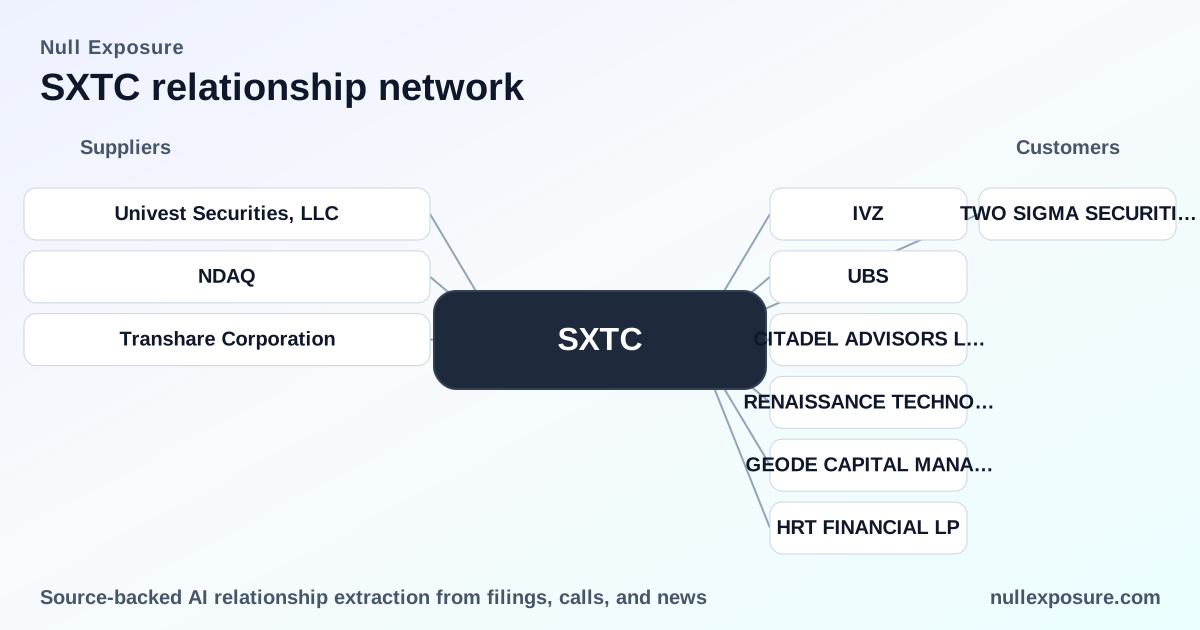
Below I list every relationship referenced in the FY2026 news signal set, with a plain-English takeaway and the source for each entry.
- UBS GROUP AG — UBS GROUP AG reduced its SXTC position by approximately 62,499 shares (a near-total reduction of the recorded holding) in Q3 2025 for an estimated $98,123, reflecting a rapid deleverage or reallocation away from the name. According to a Quiver Quant news note dated March 10, 2026, UBS’s move was one of the largest recent outflows.
- UBS — A second entry labeled UBS records the same dispositional change: roughly 62,499 shares sold in Q3 2025 for an estimated $98,123, reinforcing that a major UBS desk trimmed exposure during the same window. Reported by Quiver Quant on March 10, 2026.
- INVESCO LTD. — Invesco added 89,660 shares in Q3 2025, an influx valued at about $140,766, signaling tactical accumulation by an asset manager that typically reallocates across small-cap names. This transaction is reported in the same Quiver Quant note dated March 10, 2026.
- IVZ — A duplicate listing of INVESCO (IVZ) shows the identical addition of 89,660 shares in Q3 2025 for approximately $140,766, confirming the same buy-side activity was captured under both name forms in the source. See Quiver Quant, March 10, 2026.
- CITADEL ADVISORS LLC — Citadel increased its SXTC exposure by roughly 48,759 shares in Q3 2025, an estimated $76,551 allocation consistent with short-term trading strategies used by systematic and principal-prop desks. Noted in Quiver Quant’s March 10, 2026 coverage.
- RENAISSANCE TECHNOLOGIES LLC — Renaissance Technologies added approximately 44,500 shares in Q3 2025 (estimated $69,865), consistent with quant-driven position adjustments documented in the same Quiver Quant report. March 10, 2026.
- GEODE CAPITAL MANAGEMENT, LLC — Geode added about 53,671 shares in Q3 2025, an estimated $84,263 purchase that likely reflects passive or index-related reweighting rather than long-term sector conviction. Source: Quiver Quant, March 10, 2026.
- HRT FINANCIAL LP — HRT Financial added roughly 26,749 shares in Q3 2025 for an estimated $41,995, a modest but active move by a market-making or systematic liquidity provider captured in the Quiver Quant summary. March 10, 2026.
- TWO SIGMA SECURITIES, LLC — Two Sigma added about 15,449 shares in Q3 2025 (estimated $24,254), an allocation size consistent with algorithmic strategies incrementally increasing exposure around a corporate event. Reported by Quiver Quant on March 10, 2026.
Each of the above entries is drawn from a Quiver Quant news aggregation published March 10, 2026, which summarized institutional hedge fund and asset manager activity around the company’s registered direct offering announcement.
Operational and contractual portrait — what the data implies
No explicit vendor or contractual constraints were provided in the relationship feed, so treat these as company-level signals rather than counterparty-specific constraints. From a business-model perspective:
- Contracting posture: transactional and equity-dependent. The company’s short operating runway and reliance on registered direct offerings indicate an opportunistic, market-dependent contracting posture rather than long-term financing covenants.
- Concentration: equity holders are concentrated and low in aggregate institutional ownership. Small reported shares outstanding and tiny institutional penetration mean single large trades materially move the float.
- Criticality: medium-to-high for financing cycles but low for supply-chain disruption. SXTC’s core operations are manufacturing and sales of TCMP, but corporate continuity hinges on successful equity raises given current negative EBITDA.
- Maturity: early-stage public company volatility. Financials and flows align with a small-cap, thinly traded issuer where portfolio rotations by a handful of active managers drive short-term price and liquidity swings.
Investment implications — what operators and allocators should watch
- Counterparty risk for customers and distributors is tied to financing windows. If the company cannot access follow-on capital, product supply or contract performance could be impaired despite ongoing manufacturing.
- Volatility is driven by quant and hedge activity, not by operating fundamentals. For partners evaluating payment terms or inventory commitments, price-based credit triggers could be unreliable because they reflect trading flow, not cash generation.
- Low institutional anchors increase tail risk. Without a stable block of long-term holders, equity dilutions and opportunistic trading will continue to reshape ownership and liquidity.
For a deeper read on corporate flow signals and tailored exposure analytics, visit https://nullexposure.com/.
Bottom line
SXTC is a small, loss-making Chinese TCMP manufacturer whose market behavior is dominated by short-term institutional flows and event-driven financings. That profile creates asymmetric operational risk for counterparties and means valuations will be driven as much by equity-market mechanics as by product sales. Investors and counterparties should prioritize cash-cycle monitoring and financing announcements as leading indicators of company stability.