Synaptics (SYNA): Customer Map and Commercial Bearings for Investors
Synaptics designs and sells mixed-signal semiconductor solutions and on-device AI processors to OEMs and large consumer-electronics brands, monetizing through a mix of product sales, IP licensing, and usage-based royalties tied to device shipments and feature enablement. For investors evaluating counterparty concentration, supply-chain placement, and recurring royalty leverage, Synaptics presents a hybrid model: hardware-first revenue with an expanding software/IP monetization layer that increases both gross margin potential and contract complexity. For a structured counterparty view and interactive relationship maps, visit https://nullexposure.com/.
How Synaptics runs the business and collects revenue
Synaptics is a fabless semiconductor supplier that sells chips and modules to contract manufacturers, OEMs, distributors, and value-added resellers, while also licensing IP and recognizing sales- or usage-based royalties when performance obligations are met. The company’s operating posture is supplier-to-large-enterprise OEMs, concentrated geographically in APAC given billings, and increasingly positioned as a provider of AI-enabled components for wearables and edge devices. This mix creates a revenue profile that blends discrete device sales with recurring royalty streams tied to end-customer adoption.
Customer relationships that matter — headline takeaways
Below I walk through every customer relationship flagged in the gathered results. Each short profile is actionable for investors assessing dependence, strategic fit, and revenue channels.
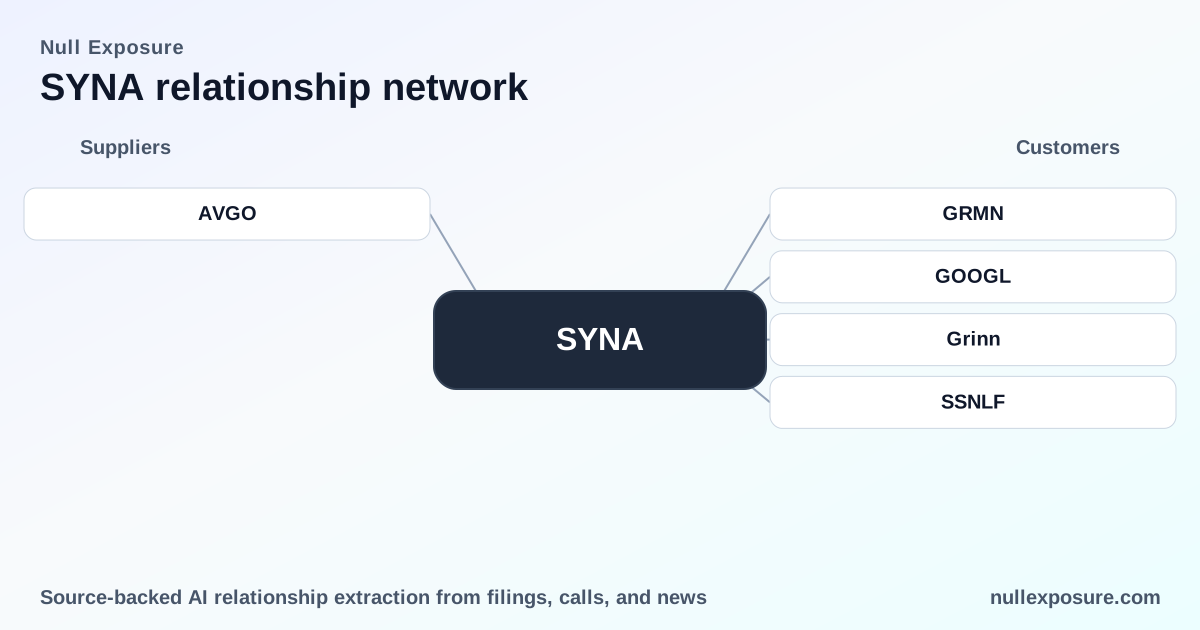
Google / GOOGL — platform partner for on-device AI
Synaptics is cited as a leader in AI-enabled wearables with Google listed among the brands running models natively on Synaptics processors; management specifically noted Google’s Gemma 3 model running on Synaptics’ multimodal processors during FY2026 commentary. According to an earnings-call transcript and related coverage, Google is a strategic partner for bringing large AI models to edge devices via Synaptics silicon (InsiderMonkey, FY2026; see https://www.insidermonkey.com/blog/synaptics-incorporated-nasdaqsyna-q2-2026-earnings-call-transcript-1690869/).
Garmin / GRMN — wearable OEM relationship
Analyst commentary and trade press identify Garmin as one of the wearable brands benefiting from Synaptics’ AI and sensor integrations, framing Garmin as a customer for Synaptics’ wearable-focused processors and sensing products. This mention surfaced in industry coverage tied to a 2026 price-target update and reflects Synaptics’ penetration into fitness and wearable OEM stacks (StocksToTrade, Jan 2026; see https://stockstotrade.com/news/synaptics-incorporated-syna-news-2026_01_14/).
Samsung — large OEM customer for wearable components
Market coverage highlights Samsung alongside Google as a brand using Synaptics’ AI-enabled wearable solutions, signaling continued enterprise-level OEM relationships in the high-volume smartphone and wearable segments. The reference came in a January 2026 industry note that positioned Synaptics as a go-to supplier for next-generation wearable experiences (StocksToTrade, Jan 2026; see https://stockstotrade.com/news/synaptics-incorporated-syna-news-2026_01_14/).
Grinn — engineering partner showcasing robotics use case
Management referenced “Grinn” as a partner that demonstrated a robotic hand built with Synaptics processors, connectivity, and sensing products, illustrating a use case beyond consumer wearables and into robotics/prosthetics integrations. This example comes from the FY2026 earnings-call transcript and highlights diversification of end markets and product applications (InsiderMonkey, FY2026; see https://www.insidermonkey.com/blog/synaptics-incorporated-nasdaqsyna-q2-2026-earnings-call-transcript-1690869/).
Company-level constraints and what they imply for revenue stability
The public evidence provides several operating-model signals that influence risk and upside.
- Licensing and usage-based royalties are embedded in the revenue mix. Synaptics recognizes revenue from IP licensing and records sales- or usage-based royalties when the sale or use occurs or when performance obligations are satisfied. This creates revenue upside tied to end-device unit growth but also introduces volatility linked to customers’ shipment cycles and royalty accounting timing.
- Customer base is large-enterprise focused. Filings indicate the company’s customers include many of the world’s largest mobile and PC OEMs and a wide set of IoT and consumer-electronics manufacturers, which produces concentration risk on a relatively small set of high-volume buyers.
- APAC billing concentration drives geographic exposure. FY2025 billing by customer location shows heavy flows from China, Taiwan, Japan and South Korea versus the United States, signaling exposure to regional demand cycles, trade dynamics, and supply-chain disruption.
- Multi-channel go-to-market posture. Synaptics sells through contract manufacturers, distributors and resellers in addition to direct enterprise deals, which means revenue recognition is a mix of point-in-time product shipments and time-based/licensing arrangements.
- Product-led hardware core with growing IP role. The company is a fabless mixed-signal semiconductor vendor by heritage, but rights to IP are sold or licensed — producing a dual revenue engine that supports margin expansion if software/IP monetization scales.
These constraints collectively present a company that is both hardware-dependent and increasingly IP-driven, which changes the risk profile for premium finance: device cycles affect short-term cash, while licensing and usage royalties provide longer-tailed revenue when adoption scales.
For a consolidated, interactive counterparty map and deeper coverage of Synaptics’ large OEM relationships, see https://nullexposure.com/.
Investment implications and risk posture
- Concentration is the key risk and the key lever. Dependence on a small number of large OEMs and APAC billings concentrates downside if flagship customers adjust product roadmaps or if regional demand softens. Conversely, successful monetization of on-device AI with partners like Google and Samsung materially increases lifetime revenue per device.
- Royalty recognition introduces cadence volatility but also recurring revenue potential. Usage-based royalties grow with unit adoption and feature enablement, improving margins over time but creating lumpy quarterly results tied to customer shipment timing.
- Product diversification into robotics and beyond reduces secular risk. Proof points such as the Grinn robotics demonstration signal alternative verticals where Synaptics’ sensing and connectivity IP create additional TAM.
Bottom line
Synaptics operates as a hardware-oriented semiconductor supplier transitioning into a hybrid product-and-IP business, with large-enterprise customers in wearables and consumer electronics driving both unit sales and royalty upside. Investors should weight customer concentration, APAC exposure, and the pace of on-device AI adoption when modeling revenue and cash-flow trajectories. For portfolio teams that need structured counterparty intelligence and relationship timelines, NullExposure provides mapped evidence and source-level trails to support diligence: https://nullexposure.com/.
Bold takeaways: Synaptics is strategically positioned in AI-enabled wearables but is exposed to OEM concentration and regional billing cycles; licensing and usage-based royalties are the company’s most important lever for margin expansion.