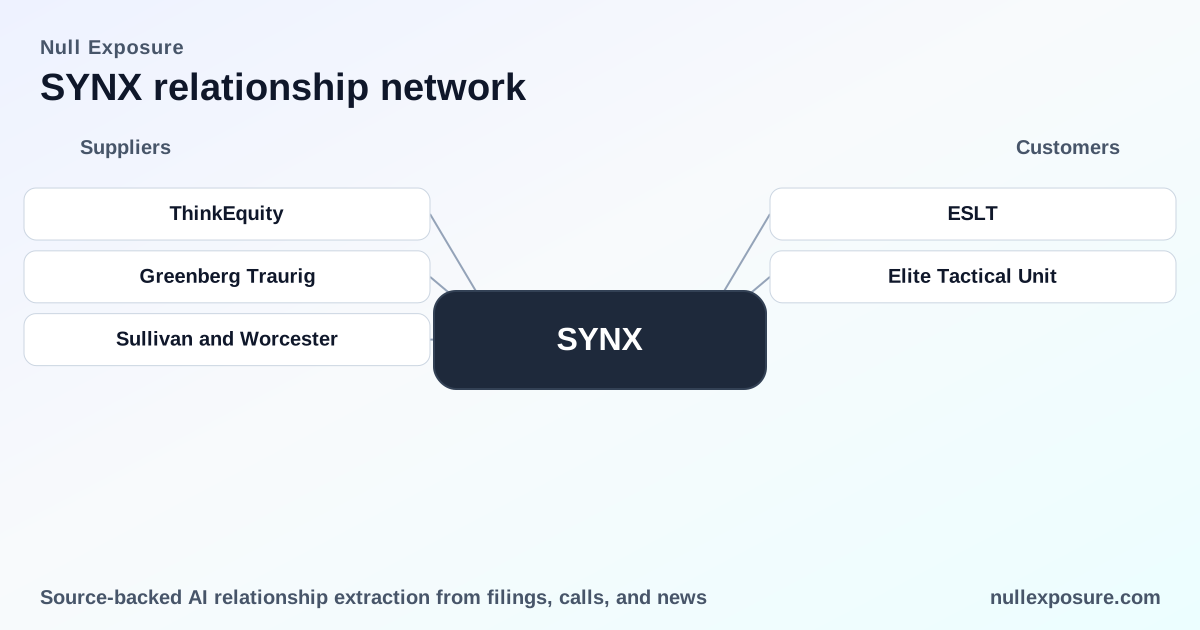
Silynxcom (SYNX): Customer Map and Commercial Thesis
Silynxcom monetizes by selling high-performance tactical audio and electronic communications systems to defense and law‑enforcement integrators and end users, combining product sales with system-level integration where its headsets are embedded into larger platforms. Revenue is driven by a mix of direct orders from elite units and OEM integration contracts with prime defense suppliers, creating a revenue profile that is small but strategically linked to long sales cycles and high switching costs. For an executive summary and dataset access, see https://nullexposure.com/.
Where SYNX fits in the defense communications value chain
Silynxcom’s business is not commodity electronics; it sells mission‑critical communications hardware that is often integrated into prime contractor platforms. That positioning drives two structural features of the commercial model: customer concentration with high switching cost (integration into systems like Elbit Systems’ platforms) and contract-driven lumpiness (large one‑off orders from tactical units). The firm is early stage by financial metrics—small market cap, negative margins, and limited institutional ownership—which amplifies execution and contract‑fulfillment risk for investors.
Key signals that shape investor expectations
- Concentration and strategic dependency. Integration into Elbit Systems’ platforms suggests product stickiness with prime contractors, which supports long-term revenue potential but also creates dependency on a small set of channel partners. According to the company prospectus cited in a March 2026 Globes article, Elbit integrates Silynxcom headsets into its systems.
- Order-driven revenue model. Public disclosures show discrete orders to end users: a GlobeNewswire release in October 2025 reported a $935,000 order from an elite tactical unit. These transactions highlight the lumpy nature of revenue.
- Small public financial footprint and concentrated ownership. SYNX reports roughly $6.0M revenue TTM with negative operating margins and a small market capitalization (~$8.5M), and insiders control nearly 60% of shares; institutional ownership is effectively negligible. These metrics underline early-stage risk and potential for insider-driven strategic decisions.
For deeper context and sourcing, visit https://nullexposure.com/.
Customer relationships in the public record
Elbit Systems — strategic OEM integration
Elbit Systems integrates Silynxcom’s headsets into its systems, which positions Silynxcom as a supplier to a major defense prime and gives Silynxcom indirect access to prime-level contracts and export channels. According to the company prospectus referenced in a Globes report from March 2026, Elbit is listed among Silynxcom’s customers and integrates its headsets into Elbit platforms. (Globes, March 2026)
Elite Tactical Unit — direct end‑user order
Silynxcom received a discrete $935,000 order from an elite tactical unit for advanced in‑ear solutions, demonstrating the company’s ability to secure meaningful single‑order wins from specialized law‑enforcement or military teams. The transaction was announced in a GlobeNewswire press release dated October 8, 2025. (GlobeNewswire, Oct 8, 2025)
What these relationships imply about contracting posture and maturity
- Contracting posture: The mix of OEM integration (Elbit) and direct orders (tactical units) indicates a hybrid contracting posture: reseller/integrator channels for scale plus direct sales for high-margin, small‑batch tactical deployments. This reduces reliance on one go‑to‑market approach but concentrates risk around a few large counterparties.
- Customer concentration and criticality: Being embedded into a prime contractor’s systems elevates Silynxcom’s product criticality—integration increases switching costs and potential for multi-year demand—but also concentrates reliance on the prime for order flow. This is a hallmark of specialized defense suppliers.
- Maturity and revenue profile: Public information points to an early commercial stage: modest TTM revenue (~$6.0M) and negative margins indicate that the company is still scaling R&D and go‑to‑market investments rather than generating steady cash flow.
Financial and governance context that affects customer risk
- Small scale and negative operating metrics constrain the company’s ability to absorb contract delays or cancellations; Silynxcom reported negative operating margins and EBITDA losses in its latest filings. These financial constraints create execution risk on larger integration programs.
- High insider ownership (circa 60%) and low institutional float can be constructive for long‑term strategic continuity but reduces external governance pressure and liquidity—factors investors should weigh when assessing counterparty credit and contract stability.
- Low analyst coverage and sparse sell‑side signals imply that relationship disclosures and press releases are the primary public inputs for evaluating revenue concentration and customer health.
Risks and upside specific to customer dynamics
- Upside: Integration into Elbit Systems’ platforms is a material strategic asset that can enable indirect participation in larger prime contracts and international exports; successful scaling of such OEM integrations would be high‑leverage for revenue growth. Repeatable orders from elite units validate product fit and can drive further direct procurement from other specialized teams.
- Risks: Revenue lumpiness from one‑off orders and dependence on a small set of customers increase volatility; given the company’s modest balance sheet and negative margins, operational disruptions or missed deliveries could quickly impact near‑term cash flow.
Bottom line for investors evaluating relationships
Silynxcom is a small, specialized defense‑communications supplier whose customer footprint combines strategic OEM integration (notably Elbit Systems) and tactical end‑user orders that validate product performance in operational settings. This dual channeling creates both upside—through access to prime contractor pipelines—and downside via concentration and financial fragility. Investors should prioritize monitoring contract renewal cadence with primes, order pipeline disclosures, and any expansion of institutional ownership that would improve liquidity and oversight.
For additional investor-focused relationship mapping and ongoing monitoring, visit https://nullexposure.com/.
Sources
- Globes: “Israeli defense co. Silynxcom files for HYSE IPO,” referencing the company prospectus and customer list (reported March 2026).
- GlobeNewswire press release: “Silynxcom Receives $935,000 Order from Elite Tactical Unit” (October 8, 2025).