Tarsus Pharmaceuticals: commercializing XDEMVY through a concentrated distributor channel and Greater China partnerships
Tarsus Pharmaceuticals monetizes by selling its sole approved product, XDEMVY (TP-03 / lotilaner ophthalmic solution), into the U.S. healthcare channel and by out‑licensing regional rights for China to third‑party partners that assume development and commercial obligations in exchange for milestone and royalty economics. The company recognizes product sales at the point of delivery, runs a specialty sales and education program in the U.S., and supplements revenue with partner milestone receipts tied to regulatory approvals overseas. Investors should view Tarsus as a single‑product commercial-stage biotech with exposure to U.S. specialty distribution concentration and upside from outsourced China commercialization. For deeper company relationship maps and signals visit https://nullexposure.com/.
How the business actually sells money into the bank
Tarsus’ operating model is straightforward: sell bottles of XDEMVY to a limited set of specialty pharmacies and distributors in the U.S., who then supply clinics, hospitals, retail pharmacies and federal programs, and monetize incremental value through licensing milestones and royalties in Greater China. The company reported that XDEMVY generated $180.1 million in net product sales in 2024, the first full commercial year following FDA approval in July 2023, which confirms the product is now the primary revenue driver. According to company reporting, sales are recognized at a point in time—typically upon delivery—so revenue reflects transactional, spot sales rather than multi‑period performance obligations.
Key commercial characteristics:
- Contracting posture is spot sales, not long‑term purchase commitments.
- Geography is U.S.‑centric for direct sales; China commercialization is outsourced to regional partners.
- Materiality is high: the company defines major customers as those exceeding 10% of revenue, signaling meaningful concentration risk.
- The business is commercial and active, but revenue and profitability remain concentrated in a single product.
Why concentration and channel structure matter to investors
Tarsus’ channel and partner architecture creates a distinct risk/reward profile. Selling into a limited number of specialty pharmacies and distributors concentrates collections and fulfillment counterparty risk; insolvency or contract disruption at a key distributor would have an outsized operational impact. Conversely, the out‑license strategy for China converts local regulatory and commercial execution risk into lumpy milestone upside with limited capital deployment from Tarsus. The company’s 2024 disclosures explicitly frame XDEMVY as the core product whose continued success determines the firm’s path to profitability.
If you want a full mapped view of counterparties and downstream exposure, browse the relationship intelligence at https://nullexposure.com/ for organized signals and filings.
Customer and partner relationships — the full list and what each means
Below are every named relationship surfaced in public filings and news reports, summarized in plain English with source references.
-
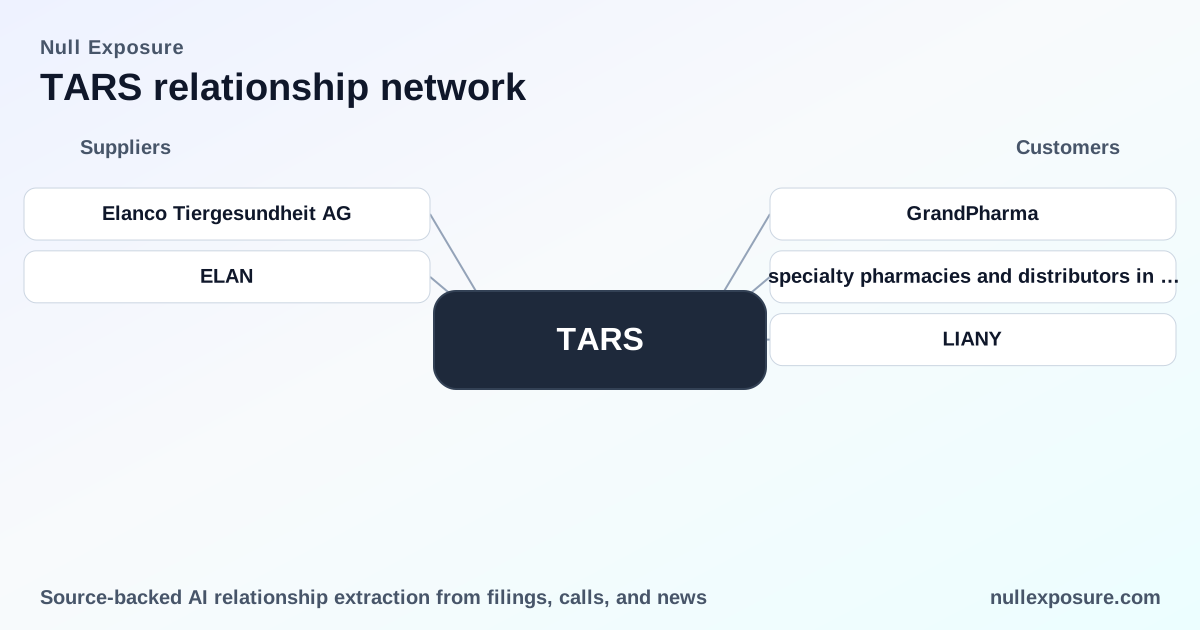
specialty pharmacies and distributors in the U.S.
Tarsus sells XDEMVY directly to a limited number of specialty pharmacies and distributors, which in turn supply clinics, hospitals, pharmacies and federal healthcare programs; sales to these customers are the primary channel for U.S. revenue recognition. Source: Tarsus 2024 Form 10‑K (FY2024). -
GrandPharma / Grand Pharmaceutical Group / Grand Pharmaceutical Group Limited
In March 2024 Tarsus executed documentation assigning the China out‑license to GrandPharma, and subsequent March 2026 regulatory approval by China’s NMPA triggered a US$15 million milestone payment to Tarsus, validating the partner’s regulatory execution and delivering near‑term non‑U.S. cash inflow. Sources: Tarsus 2024 Form 10‑K (Novation Agreement, March 2024) and reporting on the NMPA approval and milestone payment (Sahm Capital and GlobeNewswire, March 2026). -
LianBio / LIANY
Tarsus originally granted an exclusive China Out‑License to LianBio in March 2021 for development and commercialization of TP‑03 in Greater China; that agreement underpinned the later legal succession to GrandPharma and establishes the out‑license path for China territory economics. Source: Tarsus 2024 Form 10‑K (China Out‑License, March 2021).
What the constraints tell investors about durability and risks
The firm‑level constraints extracted from Tarsus’ disclosures form a coherent operating signal set:
-
Spot contracting: Revenue is recognized at delivery, indicating transactional sales rather than multi‑period contractual revenue. This supports near‑term cash visibility but reduces recurring revenue predictability. Evidence: revenue recognition policy in the Form 10‑K.
-
North American sales concentration: Commercial launch and primary sales execution are U.S.‑focused; the sales organization and marketing investments center on the U.S. specialty ophthalmology channel. Evidence: multiple 2023–2024 disclosures on launch and commercialization in the U.S.
-
Material customer concentration: The company defines major customers as those representing over 10% of revenue, signaling that a small set of customers could materially affect results. Evidence: customer concentration disclosure in the Form 10‑K.
-
Dual role: seller and distributor reliance: Tarsus acts as seller to distributors while depending on those same distributors to reach end‑users, creating operational interdependence that elevates counterparty operational risk. Evidence: the company’s description of its sales channel.
-
Active commercial stage with a single core product: XDEMVY is the company’s only product approved for commercial sale and is the primary revenue driver, which concentrates product‑cycle and regulatory risk. Evidence: Form 10‑K statements on product status and revenue reliance.
Together these signals show a company with clear monetization levers, concentrated counterparty exposure, and targeted externalization of geographic execution via licensing—a profile investors can underwrite but must monitor for distributor performance and partner milestone cadence.
Investment implications and what to watch next
- Positive catalyst path: Additional regulatory wins, commercial adoption lifts in the U.S., and further partner milestones (beyond the $15M China trigger) will deliver step changes to cash flow and valuation.
- Primary risk: Disruption at a major distributor or deterioration of commercial uptake for XDEMVY would compress revenue quickly because of the product’s singular role.
- Operational signal to track: Quarterly disclosures on distributor counts, top‑10 customer revenue splits, and milestone receipts from GrandPharma/LianBio will be the clearest predictors of revenue stability.
For a consolidated view of Tarsus’ counterparties, filings, and real‑time relationship signals, see the company coverage at https://nullexposure.com/.
Bold, focused governance of distribution relationships and disciplined monitoring of partner milestones will determine whether Tarsus’ single‑product model converts into durable, diversified value for shareholders.