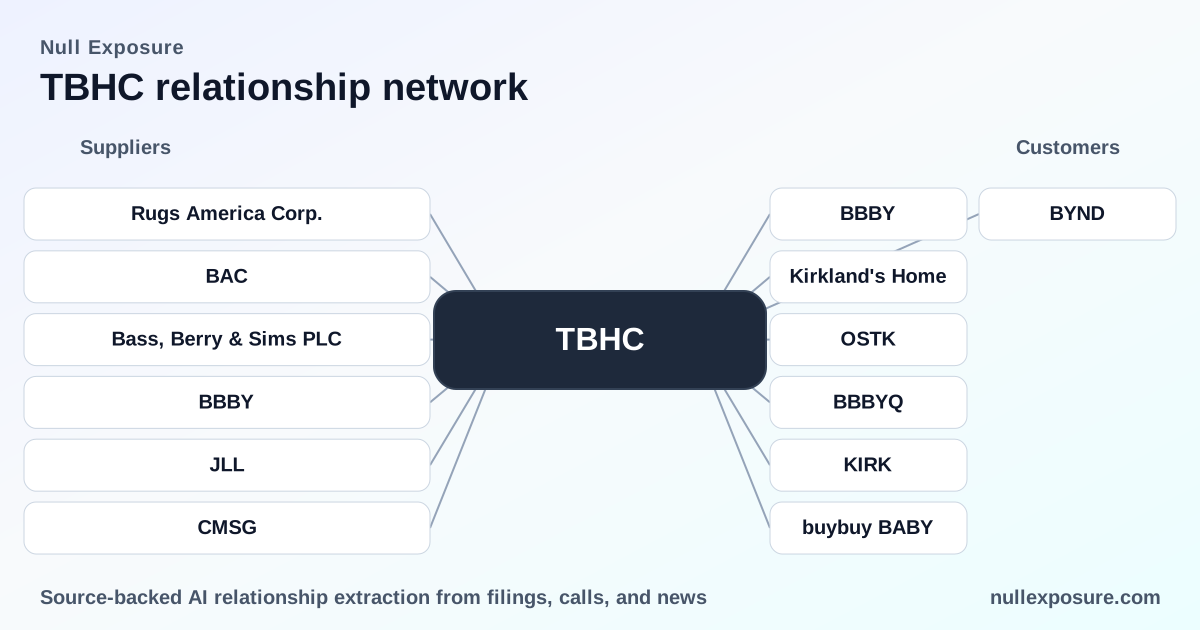
The Brand House Collective (TBHC): Customer relationships that reshape a specialty retailer
The Brand House Collective operates as a multi-brand merchant, supply-chain and retail operator that monetizes primarily through point-of-sale merchandise sales across physical stores and e-commerce, supplemented by brand and intellectual-property transactions and capital-light store conversion services. Revenue is recognized at the time of sale, the company has repositioned itself from a single-banner retailer into a retail operator for third‑party home brands, and it has acted decisively to monetize IP—most notably selling the Kirkland’s Home name for $10 million while running conversion programs with Bed Bath & Beyond and Overstock. For direct updates and data feeds, visit https://nullexposure.com/.
Business model constraints and operating posture
- Contracting posture — spot sales. TBHC recognizes revenue at the point of sale in stores and at estimated delivery for e‑commerce orders, signaling a largely transactional, low‑duration revenue base rather than multi‑year recurring contracts.
- Geographic concentration — North America (U.S.). The company operates hundreds of U.S. stores and an e‑commerce channel under the Kirkland’s Home brand, defining a domestic retail footprint.
- Role — seller and retail operator. TBHC functions as the merchant of record for core home‑décor products while increasingly operating retail banners on behalf of larger brands.
- Segment focus — core product retail. The company is squarely positioned in home décor and furnishings merchandising and store operations.
These signals imply a business that is operationally retail‑centric and revenue‑sensitive to foot traffic, merchandising execution and brand licensing events, with a strategic tilt toward capital‑light growth through store conversions rather than heavy real estate or long-term wholesale contracts.
How the relationships fit together: one‑by‑one coverage Below I map every customer relationship cited in the public record, with a one‑to‑two sentence plain‑English summary and the documentary source.
-
Bed Bath & Beyond, Inc. (BBBY) — TBHC sold the Kirkland’s Home retail banner and related IP to Bed Bath & Beyond and is serving as a retail operator for Bed Bath & Beyond Home stores, supporting BB&B’s relaunch in physical retail. Source: Bed Bath & Beyond investor press release announcing the merger/agreement (investors.beyond.com, 2025).
-
BBBY (ticker references) — Multiple company communications and news outlets refer to TBHC’s strategic alignment with the Bed Bath & Beyond group (ticker: BBBY) as both buyer of the Kirkland’s Home assets and partner for store conversions. Source: Bed Bath & Beyond press materials and coverage (investors.beyond.com; Furniture Today, March 2026).
-
Bed Bath & Beyond Home (brand) — TBHC is executing a store conversion program that brings the Bed Bath & Beyond Home banner into converted locations as part of an aggressive but capital‑light conversion strategy. Source: TBHC Q4 2025 earnings call (tbhc-2025q4-earnings-call).
-
Bed Bath & Beyond (symbol variant / Bed Bath & Beyond Inc.) — Press reporting and TBHC disclosures repeatedly connect TBHC’s operational role to the broader Bed Bath & Beyond corporate efforts to relaunch brick‑and‑mortar stores. Source: Retail TouchPoints and HF Business reporting (March–May 2026).
-
Overstock (OSTK) — TBHC explicitly names Overstock as a banner leveraged in its conversion strategy, operationally partnering on merchandising assortments and store format conversions. Source: TBHC Q4 2025 earnings call and company press commentary (tbhc-2025q4-earnings-call; prnewswire/furnituretoday coverage).
-
BBBYQ (ticker variant referenced in earnings transcript) — TBHC’s earnings narration uses the Bed Bath & Beyond‑related tickers to describe conversion activity and customer delivery priorities, reflecting the companies’ commercial linkage in investor communications. Source: TBHC Q4 2025 earnings call transcript (tbhc-2025q4-earnings-call).
-
Kirkland’s Home — TBHC rebranded from Kirkland’s and historically operated the Kirkland’s Home banner; it subsequently sold the Kirkland’s Home trade name and related brand assets for $10.0 million as part of strategic repositioning. Source: Company financial release and regional BizJournal reporting (ir.kirklands.com; bizjournals.com, FY2025/FY2026).
-
Kirkland’s / KIRK (legacy references and financing) — Coverage notes that Kirkland’s received a $17 million debt financing facility the prior year, evidence of prior capital activity under the Kirkland’s name that factors into TBHC’s balance-sheet history. Source: Bisnow reporting (bisnow.com, FY2025).
-
BuyBuy Baby / buybuy BABY (brand) — TBHC’s public descriptions list buybuy BABY as one of the brands it manages operationally, indicating TBHC’s role as an operator of multiple home‑and‑family retail banners. Source: Bed Bath & Beyond investor press release and TBHC PR (investors.beyond.com; prnewswire, FY2025).
-
BuyBuy Baby (variant) — Multiple press outlets repeat the inclusion of BuyBuy Baby in TBHC’s managed‑brand portfolio, reinforcing the company’s multi‑brand operator narrative. Source: HF Business and PR coverage (hfbusiness.com; prnewswire, FY2025–FY2026).
-
BYND / Beyond (acquirer naming variant) — Several TBHC filings and press reports state the $10 million gain on sale of the Kirkland’s brand to an entity described as “Beyond” or BYND in coverage, documenting a material IP monetization event in fiscal reporting. Source: TradingView and company quarterly release (tradingview.com; ir.kirklands.com, FY2025).
Each of these relationships is documented in company statements, earnings commentary or press coverage between FY2025 and FY2026; the public record shows transactions (IP sale), operational partnerships (store conversion and banner operations), and ongoing merchandising relationships across these named brands.
Strategic implications for investors and operators
- Revenue composition is transactional and exposed to retail cycles. With revenue recognized at sale, TBHC’s topline tracks immediate retail demand and is less insulated by long‑term contracts. This drives cash flow sensitivity to seasonal and macro retail trends.
- Customer concentration and strategic dependence on Bed Bath & Beyond and Overstock as operating partners increase operational leverage: store conversion success and merchandising execution for those banners become material to future growth and profitability. The $10 million IP sale is a one‑time liquidity event that strengthens near‑term cash position but does not replace recurring retail margin.
- Capital‑light conversion strategy reduces capex needs but raises execution risk: TBHC is positioning as a service operator for third‑party banners; success depends on sourcing, supply‑chain efficiency and in‑store operational excellence rather than property ownership.
- Geographic and segment concentration (U.S. home décor retail) simplifies go‑to‑market but concentrates risk in a single consumer category and economy.
Key takeaways
- TBHC monetizes through point‑of‑sale retail, brand/IP transactions and store‑conversion services; its recent sale of the Kirkland’s Home name for $10 million and active conversion partnership with Bed Bath & Beyond and Overstock are the most consequential customer developments.
- Operating signals — spot contracts, U.S. retail focus, seller role and core product concentration — position TBHC as an execution‑dependent retail operator with near‑term liquidity benefits but exposure to retail demand fluctuations.
For a consolidated view of TBHC customer relationships and to access structured signals that support investment diligence, visit https://nullexposure.com/.