Transcontinental Realty Investors (TCI): Tenant Relationships and What They Mean for Investors
Transcontinental Realty Investors (TCI) operates as a diversified real estate investment company headquartered in Dallas, monetizing through rental income across apartments, office buildings, shopping centers and land, supplemented by periodic asset dispositions. Revenue recognition is driven by a mix of long-term commercial leases (straight-line recognition) and shorter-term residential leases (cash collection-based), producing a hybrid cash flow profile that combines stability from commercial tenants with rotation and yield from residential units. For a concise view of TCI’s customer exposures and the implications for cash flow and risk, see Null Exposure’s research hub: https://nullexposure.com/
Why tenant composition matters for a small-cap RE investor
Investors valuing TCI should focus on three core dynamics: lease tenor and recognition, counterparty credit mix, and regional concentration. Long-term commercial leases underpin predictable NOI and support financing, while residential leases create turnover and operating leverage at the property level. The presence of government and institutional tenants improves counterparty credit but does not eliminate leasing risk tied to local markets in the Southern United States. These operating characteristics shape both earnings visibility and the sensitivity of TCI’s valuation to cap-rate moves and local economic cycles.
Tenant list disclosed in coverage (each tenant from the available results)
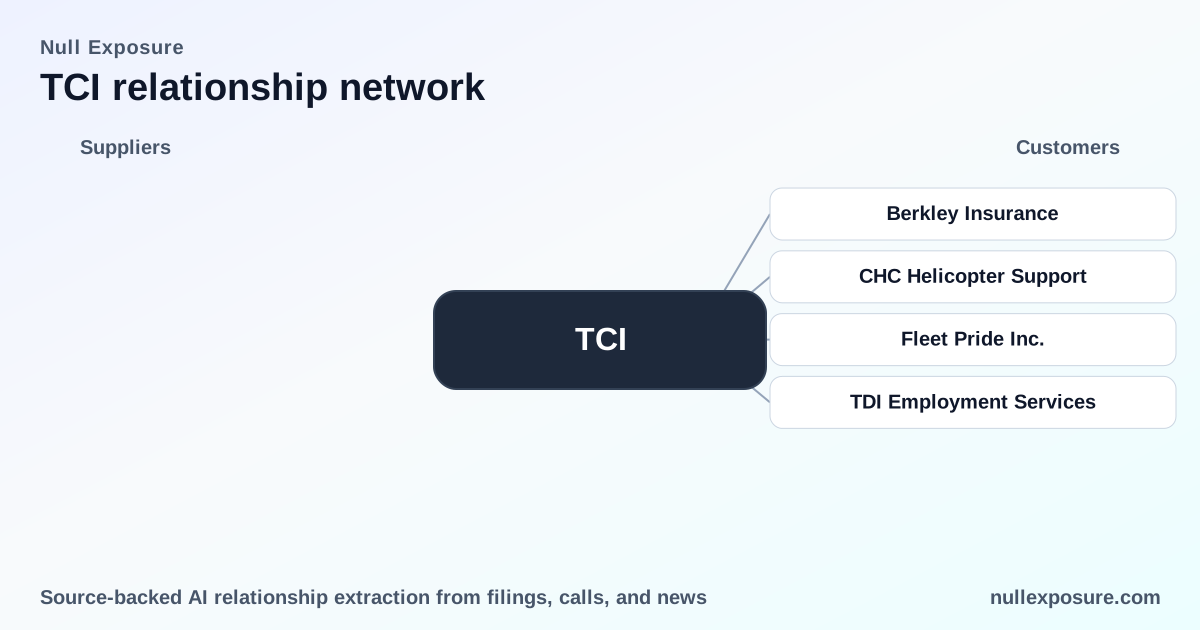
TCI’s public coverage of a Las Colinas office building lists four tenants in FY2019. Each tenant is reported in the same piece of local coverage; the building is owned by an affiliate of Transcontinental Realty Investors.
Berkley Insurance
Berkley Insurance is named as a tenant in the Las Colinas office tower that a TCI affiliate owns, indicating corporate tenant demand for parts of TCI’s commercial footprint. The tenant listing is reported in a Dallas Morning News article from September 24, 2019 (FY2019): https://www.dallasnews.com/business/real-estate/2019/09/24/landmark-las-colinas-office-tower-is-the-latest-commercial-property-on-the-market/
CHC Helicopter Support
CHC Helicopter Support is included among tenants occupying space in the same Las Colinas property, reflecting a mix of specialized corporate occupiers in TCI’s office assets. Source: Dallas Morning News, September 24, 2019 — https://www.dallasnews.com/business/real-estate/2019/09/24/landmark-las-colinas-office-tower-is-the-latest-commercial-property-on-the-market/
Fleet Pride Inc.
Fleet Pride Inc. appears on the tenant roster for the Las Colinas tower owned by a TCI affiliate, representing a commercial operator presence within that asset. Source: Dallas Morning News, September 24, 2019 — https://www.dallasnews.com/business/real-estate/2019/09/24/landmark-las-colinas-office-tower-is-the-latest-commercial-property-on-the-market/
TDI Employment Services
TDI Employment Services is also listed as a tenant at the Las Colinas office address owned by a TCI affiliate, showing that the building hosts a mix of professional and service-sector lessees. Source: Dallas Morning News, September 24, 2019 — https://www.dallasnews.com/business/real-estate/2019/09/24/landmark-las-colinas-office-tower-is-the-latest-commercial-property-on-the-market/
Contracting posture, counterparty mix and geography — company-level signals
Company disclosures and revenue recognition language provide explicit signals about how TCI contracts with tenants and how that translates into earnings characteristics:
- Contract tenor is mixed. Company statements indicate commercial leases are generally leased for more than twelve months and rental revenue is recognized on a straight-line basis over lease terms, which supports stable, predictable GAAP rental income for the commercial portfolio.
- Residential leasing is shorter and cash-driven. Rental revenue for residential property is generally leased for twelve months or less and is recorded when due from residents, producing more immediate cash recognition and higher turnover sensitivity.
- Counterparty mix includes government and individuals. Filings note leasing to for-profit businesses, certain local/state/federal agencies and residents, implying a diversified credit mix that blends institutional-grade counterparties with numerous individual tenants.
- Geographic focus is regional. TCI states it operates throughout the Southern United States, concentrating exposure to that macroeconomic and regulatory footprint.
These signals collectively indicate a hybrid operating model: long-term, contractually stable cash flow from commercial leases paired with cyclical, higher-turnover revenues from residential units. This structure reduces volatility in reported revenue while maintaining sensitivity to local rental markets and occupancy trends.
Risk and opportunity implications for investors
- Stability from commercial leases: Long-term, straight-line recognized commercial leases provide earnings smoothing and predictability, which supports financing and reduces short-term earnings volatility.
- Revenue volatility from residential turnover: Shorter residential leases translate into higher operating leverage at property level, where occupancy swings and rent resets can materially affect cash flow in the near term.
- Counterparty credit diversification: The mix of corporate, government and individual tenants reduces single-source counterparty risk, but asset-level concentration (e.g., a single office tower) can still create idiosyncratic performance swerves.
- Regional concentration risk: Operating predominantly in the Southern U.S. creates exposure to regional economic cycles and weather-related risks, which investors should factor into scenario analyses.
- Governance and capitalization signals: Company-level metrics (notably high insider ownership) suggest concentrated control, which influences liquidity and strategic decision-making at the corporate level.
Practical takeaways for valuation and due diligence
- For near-term cash-flow forecasting, model a baseline of stable NOI from commercial leases with a separate, higher-variance stream for residential rental income driven by occupancy and rent growth assumptions.
- Stress-test for regional shocks given TCI’s Southern U.S. footprint and factor in the timing differences between straight-line GAAP recognition and actual cash receipts from leases.
- Review asset-level tenant rosters (as in the Las Colinas example) to assess tenant mix, industry concentration and lease expirations; local-market listings provide practical visibility into asset-level credit quality.
- For further consolidated analysis of customer exposures and relationship maps, Null Exposure maintains curated relationship intelligence: https://nullexposure.com/
Bottom line
TCI’s tenant relationships combine contractual stability from commercial leases with operational yield from residential units, producing a blended income stream that supports a predictable GAAP profile while retaining asset-level operational risk. The Las Colinas tenant listings (Berkley, CHC Helicopter Support, Fleet Pride, TDI Employment Services) offer a concrete example of corporate and service-sector demand within TCI’s commercial assets. Investors should price the company with an emphasis on lease tenor, counterparty credit mix, and regional concentration when assessing downside risk and upside from rent-roll improvements.