USA TODAY Co. (TDAY) — the customer map that defines revenue durability and risk
Thesis: USA TODAY Co. is a dual‑engine media and digital marketing business that monetizes through subscriptions, advertising and a growing digital marketing services (DMS) arm; recent disclosures show revenue drivers that split between high‑frequency subscription and advertising sponsorship flows and intermittent enterprise licensing and partner programs. Investors should treat TDAY as a subscription + advertising operator with an expanding enterprise licensing vector that introduces both upside (scale and margins) and new counterparty concentration dynamics. For additional context and signals on commercial relationships, visit https://nullexposure.com/.
How TDAY sells and gets paid — a practical investor view
USA TODAY Co. collects revenue in three repeating ways that shape receivables, churn and cash flow:
- Subscriptions: print and digital subscription revenue is billed up front and recognized over the term (typically one to 12 months), giving the company a predictable, recurring cash base. This is a foundational and maturing revenue stream across the domestic footprint.
- Advertising and sponsorship: national advertisers, local ad sales and event sponsorships generate lumpy, volume‑sensitive revenue tied to seasonal and macro ad cycles. Sponsorships such as the Ad Meter create brand relationships and event income.
- Digital marketing services and enterprise licensing: LocaliQ and other DMS offerings sell recurring digital marketing services to SMBs and mid‑market advertisers; separately, enterprise licensing (including an announced AI licensing deal) opens high‑margin enterprise revenue channels.
Key operating characteristics follow from those monetization modes: contracting posture is largely subscriptional and campaign‑based; customer base spans small businesses to large enterprises; geographic concentration is heavily North American; and delivery mixes direct sales, proprietary platforms and reseller channels.
Relationship roll call — every partner in our review
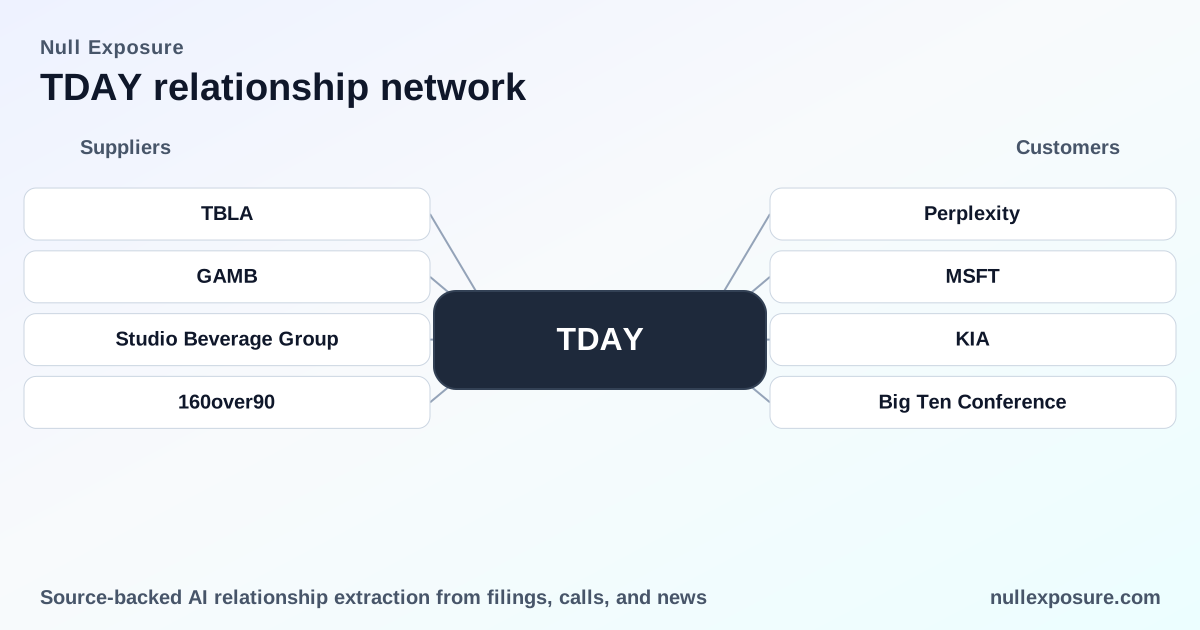
Perplexity
Perplexity was called out on the Q3 2025 earnings call as the largest item affecting quarter results, with management disclosing a roughly $7 million adjusted EBITDA impact driven by revenue shifting into Q4 and pull‑forward expenses tied to cost‑reduction actions and employee exits. This is a short, material operational impact originating from customer timing and internal actions (Q3 2025 earnings call, discussed March 7, 2026).
Microsoft / MSFT
USA TODAY Co. announced a new AI licensing deal with Microsoft during the Q3 2025 earnings call, signaling a move into enterprise AI monetization and strategic IP licensing with a major cloud and platform partner (Q3 2025 earnings call, March 7, 2026). The same disclosure appears under both MSFT and Microsoft in company mentions.
Kia (listed as KIA / Kia)
Kia is an associate sponsor of the 2025 Ad Meter competition, representing a national advertising and sponsorship relationship that delivers both cash and brand‑boosting exposure for the company’s events and national advertising inventory (USA TODAY Co. press release, March 2026).
Big Ten Conference
The USA TODAY Network will produce and publish the Big Ten Conference’s official championship game‑day programs for football and basketball, an ongoing content and media services relationship that ties local and national sports audiences to the company’s publishing and event monetization (Gannett/USA TODAY press release, FY2024).
The Detroit News
USA TODAY Co. had been running The Detroit News’ business operations since 1989 under a joint operating agreement (JOA); the company’s involvement and the recent sale process were covered by local reporting describing that historical operations arrangement and the current disposition of those responsibilities (Freep coverage of the sale, reported January 31, 2026 / article first seen May 4, 2026).
What those relationships reveal about revenue durability and concentration
The relationship set establishes a portfolio mix with different revenue behaviours:
- Recurring, predictable cash: subscriptions and LocaliQ engagements provide steady, time‑phased revenue because subscription contracts are billed up front and recognized over the term. This underpins a baseline of recurring revenue.
- Advertising and event volatility: sponsorships (Kia) and conference program publishing (Big Ten) drive high‑margin, event‑tied proceeds that are cyclical and calendar‑sensitive.
- Enterprise licensing upside and concentration risk: the Microsoft AI licensing deal is a meaningful strategic shift into enterprise agreements, which bring higher revenue per counterparty and potential scale but also counterparty concentration risk if a few large partners account for disproportionate revenue.
- Local operations churn and transition risk: the handling and sale of The Detroit News’ business operations illustrate the operational complexity and potential one‑off impacts to local revenue lines when JV or JOA arrangements change.
Company‑level operating constraints and what they mean for investors
The signals in TDAY’s disclosures and product descriptions form a coherent operating profile:
- Contracting posture — subscription‑first: TDAY recognises digital subscription revenue over contract terms (typically one to 12 months), translating into recurring revenue that smooths near‑term volatility.
- Counterparty breadth — multi‑tier: the customer base spans small businesses and SMBs (LocaliQ), mid‑market advertisers, and large enterprise partners for national advertising and licensing, creating a diversified revenue mix but uneven margin contribution.
- Geographic footprint — North America dominant: approximately 95% of DMS revenues originate in North America, concentrating macroeconomic and advertising cycle exposure in that region while limiting international diversification.
- Go‑to‑market — seller plus reseller channels: the company sells directly and uses resellers and agencies to extend reach, which increases distribution scale but creates dependency on third‑party partner economics.
- Segment focus — services growth: the Digital Marketing Solutions segment under LocaliQ is an explicit growth axis, representing both recurring service fees and higher churn risk associated with SMB clients.
These constraints mean investors should value TDAY as a recurring revenue business supported by lumpy advertising and licensing: subscription cash flow reduces downside, while enterprise deals and event sponsorships create episodic upside and a potential for earnings leverage.
Risks, catalysts and actionable signals
- Risk — ad cyclicality: heavy reliance on North American ad spend and event sponsorships exposes near‑term results to macro advertising softness.
- Risk — customer timing and restructuring impacts: the Perplexity‑related $7 million EBITDA swing demonstrates how revenue timing and internal cost actions create quarter‑level volatility.
- Catalyst — enterprise licensing: the Microsoft AI licensing agreement is the clearest near‑term upside lever for margin improvement and revenue re‑acceleration.
- Catalyst — local DMS scale: growth in LocaliQ’s SMB and mid‑market footprint will improve top line predictability if churn is contained.
Bottom line — what investors should do next
USA TODAY Co. is a subscription‑anchored media company with expanding enterprise licensing ambitions and a fast‑changing digital marketing services franchise. The company’s customer relationships span SMBs to global tech platforms, which diversifies revenue but concentrates geographic risk in North America and introduces new large‑counterparty dynamics. Monitor enterprise licensing rollouts and DMS churn metrics as primary signals for material re‑rating.
For deeper signal tracking and to see how these relationships evolve quarter to quarter, visit https://nullexposure.com/.
Bold takeaway: TDAY’s earnings durability rests on subscription cash flows; valuation upside will come from scaling enterprise licensing while managing SMB churn and advertising cyclicality.