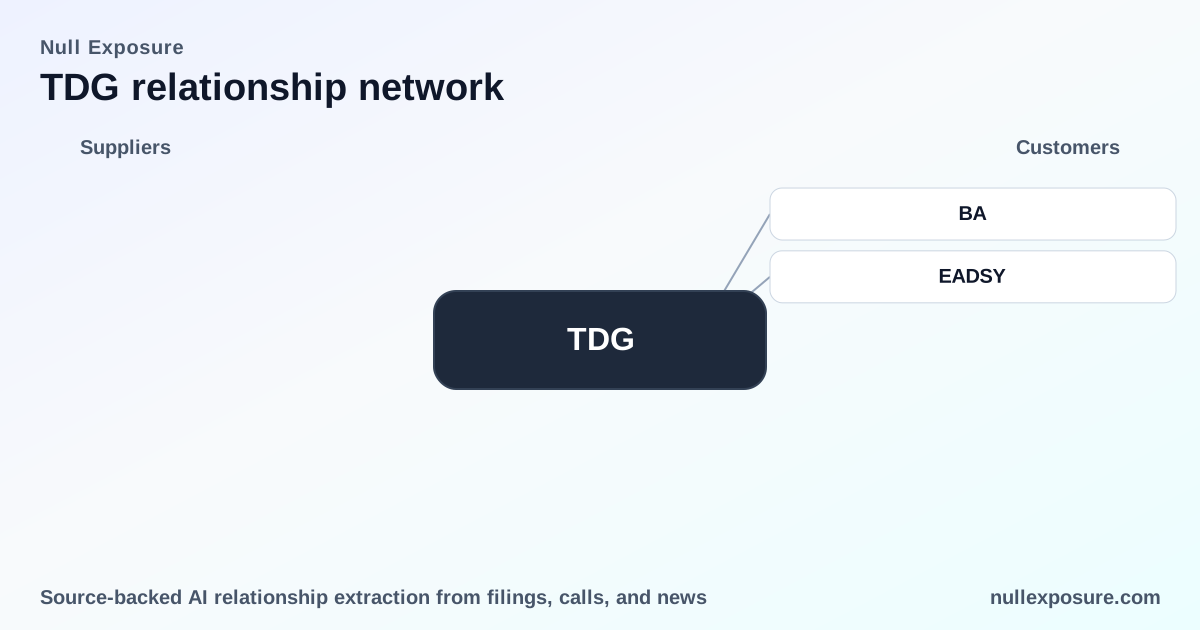
TransDigm (TDG): Customer Relationships That Underpin a High‑margin Aerospace Franchise
TransDigm operates as a consolidator and manufacturer of highly engineered aircraft components, monetizing through designed‑in positions on OEM platforms and a high‑margin aftermarket business supported by recurring replacement demand. The company combines organic exposure to Boeing and Airbus production ramps with acquisitive growth and aftermarket pricing power; TransDigm reported roughly $9.11B revenue and $4.644B EBITDA (TTM), reflecting the profitability of that model. For quick access to the source package behind this note, visit https://nullexposure.com/.
Why customers matter for TDG’s economics
TransDigm’s operating model is built around two complementary revenue pools: OEM original equipment and a captive aftermarket. Contracting posture is mixed—TransDigm discloses long‑term OEM contracts exist but are cancellable and often don’t guarantee minimum volumes, while most aftermarket sales are transacted without long‑dated commitments. This structure produces high margin visibility from installed base economics, but also concentrates exposure to program production cycles and global air traffic trends.
- Concentration and materiality: No single customer exceeded 10% of sales in FY2025, yet the top ten customers accounted for roughly 40% of net sales, concentrating revenue while preserving supplier bargaining power.
- Counterparty mix and criticality: About 35–40% of sales are defense‑related, and customers include defense agencies, major OEMs and distributors—this places TransDigm in the role of both a critical components manufacturer and a supplier to large enterprise buyers.
- Global footprint: Revenues are materially international, with sizable sales in North America, EMEA and APAC, consistent with a global installed base that supports the aftermarket.
- Contract risk: The absence of guaranteed future sales for most aftermarket customers is a company‑level signal that revenue depends on sustained aircraft utilization and replacement demand rather than binding purchase commitments.
These operating characteristics drive pricing power and predictability on installed platforms, but also create sensitivity to OEM production cycles, defense spending shifts and acquisition financing.
Customer relationship map — who TDG sells to
Below I cover every relationship referenced in the source set. Each entry is a plain‑English summary with a concise source note.
Boeing
TransDigm is a designed‑in supplier on key Boeing platforms (including the 737 MAX family), and Boeing production ramps materially influence TransDigm’s commercial OEM revenue and aftermarket demand. According to a feature in Finterra (April 2026) and other Q1 FY2026 coverage, TransDigm’s installed base on Boeing platforms contributes to its moat and top‑line variability tied to Boeing production rates. (Sources: Finterra feature, April 2026; Tikr Q1 FY2026 recap, May 2026)
Airbus
TransDigm likewise holds designed‑in positions on Airbus platforms such as the A320neo, with Airbus production rate changes contributing to commercial OEM growth and subsequent aftermarket pull‑through. Coverage in Finterra and company commentary on Q1 FY2026 cites Airbus ramp activity as a material revenue driver. (Sources: Finterra feature, April 2026; Tikr Q1 FY2026 recap, May 2026)
BA (ticker references to Boeing)
Several news items reference BA as shorthand for Boeing when discussing the implications of higher defense or commercial funding on suppliers; the citations reiterate that Boeing program activity is a direct lever on TransDigm’s OEM and defense opportunities. (Source: TradingView / Zacks analysis, March 2026)
AIR (ticker references to Airbus)
Some market commentary cites AIR as shorthand for Airbus when linking commercial production trends to TransDigm’s fiscal performance; these pieces reinforce the same point about platform exposure. (Source: FinancialContent article, April 2026)
Jet Parts Engineering
TransDigm announced plans tied to acquisition activity that includes Jet Parts Engineering, and a related debt offering was disclosed to help fund that purchase—signaling continued inorganic expansion of TransDigm’s aftermarket and MRO capabilities. (Source: Investing.com SEC filing summary, May 2026)
Stellant Systems, Inc.
Stellant Systems was named as an acquisition target in the company’s recent financing disclosure; the deal fits TransDigm’s playbook of buying complementary aerospace suppliers to broaden engineered‑components reach. (Source: Investing.com SEC filing summary, May 2026)
Victor Sierra Aviation Holdings
Victor Sierra Aviation Holdings is another announced acquisition that TransDigm intends to fund via a announced debt offering, consistent with the company’s strategy of acquisitive portfolio growth to expand its engineered parts footprint. (Source: Investing.com SEC filing summary, May 2026)
What these relationships imply for investors
- Platform exposure is the strategic asset. Being designed‑in on Boeing and Airbus provides recurring aftermarket revenue and high margins; this is the structural advantage that supports TransDigm’s premium profitability.
- Concentration is real and actionable. Top‑10 customer concentration (~40%) is a double‑edged sword: it supplies scale and predictable program economics but leaves TDG vulnerable to OEM cycle shocks or aircraft groundings.
- Contracting is mixed and transactional. The company’s disclosure that most aftermarket orders are not backed by long‑term purchase guarantees means revenue is durable via installed base economics rather than contractual lock‑ins—this supports margins but increases reliance on fleet utilization.
- M&A and financing shape growth. The company announced a $2 billion debt offering to fund purchases including Stellant, Jet Parts Engineering and Victor Sierra Aviation (Investing.com, May 2026), which accelerates scale but raises leverage and integration execution risk.
Bottom line — investable character and monitoring checklist
TransDigm is a high‑margin aerospace supplier anchored by designed‑in OEM relationships and a lucrative aftermarket. Key investor monitoring points are: Boeing and Airbus production trajectories, defense procurement funding, integration progress on recent acquisitions, and leverage evolution following the announced debt raise. For a concise briefing package and ongoing coverage of customer relationships and transaction signals, see https://nullexposure.com/.
Bold takeaway: TDG’s moat is its installed base and designed‑in positions, not long‑term guaranteed aftermarket contracts — that delivers margin but concentrates exposure to OEM cycles and acquisition financing.