Teladoc Health (TDOC): Customer Relationships and Commercial Risk Profile
Teladoc Health sells and delivers virtual care services through a hybrid B2B / direct-to-consumer model, monetizing primarily via subscription-style monthly access fees (PMPM/PPPM) and incremental usage-based charges for visits or specialty services; the company also operates a consumer-facing mental health channel that sells directly to individuals. Investors should evaluate Teladoc on the basis of subscription revenue durability, client concentration within Integrated Care, and U.S.-centric scale with global reach. For a concise gateway to our broader coverage and workflows, visit https://nullexposure.com/.
The business model in one paragraph
Teladoc operates as a service provider to employers, health plans and health systems while also selling mental-health services directly to consumers through BetterHelp. Revenue is dominated by contractually recurring access fees billed monthly on a per-member basis, supplemented by per-visit or per-case charges in certain agreements. Contract terms skew short — typically one to three years — and the business relies on renewal cycles and calendar-year onboarding patterns to grow utilization and yield.
Quick takeaways for investors
- Primary monetization: subscription access fees (PMPM/PPPM) with supplementary usage fees.
- Contracting posture: short-term contracts that renew frequently, creating regular re-pricing and retention risk.
- Concentration: no single customer >10% of revenue, but the top five customers represent a meaningful slice of Integrated Care.
- Geography: operations are U.S.-dominant with an established global presence.
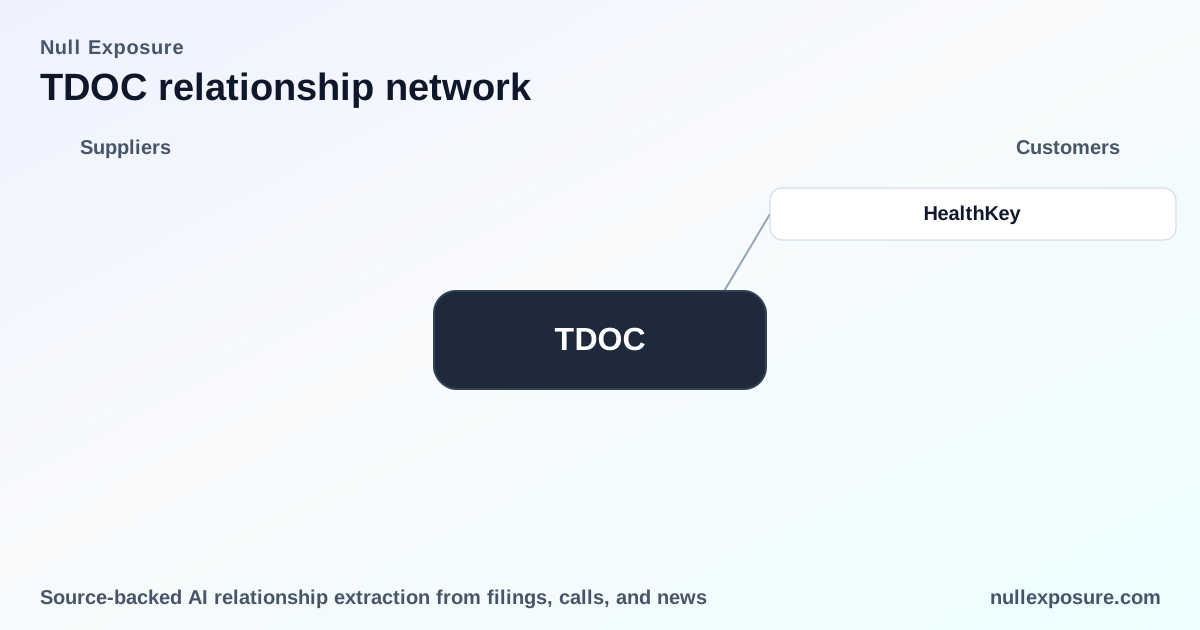
Customer relationship: HealthKey
HealthKey leverages Teladoc’s platform to expand virtual care into underserved areas; the partnership emphasizes improving access and equity by deploying Teladoc’s technology in targeted markets. This was reported in a news article covering Teladoc partnerships in FY2026. Source: a TradersUnion news report dated March 10, 2026 (TradersUnion / company partnership reporting).
What the contract signals reveal about risk and optionality
Teladoc’s public disclosures and reporting create a consistent portrait of how customers contract and how revenue behaves. Treat these as company-level signals that define commercial durability and operational constraints:
-
Short-term, renewable contracts: The company states Integrated Care client agreements generally run one to three years, with the majority on one-year terms that renew after year one. This contracting posture accelerates re-pricing opportunities but creates recurring renewal risk and revenue volatility at renewal windows. (Company filings; client-term disclosures.)
-
Subscription-first economics with usage toppings: Integrated Care revenue is primarily recognized from monthly access fees on a PMPM/PPPM basis, while certain contracts include additional per-visit or per-case revenue for general medical or specialty services. This hybrid model provides a steady base but leaves upside—and some unpredictability—tied to utilization. (Company filings; revenue recognition language.)
-
Direct-to-consumer channel for mental health: BetterHelp is sold directly to individuals, eliminating B2B counterparty concentration on that segment while creating a different customer-acquisition and churn profile than Integrated Care. (Company filings; BetterHelp segment description.)
-
Customer concentration is mixed—material within segment, immaterial at the consolidated level: No single customer exceeds 10% of consolidated revenue, signaling low single-counterparty dependency at the corporate level; however, the top five clients accounted for 18% of total revenue and 31% of Integrated Care revenue for FY2024, indicating meaningful concentration within the core B2B segment. That composition elevates counterparty risk inside Integrated Care even as consolidated concentration looks benign. (Company filings for years ended Dec. 31, 2024 and 2023.)
-
U.S.-dominant geography with global footprint: Approximately 94 million U.S. members had access to one or more Teladoc products as of Dec. 31, 2024, and the bulk of revenue is U.S.-sourced, even as Teladoc describes itself as a global leader in virtual care. This posture concentrates regulatory, reimbursement, and market-cycle risk in North America while preserving international growth optionality. (Company filings; membership and revenue-by-geography disclosures.)
-
Relationship maturity: a mix of renewing and ramping customers: Many Integrated Care contracts go live January 1 and experience enrollment and utilization ramp-through during the year; most clients have short-term contracts but recurrent renewals, producing a pattern of early-year contract takeoffs followed by mid-year utilization normalization. This calendarized flow creates predictable seasonality for onboarding but also timing risk for revenue recognition and utilization-based upside. (Company filings; segment commentary.)
-
Role and criticality: Teladoc as seller and service provider: Teladoc acts as both the contracted vendor selling access to provider networks and as the operating service provider delivering virtual visits and care pathways, which makes its platform operationally critical to client benefits administration and member experience. That operational role magnifies the impact of service outages, quality issues, or changes in provider network economics. (Company filings; segment descriptions.)
Financial and strategic implications for investors
-
Margin sensitivity to utilization and pricing: The subscription base provides predictable top-line coverage, but margins expand or contract depending on visit volume and the mix of specialty services billed on a per-case basis. The BetterHelp direct channel has different unit economics and marketing intensity than Integrated Care. (Segment-level revenue descriptions.)
-
Recontracting and churn are primary value levers: Given short contracts and a high renewal cadence, retention and contract renegotiation drive revenue certainty. Investors should focus on renewal rates, per-member pricing trajectories, and the company’s ability to cross-sell specialty services.
-
Concentration risk inside Integrated Care requires monitoring: While consolidated customer concentration is below a 10% threshold per-customer, the top-five client footprint within Integrated Care is large enough to be a material driver of segment performance. Loss or unfavorable repricing of one or more large Integrated Care clients would move metrics materially. (Company filings; top-five client disclosure.)
For readers who want the consolidated view of Teladoc’s customer intelligence and contract signals, explore our platform at https://nullexposure.com/ for a deeper breakdown of counterparties, contract tenor, and exposure maps.
Bottom line
Teladoc’s commercial model is subscription-based with usage upside, delivered through a mixed counterparty base of individuals and large enterprise clients. Short contract tenors, calendarized onboarding, and segment-level concentration are the dominant operational constraints that determine revenue durability and re-pricing exposure. HealthKey is an example of Teladoc extending its platform into underserved markets via partnership in FY2026, reinforcing the company’s role as a service provider and platform vendor to external integrators. Investors should prioritize renewal metrics, utilization trends, and top-client exposures when modeling future cash flows.