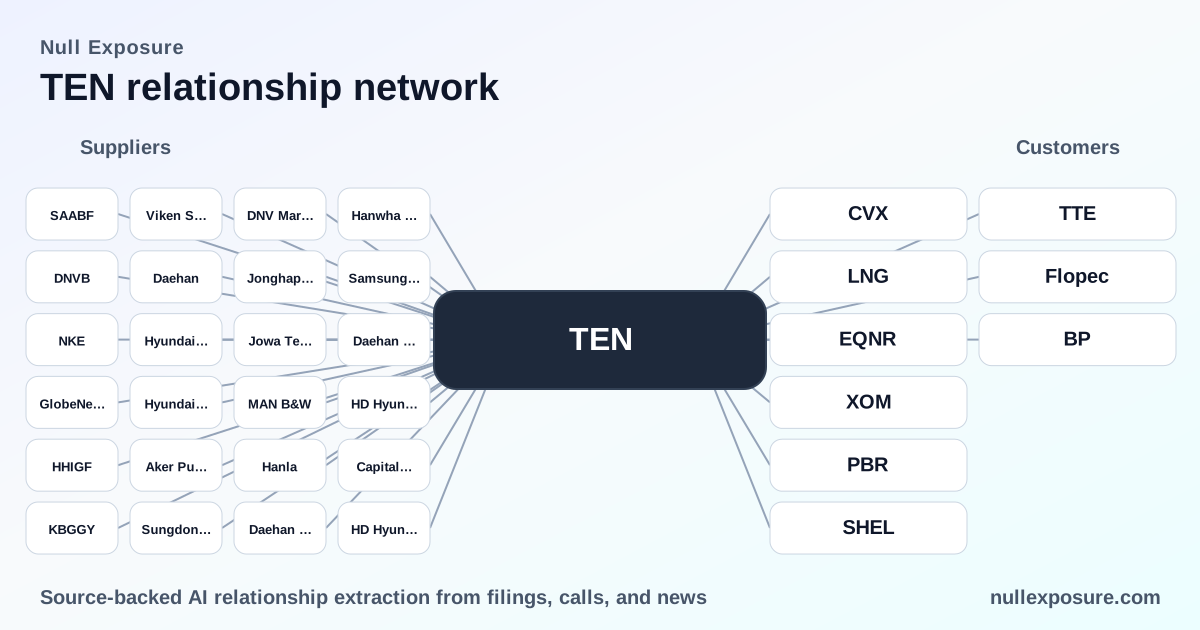
TEN’s customer map: blue‑chip counterparty strength and long‑dated revenue visibility
Tsakos Energy Navigation Limited (TEN) operates as an asset‑heavy tanker owner‑operator that monetizes primarily through long‑term time‑charters, shuttle‑tanker contracts and selective spot exposures across crude, product and LNG trades. Revenue drivers are concentrated: long multi‑year charters with oil majors and national oil companies provide high visibility and asset finance leverage, while shorter charters and spot positions capture upside in tight tanker markets. For a deeper look at TEN’s commercial counterparties and what they mean for credit and earnings durability, visit https://nullexposure.com/.
Market signal: TEN trades predominantly with investment‑grade energy companies and national exporters, and it purpose‑builds vessels when necessary to secure extended contracts. That operating posture makes the company both capital‑intensive and contractually conservative — long contracts reduce short‑term volatility but raise build‑to‑contract execution risk and customer concentration exposure.
Why the customer list matters to investors
TEN’s client roster is not a random mix of spot charterers — it reads like a shortlist of global commodity integrators. High counterparty quality, long contract tenors (including reported 15‑year shuttle deals), and targeted newbuild programs are the three structural themes that define TEN’s business model. Those themes translate to stable EBITDA generation when charters are performing and to rapid earnings leverage when tanker rates spike.
Key structural implications:
- Long tenors increase bankability of vessel financing and reduce rate volatility in revenue streams.
- Concentration with majors concentrates counterparty credit risk but reduces receivable collection risk relative to smaller charterers.
- Newbuild commitments tie capital and execution risk to contract awards and shipyard timelines.
For more on TEN’s commercial relationships and their financial implications, see https://nullexposure.com/.
Client-by-client: what the reporting shows and why it matters
-
Chevron (CVX) — Multiple reports show Chevron as a repeat, multi‑year charterer of TEN tonnage, including two Suezmaxes priced at about $65m each that were chartered for delivery in 2020 and two‑year timecharters and renewals in the mid‑2010s. These fixtures underscore Chevron’s role as a reliable, long‑term counterparty. Source: Splash247 reporting on TEN vessel orders and timecharter renewals (FY2019; FY2015) — https://splash247.com/tsakos-orders-suezmax-pair-at-hyundai-samho/ and https://splash247.com/chevron-takes-two-ten-suezmaxes-on-two-year-timecharters/.
-
Cheniere Energy Inc. (LNG) — Industry coverage identifies Cheniere as a charterer of at least one TEN LNG carrier, signalling an entry into hydrocarbon gas logistics beyond crude and products. This relationship supports diversification of TEN’s revenue base into the higher‑spec LNG segment. Source: gCaptain report on TEN’s LNG tanker expansion (FY2022) — https://gcaptain.com/tsakos-energy-navigation-plans-expansion-of-lng-tanker-fleet/.
-
Equinor ASA (EQNR) — TEN’s management states Equinor charters roughly a dozen conventional tankers, and separate newbuild reporting ties LNG‑fuelled vessels to long‑term Equinor contracts expected to generate significant revenue. Equinor is a core industrial customer that drives recurring charter demand. Source: gCaptain coverage quoting TEN management and Daehan order commentary (FY2022; FY2021) — https://gcaptain.com/tsakos-energy-navigation-plans-expansion-of-lng-tanker-fleet/ and https://splash247.com/daehan-secures-order-for-up-to-six-lng-fuelled-tankers-from-ten/.
-
Shell (SHEL) — Historical fixtures show Shell taking MR tankers and a Suezmax on average two‑year periods; Shell’s engagements illustrate TEN’s ability to place medium‑range tonnage with European majors. These short‑to‑medium term charters provide tactical fleet utilization and cash flow smoothing. Source: Splash247 tanker timecharter reporting (FY2015) — https://splash247.com/tsakos-energy-navigation-gets-two-year-tanker-timecharter-renewal/.
-
Total (TTE) — Total is listed among the blue‑chip majors trading with TEN; inclusion in TEN’s core client set reinforces exposure to integrated European energy demand and long‑term charter flows. Source: gCaptain commentary on TEN’s major‑client mix (FY2026) — https://gcaptain.com/ten-ceo-shadow-fleet-crunch-has-pushed-tanker-rates-to-rare-levels/.
-
ExxonMobil (XOM) — ExxonMobil appears in TEN’s cited stable of major counterparties, reflecting access to large global crude streams and the credit support that comes with top‑tier oil supermajors. This relationship strengthens receivable quality and financing terms. Source: gCaptain market analysis quoting TEN management (FY2026) — https://gcaptain.com/ten-ceo-shadow-fleet-crunch-has-pushed-tanker-rates-to-rare-levels/.
-
BP — BP is part of the same major‑client cohort referenced by TEN leadership; this further diversifies charter sources among global refiners and traders. Source: gCaptain report on tanker market tightness and TEN client roster (FY2026) — https://gcaptain.com/ten-ceo-shadow-fleet-crunch-has-pushed-tanker-rates-to-rare-levels/.
-
Petrobras / Petroleo Brasileiro SA (PBR) — TEN has an expanding relationship in Brazil: management announced a landmark award from Petrobras covering nine newbuild DP2 shuttle tankers, and reporting confirms existing vessels working for Petrobras. This is a transformational contract for TEN given the scale and long tenor. Source: gCaptain and Splash247 coverage on Petrobras awards and existing work (FY2025; FY2014; FY2026) — https://gcaptain.com/ten-ceo-shadow-fleet-crunch-has-pushed-tanker-rates-to-rare-levels/ and https://splash247.com/tsakos-readies-nine-shuttle-tankers-at-samsung-heavy/ and https://www.marinelink.com/news/shuttle-tanker-great362771.
-
Transpetro — Reporting ties nine DP2 Suezmax shuttle tankers on 15‑year contracts to Brazilian shuttle services operated via Transpetro, with media estimates of roughly US$2.0 billion in gross revenues across 2027–2028; this elevates TEN from spot/time operator to long‑term infrastructure partner in Brazilian offshore logistics. Source: Simply Wall St and Splash247 summaries of TEN’s shuttle tanker arrangements (FY2026) — https://simplywall.st/stocks/us/energy/nyse-ten/tsakos-energy-navigation/news/how-tens-us200-million-shuttle-tanker-charter-extensions-wil/amp and https://splash247.com/tsakos-readies-nine-shuttle-tankers-at-samsung-heavy/.
-
Flopec — TEN has placed MR tonnage on timecharter with Ecuador’s state shipping company Flopec (which carries crude and products on behalf of PetroEcuador), demonstrating TEN’s footprint in national export logistics beyond the majors. Source: Splash247 timecharter report (FY2015) — https://splash247.com/tsakos-energy-navigation-gets-two-year-tanker-timecharter-renewal/.
Investment implications and risk checklist
TEN’s commercial model delivers high revenue visibility when long contracts are in place and strong upside during tanker tightness because the company operates modern tonnage and secures blue‑chip charters. However, investor focus must remain on three risk vectors: customer concentration, newbuild execution and delivery timelines, and cyclical spot exposure on remaining fleet. Credit panels and lenders will price TEN more favorably given the caliber of counterparties, but capital commitments for newbuilds mean execution risk is non‑trivial.
Bold takeaways:
- Long, secured charters with majors and national oil companies are the primary driver of TEN’s valuation stability.
- Large Brazilian shuttle contracts and LNG charters materially diversify revenue mix while increasing capital intensity.
- Counterparty quality reduces collection risk but concentrates exposure; watch delivery schedules and charter commencements for earnings realization.
For a concise commercial‑relationship dossier and periodic updates on new awards, visit https://nullexposure.com/.