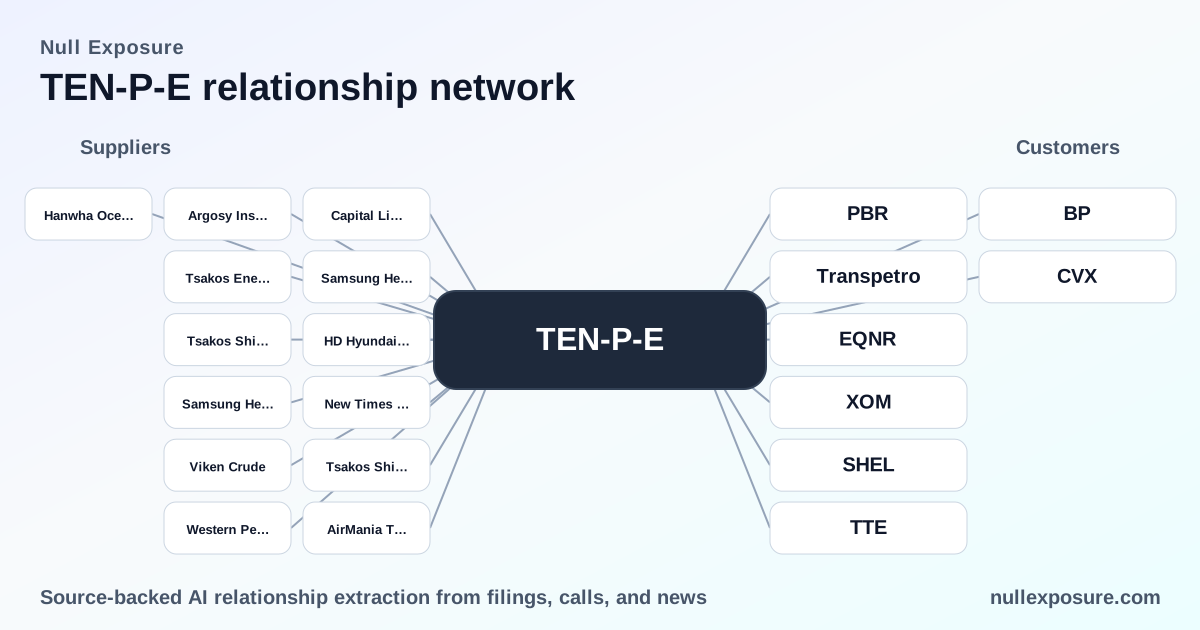
TEN-P-E Customer Map: Long-term charters to the majors drive revenue visibility
TEN-P-E operates as an owner-operator of energy shipping tonnage that monetizes primarily through long-duration charters with energy majors and national logistics arms. The company secures multi-year employment contracts for purpose-built shuttle and Suezmax tankers, converting capital investment in newbuildings into contracted cash flow streams and repeat-client relationships with the world’s largest oil companies. For an active view of TEN-P-E’s counterparty profile, see https://nullexposure.com/.
What the recent customer news tells investors
TEN’s commercial model is straightforward: invest in or order specialized vessels, place them on long-term charters, and collect predictable charter revenue. Recent market reports confirm a clear contracting posture — multi-decade-equivalent employment terms (15-year charters are documented) — and a customer mix concentrated among a small set of large oil companies and Petrobras’ logistics arm.
- Contracting posture: long-term, asset-backed charters (15-year shuttle tanker deals reported).
- Concentration: revenue is skewed toward a handful of global energy majors with ExxonMobil identified as the single largest revenue client and several other supermajors following.
- Criticality and credit: clients are large, investment-grade energy companies and national logistics subsidiaries, increasing counterparty credit quality relative to spot exposures.
- Maturity and repeat business: historical repeat awards (for example, prior Equinor block contracts) demonstrate TEN’s role as a preferred provider.
For a deeper catalogue of customer links and direct source references, visit https://nullexposure.com/.
The customer roster — who TEN-P-E is transacting with (what the reports say)
Petrobras / PBR
TEN secured a series of long-term charters tied to Petrobras that underpinned a large shuttle-tanker newbuilding programme, with media reporting that the investment is backed by long-term charters to Brazilian energy major Petrobras. (TradeWinds, Mar 2026; ShippingTelegraph, Mar 2026.)
Transpetro (Petrobras Transporte S.A.)
Transpetro’s logistics arm has been named as the charterer for nine DP2 Suezmax shuttle tankers on 15‑year employment contracts, an arrangement explicitly reported as the basis for the orderbook and future revenues. (ShippingTelegraph, Mar 2026; Splash247, Mar–May 2026.)
ExxonMobil (XOM)
ExxonMobil is identified as TEN’s largest revenue client, placing it at the top of the counterparty list that drives fleet employment and recurring charter income. (InsiderMonkey earnings-call transcript summary, Q3 2025; Investing.com earnings transcript, May 2026.)
Shell (SHEL)
Shell is listed among the top-tier clients that provide a steady employment pipeline for TEN’s vessels, positioned after ExxonMobil in revenue contribution. (InsiderMonkey earnings-call transcript summary, Q3 2025; Investing.com earnings transcript, May 2026.)
Equinor (EQNR)
TEN’s relationship with Equinor is long-standing: a prior 2014 contract for nine Aframax vessels established TEN as a regular provider and underpins a pattern of repeat, long-tenor work. (ShippingTelegraph historical note cited in the Mar 2026 reporting.)
Chevron (CVX)
Chevron is listed among the core group of energy majors that collectively supply most of TEN’s revenue, reflecting diversified charter clients across the supermajor cohort. (InsiderMonkey and Investing.com earnings-call summaries, 2025–2026.)
Total / TotalEnergies (TTE)
TotalEnergies is reported alongside other supermajors as a named customer, supporting TEN’s strategy of contracting with counterparty-creditworthy operators. (Investing.com and InsiderMonkey, Q3 2025 transcripts.)
BP (BP)
BP is included in TEN’s top revenue clients list, forming part of the concentrated supermajor exposure that underlies most of the company’s contracted employment. (Investing.com earnings transcript, May 2026; InsiderMonkey Q3 2025.)
Grace Energy Shipping
Market sources reported that a Samsung-built ship linked to TEN activity was picked up by UAE-based Grace Energy Shipping for $40.5m, evidence of secondary-market vessel transfers and profitable fleet recycling dynamics. (Splash247 fleet/market commentary, May 2026.)
What these relationships mean for cash flow and risk
The customer set gives TEN high revenue visibility because large portions of the fleet are covered by long-term charters with investment-grade counterparties or national logistics subsidiaries. The Transpetro 15‑year package is a decisive example: industry commentary places the gross charter value of that work at roughly US$2.0 billion of gross revenues across 2027–2028 for the set of nine shuttle tankers, indicating material forward contracted receipts. (SahmCapital analysis, Apr 2026; Riviera and TradeWinds reporting, Mar 2026.)
At the same time, the business model concentrates counterparty exposure in a small group of supermajors and national operators. That concentration is a double-edged sword: it raises customer credit quality and stability, but increases single-counterparty sensitivity if global oil demand patterns or client strategies shift. Vessel newbuild commitments also create capital-intensity risk in the near term as shipyard spend precedes full revenue realization.
Operational signals investors should track
- Fleet employment mix: proportion of vessels on long-term charters versus spot — a higher long-term share directly increases revenue predictability. Recent news shows a meaningful push toward long contracts with Transpetro and supermajors. (ShippingTelegraph, Splash247, 2026.)
- Orderbook delivery timing: newbuild delivery dates determine when contracted revenue starts flowing and when capital expenditures are realized. (TradeWinds, Mar 2026.)
- Counterparty concentration: monitor revenue contribution trends for ExxonMobil and the named supermajors in quarterly reporting. (InsiderMonkey and Investing.com transcripts, 2025–2026.)
- Secondary market activity: disposals or third-party purchases (e.g., Grace Energy Shipping pay‑outs) affect fleet age, financing needs and potential free-cash-flow. (Splash247, May 2026.)
Investment implications — the payoff and the watchlist
- Payoff: TEN’s model transforms newbuilding capex into long-dated charter cash flows with high counterparty quality; the Transpetro deal represents a material locked-in earnings stream.
- Watchlist: concentration risk in a handful of supermajors; timing risk between capex and contracted revenue; exposure to shipyard delivery schedules and construction cost variances.
If you want a structured briefing or regular updates on TEN-P-E’s evolving client exposures and contract backlog, explore our coverage at https://nullexposure.com/.
Bold, contract-backed charters to Petrobras/Transpetro and a roster of oil supermajors are the defining facts for TEN-P-E’s revenue profile; investors should price in high visibility from long-term charters balanced against concentration and capital-intensity risk when evaluating the equity or credit story.