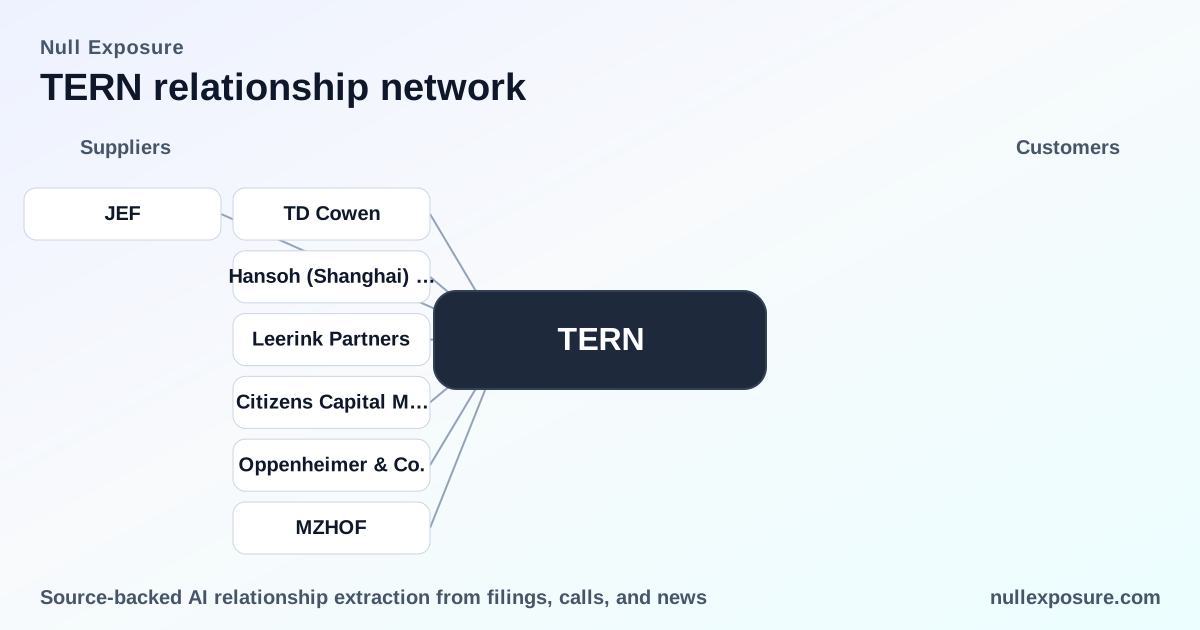
Terns Pharmaceuticals: customer relationships that drive near-term value
Terns Pharmaceuticals is a clinical-stage biotech that develops small-molecule therapies for NASH and other chronic liver diseases. The company monetizes through exclusive licensing deals, upfront and milestone payments, and strategic exits—the combination of license-derived cash flows and acquisition optionality is the primary near-term value engine for investors. For relationship due diligence and portfolio positioning, focus on the licensing posture in APAC (Hansoh), and the strategic buyer interest from large pharma (Merck/MSD) that has crystallized into a cash acquisition proposal. Visit https://nullexposure.com/ for more structured exposure intelligence and context.
Why relationships matter for equity value
Terns generates virtually all of its commercial upside through third-party partnerships and potential buyout outcomes rather than product sales today. License agreements translate into discrete revenue milestones and option payments, while corporate M&A interest converts future pipeline optionality into immediate per‑share value. The company’s reported revenue run-rate is negligible, so partner and buyer payments control cash flow and valuation multiples.
Deal headlines: Merck/MSD interest and reported deal terms
-
Finviz reported that Merck began a tender offer to acquire Terns, citing a business wire notice dated April 7, 2026. This confirms a formal corporate bid process tied to a cash consideration announced publicly. (Finviz, May 4, 2026)
Source: https://finviz.com/news/299633/wall-street-analysts-see-a-5091-upside-in-terns-pharmaceuticals-tern-can-the-stock-really-move-this-high -
MarketScreener covered Terns’ FDA Breakthrough Therapy Designation for TERN‑701 and directly tied that regulatory development to an acquisition agreement with Merck, noting that the designation and the Merck agreement together accelerate plans to advance TERN‑701. (MarketScreener, May 2026)
Source: https://www.marketscreener.com/news/terns-pharmaceuticals-announces-fda-breakthrough-therapy-designation-granted-to-tern-701-for-certain-ce7f59dcd18cff24 -
The Globe and Mail published a press‑release style summary noting a definitive agreement under which Merck (via a subsidiary) will acquire Terns for $53 per share in cash, framing the transaction as a strategic buy by a global pharmaceutical. (The Globe and Mail, May 2026)
Source: https://www.theglobeandmail.com/investing/markets/stocks/INTC/pressreleases/1205248/why-terns-pharmaceuticals-stock-rocked-the-market-in-march/ -
TradingView’s company coverage referred to the buyer as MSD and reported a total deal value of roughly $6.7 billion, signaling market narratives that equate Merck and MSD references and placing the transaction within the multibillion-dollar consolidation trend in oncology and liver disease. (TradingView, May 2026)
Source: https://www.tradingview.com/symbols/NASDAQ-TERN/
Key takeaway: Multiple news outlets report a formal acquisition agreement or tender offer tied to Merck/MSD and an agreed cash price, which materially changes the company’s near-term cash flow and valuation profile.
Licensing and geographic concentration: the Hansoh relationship
Terns’ operational model includes exclusive licensing for regional commercialization rights. In 2020 Terns granted Hansoh an option and license covering mainland China, Taiwan, Hong Kong and Macau; Hansoh exercised that option in November 2021 and the company recognized a license fee and future milestone potential. According to company disclosures, Terns recorded $1.0 million in license fee revenue upon Hansoh’s exercise, and Hansoh agreed to pay up to $67.0 million in pre‑specified clinical, regulatory and sales milestones. This makes Hansoh a material commercial conduit for APAC market exposure and milestone upside. (Company filings; Hansoh 2020 Option and License Agreement, exercised Nov 2021)
Key operational signal: The company is license-first in its commercialization posture for APAC, with highly concentrated regional exposure through a single licensee and milestone‑driven monetization rather than royalty-free transfers.
How constraints shape Terns’ operating model and investor risk
-
Contracting posture: Terns structures value capture through exclusive, royalty‑bearing licenses and option exercises, not direct sales today. That yields lump‑sum payments and milestone dependencies rather than recurring commercial revenue. Evidence: Hansoh option/license and exercise language.
-
Concentration: The APAC region is served via a single licensee (Hansoh) under an exclusive arrangement, creating geographic concentration risk where a sizable portion of future non‑U.S. upside is tied to one counterparty and a set of milestones.
-
Criticality: For Terns, partner payments are critical to near‑term liquidity and validation; the Merck acquisition proposal is transformative because it converts clinical and regulatory optionality into immediate cash for shareholders, while Hansoh payments represent staged cash inflows tied to development success.
-
Maturity: Terns is clinical‑stage with limited revenue (reported TTM revenue ~ $1.0m), so relationship value is front‑loaded into option fees, milestones and the acquisition process rather than steady product sales.
These are company‑level signals derived from contract excerpts and public disclosures; the Hansoh constraint explicitly names the licensee and therefore is attributable to that relationship.
Relationship-by-relationship briefings (each item from the results)
-
Finviz reported that Merck initiated a tender offer to acquire Terns, reflecting a formal acquisition mechanism and a public communication of the bid process. (Finviz, May 4, 2026)
Source: https://finviz.com/news/299633/wall-street-analysts-see-a-5091-upside-in-terns-pharmaceuticals-tern-can-the-stock-really-move-this-high -
MarketScreener covered Terns’ FDA Breakthrough Therapy Designation and explicitly connected that regulatory milestone to the agreement for Merck to acquire Terns, highlighting the regulatory catalyst for strategic buyer interest. (MarketScreener, May 2026)
Source: https://www.marketscreener.com/news/terns-pharmaceuticals-announces-fda-breakthrough-therapy-designation-granted-to-tern-701-for-certain-ce7f59dcd18cff24 -
The Globe and Mail summarized a definitive agreement where Merck, via a subsidiary, agreed to purchase Terns for $53 per share in cash, establishing the per‑share economics of the transaction. (The Globe and Mail, May 2026)
Source: https://www.theglobeandmail.com/investing/markets/stocks/INTC/pressreleases/1205248/why-terns-pharmaceuticals-stock-rocked-the-market-in-march/ -
TradingView referenced MSD as the acquiring party and reported a deal valuation near $6.7 billion, situating the transaction among large pharma’s portfolio-build moves ahead of patent cliffs. (TradingView, May 2026)
Source: https://www.tradingview.com/symbols/NASDAQ-TERN/
Implications for investors and operators
-
Valuation realization: The Merck/MSD bid converts pipeline optionality into cash value; investors should treat announced deal terms and tender activity as immediate capital events that dominate model assumptions.
-
Milestone dependency: Absent an acquisition, Terns’ cash runway and upside are heavily dependent on license milestone flows (Hansoh up to $67m) and future partner payments; model scenarios should stress-test milestone timing and attainment probabilities.
-
Counterparty and regulatory risk: The Hansoh APAC license concentrates non‑U.S. commercial exposure, while the Breakthrough Therapy Designation for TERN‑701 elevates regulatory sensitivity and buyer interest—both upside drivers and operational risk points.
Consider visiting https://nullexposure.com/ for a consolidated view of these relationship signals and to track changes as tender activity and milestone realizations progress.
Bottom line
Terns is a license-centric, clinical‑stage company whose immediate valuation is now driven by an announced Merck/MSD acquisition process and historically by milestone‑oriented licensing in APAC (Hansoh). For investors, the priority is monitoring deal execution and milestone receipts; for operators, the priority is managing partner integrations and regulatory catalysts that unlock milestone payments or close the acquisition. Both paths concentrate value in a small number of counterparties and discrete cash events—this is the defining investor risk-reward profile for TERN.