Truist (TFC‑P‑R) — customer incidents expose operational and reputational vectors investors must price
Truist Financial Corporation operates as a full‑service regional bank holding company, monetizing through net interest income from lending and deposits, fee income from wealth management, brokerage, mortgage and insurance distribution, and transactional interchange across a 2,781‑branch footprint. For holders of the preferred security TFC‑P‑R, the credit story rests on the bank’s ability to preserve deposit stability and contain operating losses that would otherwise pressure common equity and the issuer’s cost of capital. For immediate situational awareness and ongoing monitoring, visit https://nullexposure.com/ for a consolidated view of customer‑facing incidents and coverage.
Why these customer reports matter to an investor in preferred paper
Recent media reports document multiple customer losses tied to account fraud and transaction failures, which are operational events that directly erode trust in deposit platforms and increase the probability of regulatory scrutiny and remediation costs. Preferred holders should value the security based on the bank’s earnings stability and loss absorption capacity; persistent operational incidents increase the chance of higher provisions, litigation expense, or reputationally driven deposit outflows that would ultimately pressure capital and margin profiles.
What the incident pattern signals about Truist’s operating model
- Contracting posture: Truist operates as a large retail and commercial bank with standard deposit and custody responsibilities; incidents reported are between customers and the bank, indicating the bank carries legal and operational accountability for payments and fraud controls.
- Concentration: Truist’s broad branch network and national service footprint create a diversified deposit base, which reduces single‑counterparty concentration risk but amplifies operational exposure across many retail and small business clients.
- Criticality: Deposit access, payment rails and fraud controls are core to Truist’s value proposition; failures in these areas are immediately material to customer retention and funding costs.
- Maturity: Truist is a mature regional bank with legacy systems and integrated consumer interfaces; operating incidents often reflect stress points where legacy processes and digital channels intersect.
These are company‑level signals to incorporate into scenario analysis for TFC‑P‑R valuation and stress testing; they are not assigned to any single customer relationship unless the underlying report names that customer.
Relationship roll‑call: every customer mention and what it means
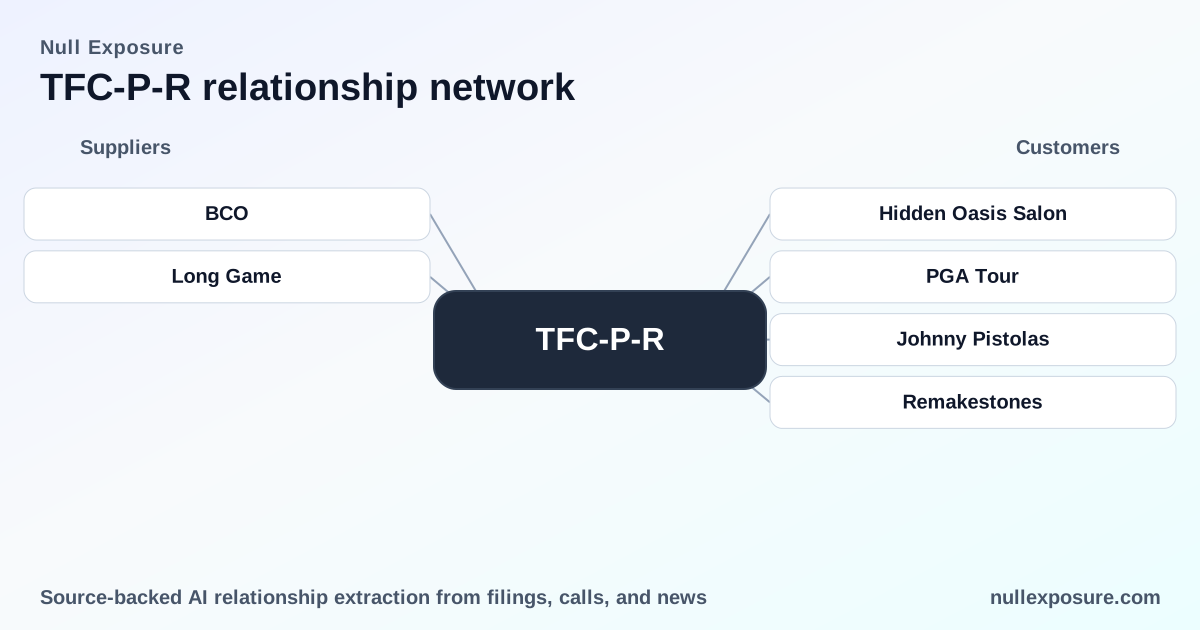
Hidden Oasis Salon — Fairfax Station, VA
A Fairfax Station salon owner reported that tens of thousands of dollars were stolen from her Truist account in a headline covering multiple affected small businesses, highlighting a cluster of customer fraud claims in early March 2026. This case was reported by Fox5 DC on March 10, 2026 and positions Truist at the center of several small business restitution disputes.
Johnny Pistolas — Adams Morgan bar and restaurant
Owners of Johnny Pistolas reported attempted wire fraud totaling $460,000 and referenced earlier losses in the same media wave; the story underscores high‑value wire transfer vulnerabilities affecting small business customers. Fox5 DC covered these claims on March 10, 2026, as part of a broader local investigation into Truist customer account compromises.
Johnny Pistolas (repeat mention in related coverage)
A separate Fox5 DC article on March 10, 2026 reiterated that multiple small business owners are coming forward after initial reporting of a $230,000 loss at a different Adams Morgan account, reflecting an ongoing media narrative and aggregation of customer complaints against Truist’s controls and remediation processes.
Remakestones — Jacksonville headstone business
A Jacksonville small business owner reported depositing $1,000 cash at a Truist ATM and not seeing the funds credited to the business account, a different class of operational failure implicating in‑branch or ATM processing. Action News Jax reported this incident on March 10, 2026, illustrating that reported failures are not limited to electronic fraud but include transactional processing gaps.
PGA Tour — corporate sponsorship relationship
Truist announced a seven‑year title sponsorship of the PGA Tour’s signature event at Quail Hollow, including a one‑year detour to Philadelphia Cricket Club, reflecting marketing and brand investment aimed at broad consumer reach and relationship‑building with affluent client segments. CBS News reported the sponsorship arrangement on March 10, 2026, signaling continued strategic spend on brand positioning even as the bank navigates operational headlines.
What investors should price in for TFC‑P‑R
- Operational risk premium: The cluster of customer fraud and transaction complaints supports adding an operational risk spread to preferred pricing until remediation and regulatory outcomes are clear. Preferred security returns depend on stable dividend capacity; rising remediation or litigation costs erode distributable earnings.
- Reputational drag vs. scale offsets: Truist’s large branch footprint and diversified revenue streams provide resilience, but persistent customer‑facing failures accelerate deposit churn and elevate funding costs. Scale mitigates idiosyncratic losses; systemic failures increase severity.
- Regulatory and legal exposure: Publicized customer losses typically accelerate supervisory interest and class action or individual litigation, increasing the probability of fines and required system upgrades that impact near‑term cash flow.
Practical monitoring checklist for analysts
- Track regulatory filings and enforcement actions in the weeks following major media coverage.
- Monitor deposit flows and liquidity metrics in investor reports and earnings calls.
- Watch remediation announcements and customer restitution programs that affect expense run‑rate.
- Observe marketing and capital allocation choices—sponsorships like the PGA Tour deal are strategic for brand, but investors should reconcile marketing spend with operational remediation budgets.
For consolidated tracking of Truist’s customer incidents, reputational signals, and a running log of reported claims, see https://nullexposure.com/ for a centralized researcher dashboard and historical context.
Bottom line: prefer discipline over complacency
Truist operates a broad, diversified banking franchise that monetizes across lending, deposits and fee businesses. The recent stream of customer complaints—covering fraud, large attempted wire thefts, and ATM processing issues—creates a short‑to‑medium term operational risk premium that prudent investors should incorporate into TFC‑P‑R valuation models. Monitor remediation actions, regulatory engagement, and deposit behavior for signs that the bank is stabilizing customer trust or, conversely, facing escalation that could pressure capital and preferred dividend coverage.