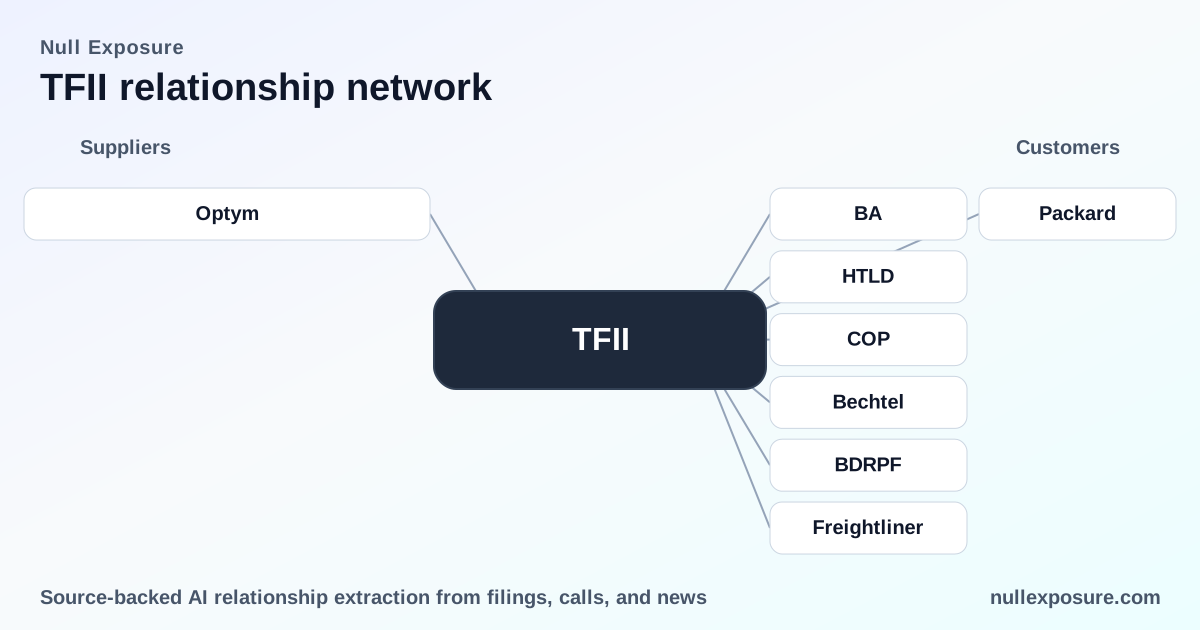
TFI International (TFII) — customer relationships that move earnings and risk
TFI International operates as a diversified North American transportation and logistics platform that monetizes through asset-based trucking, non-asset logistics, dedicated contract carriage, and specialized heavy-haul projects. Revenue converts from freight movements, dedicated long-term contracts, and opportunistic project work (e.g., heavy equipment moves), while periodic asset dispositions and tuck-in acquisitions shape free cash flow and capital intensity. For a direct view into TFII’s customer signals and sourcing, visit https://nullexposure.com/.
Investor thesis in one line: TFII’s profit profile depends on scale in irregular-route truckload and high-value specialized logistics customers, where a small set of large project wins and divestitures can swing margins materially.
Operational posture and business-model constraints
TFI runs a mixed contracting posture: short-cycle transactional freight coexists with multi-year dedicated and project contracts. The coexistence creates a diversified revenue base but produces concentration risk where large engineering or manufacturer customers drive outsized single-move revenues (project-level criticality) while overall revenue remains broad across thousands of shippers (low counterparty concentration at the top-line level). The business shows clear maturity in its operating model—integration of acquired businesses and selective divestiture activity (e.g., CFI assets) is a recurring lever to reallocate capital. Publicly visible signals in the sourced coverage did not include explicit contractual constraints such as long-term exclusivity clauses or unusual indemnities; treat that absence as a company-level signal about disclosure in these sources rather than definitive proof of no constraints.
Key takeaway: TFII’s economics are driven by transaction volume and intermittent high-margin project work; underperformance is most likely if project pipeline or large-customer throughput softens.
Customer relationship snapshots — every mention found in the coverage
Below I list each relationship identified in the collected coverage and a concise one- to two-sentence takeaway with the original source noted.
-
BA (Boeing) — Q4 2025 earnings call mention (InsiderMonkey, Mar 10, 2026). Management stated Boeing is a customer, indicating TFII handles freight or parts movements for aerospace manufacturers in that geography; the mention was made in the Q4 2025 earnings call transcript published by InsiderMonkey. (Source: InsiderMonkey Q4 2025 earnings call transcript, 2026-03-10 — https://www.insidermonkey.com/blog/tfi-international-inc-nysetfii-q4-2025-earnings-call-transcript-1699020/)
-
Boeing — Q4 2025 earnings call mention (InsiderMonkey, Mar 10, 2026). Management reiterated Boeing as a customer alongside other aerospace names, signaling exposure to capital goods logistics and supplier-tier freight flows in aerospace supply chains. (Source: InsiderMonkey Q4 2025 earnings call transcript, 2026-03-10 — https://www.insidermonkey.com/blog/tfi-international-inc-nysetfii-q4-2025-earnings-call-transcript-1699020/)
-
COP (ConocoPhillips) — Q4 2025 earnings call example move (InsiderMonkey, Mar 10, 2026). Executives referenced a large-scale energy-sector move for ConocoPhillips valued near $1 million, illustrating TFII’s ability to win single high-ticket project work in the oil & gas equipment logistics space. (Source: InsiderMonkey Q4 2025 earnings call transcript, 2026-03-10 — https://www.insidermonkey.com/blog/tfi-international-inc-nysetfii-q4-2025-earnings-call-transcript-1699020/)
-
Heartland Express Inc. (HTLD) — divestiture deal reported (Richmond News, Mar 10, 2026). Richmond News reported TFII signed a deal to sell CFI’s Truckload, Temp Control and Mexican non-asset logistics businesses to Heartland Express for US$525 million, confirming TFII’s continued use of asset portfolio reallocation to focus on strategic lines. (Source: Richmond News, March 2026 — https://www.richmond-news.com/the-mix/tfi-international-looking-for-acquisitions-growth-as-uncertainty-clouds-outlook-11894285)
-
Heartland Express Inc. (HTLD) — historical deal context (TruckingInfo, Mar 10, 2026). TruckingInfo reminded readers that Heartland previously acquired non-dedicated truckload operations from TFI in 2022 — a transaction that created scale in the irregular-route truckload segment and underscores TFII’s active M&A and carve-out cadence. (Source: TruckingInfo, March 2026 — https://www.truckinginfo.com/news/cfi-to-be-integrated-into-heartland-express)
-
ConocoPhillips — project example (InsiderMonkey, Mar 10, 2026). The company referenced a nearly $1 million specialized equipment move for ConocoPhillips, reinforcing TFII’s exposure to high-margin, episodic project logistics for energy clients. (Source: InsiderMonkey Q4 2025 earnings call transcript, 2026-03-10 — https://www.insidermonkey.com/blog/tfi-international-inc-nysetfii-q4-2025-earnings-call-transcript-1699020/)
-
Bechtel — data-center construction logistics engagement (FreightWaves, Mar 2026). FreightWaves reported TFII is working with Bechtel on the construction of a data center, indicating TFII participates in construction and project logistics for large engineering contractors. (Source: FreightWaves, March 2026 — https://www.freightwaves.com/?p=570680)
-
Bombardier — Q4 2025 earnings call mention (InsiderMonkey, Mar 10, 2026). Management identified Bombardier as a customer, confirming TFII’s role in aircraft or large-equipment movements for OEMs beyond Boeing and underscoring continued aerospace exposure. (Source: InsiderMonkey Q4 2025 earnings call transcript, 2026-03-10 — https://www.insidermonkey.com/blog/tfi-international-inc-nysetfii-q4-2025-earnings-call-transcript-1699020/)
-
Packard — manufacturing logistics mention (InsiderMonkey, Mar 10, 2026). Executives described a division that moves trucks for “the most important manufacturer in the U.S., Packard and Freightliner,” suggesting dedicated or OEM-focused logistics relationships with major truck manufacturers. (Source: InsiderMonkey Q4 2025 earnings call transcript, 2026-03-10 — https://www.insidermonkey.com/blog/tfi-international-inc-nysetfii-q4-2025-earnings-call-transcript-1699020/)
-
Bechtel — contractor relationship note (InsiderMonkey, Mar 10, 2026). Management commented on close collaboration with Bechtel in the earnings call, consistent with the FreightWaves account and signaling multiple public mentions of that contractor engagement. (Source: InsiderMonkey Q4 2025 earnings call transcript, 2026-03-10 — https://www.insidermonkey.com/blog/tfi-international-inc-nysetfii-q4-2025-earnings-call-transcript-1699020/)
-
Freightliner — OEM logistics work (InsiderMonkey, Mar 10, 2026). Freightliner is named alongside Packard as a core OEM customer for a division that moves trucks, reinforcing TFII’s anchored relationships in vehicle OEM inbound/outbound logistics. (Source: InsiderMonkey Q4 2025 earnings call transcript, 2026-03-10 — https://www.insidermonkey.com/blog/tfi-international-inc-nysetfii-q4-2025-earnings-call-transcript-1699020/)
Interpretation and investor implications
-
Revenue mix and volatility: The customer mentions illustrate TFII’s hybrid model—steady OEM and freightliner/Packard flows provide base utilization while large one-off projects (ConocoPhillips, Bechtel data center work) drive discretionary margin upside. Investors should expect lumpy earnings as project timing swings contributions quarter to quarter.
-
Concentration and criticality: Public mentions point to strategic relationships with aerospace and heavy-equipment OEMs and large contractors that are operationally critical for those customers’ supply chains; however, TFII’s overall revenue is diversified across thousands of shippers, reducing single-counterparty revenue concentration risk at the firm level while preserving material project-level exposure.
-
Contract maturity and disclosure: The sourced materials are event-driven (earnings call and press coverage) and do not include contract text or explicit constraint clauses; absence of contract-level disclosure in these sources is a company-level signal about public reporting practice, not a guarantee of contract flexibility.
-
Capital allocation and structural strategy: The reported sale of CFI assets to Heartland for US$525 million demonstrates an active capital-management posture—TFII uses divestitures and acquisitions to reshape portfolio exposure, which influences recurring margin and asset intensity.
Concluding recommendation
For investors analyzing TFII, the relevant frame is that customer relationships combine stable OEM logistics with episodic high-ticket project wins, producing a predictable base and variable upside that together justify a valuation premium relative to simple trucking comparables—provided project pipelines and divestiture execution remain robust. For a consolidated view of coverage and signal feeds that track these customer relationships over time, explore https://nullexposure.com/.
If you want a tailored briefing on how these named customers influence TFII’s revenue sensitivity or an earnings-model scenario that isolates project revenue, I can prepare that in a follow-up.