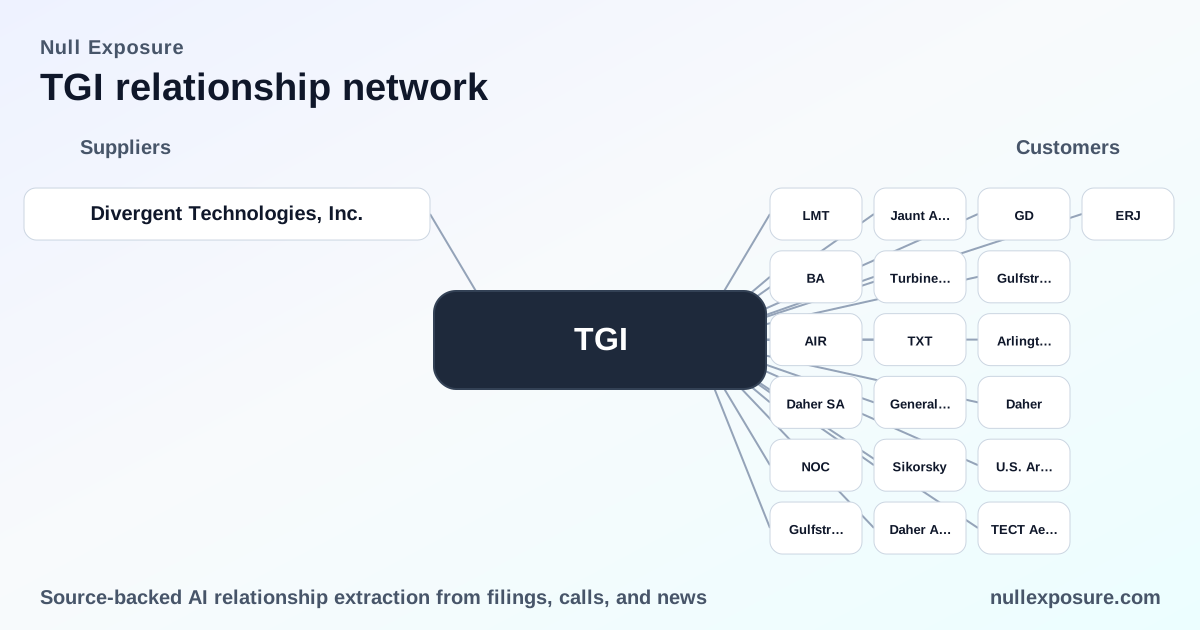
Triumph Group (TGI): Customer Map and Commercial Signals for Investors
Triumph Group operates as a specialized aerospace supplier and aftermarket services provider that monetizes through a mix of OEM production contracts, defense program supply agreements, and commercial aftermarket spares and MRO revenues. Over the past several years the firm has actively reshaped its portfolio—divesting aerostructures and product-support assets while retaining engineering, thermal-systems and critical-component manufacturing capabilities—and now generates value from long-duration prime contracts, aftermarket parts sales and targeted M&A divestitures. For investors, the thesis is clear: Triumph’s revenue engine blends defensible program work with aftermarket cash flows, while strategic asset sales concentrate the company on higher-margin, mission-critical components. Learn more at NullExposure.
How Triumph’s customers read as a portfolio
Below is a relationship-by-relationship readout drawn from public reporting in the dataset. Each entry is a concise plain-English summary with the original source noted.
- Lockheed Martin (LMT) — Triumph described itself as a key supplier on the C-130J program, signaling an ongoing supplier relationship for mission-critical parts. Reported by UPI (FY2018): https://www.upi.com/Defense-News/2018/08/08/Triumph-receives-contract-for-C-130J-parts-fabrication/
- LMT — The same Lockheed relationship appears again in the dataset with identical wording and source, reinforcing the supplier status on the C-130J program. UPI (FY2018): https://www.upi.com/Defense-News/2018/08/08/Triumph-receives-contract-for-C-130J-parts-fabrication/
- AIR — Coverage notes an exclusive commercial distribution arrangement announced in 2026, linked to Triumph’s actuation parts distribution. StockTitan (FY2026): https://www.stocktitan.net/news/AIR/
- AAR Corp. (AIR) — AAR completed acquisition of Triumph’s product support business, reflecting a transfer of MRO/parts activities to AAR and a strategic narrowing of Triumph’s scope. Reported by GovConWire (FY2024): https://www.govconwire.com/articles/aar-closes-purchase-of-triumph-groups-product-support-business
- AAR Corp. — Multiple sources reiterate the sale of the product-support division and the creation of an exclusive distribution partnership for actuation parts beginning Jan. 5, 2026. GovConWire / StockTitan (FY2024–FY2026): https://www.govconwire.com/articles/aar-closes-purchase-of-triumph-groups-product-support-business and https://www.stocktitan.net/news/AIR/
- Airbus — Triumph operates facilities that deliver parts to major airframers, including Airbus, indicating OEM supplier relationships on commercial platforms. Puget Sound / BizJournal reporting (FY2025): https://www.bizjournals.com/seattle/news/2025/02/03/boeing-supplier-triumph-group-acquired.html
- Boeing — Triumph operates facilities supplying parts and provides multi-year MRO and overhaul services for Boeing airlifters and other platforms, under multi-year contracts. SpaceWar (FY2026) and other reporting (FY2018–FY2025): https://www.spacewar.com/reports/Triumph_Group_to_provide_support_services_for_C-17_components_999.html and https://www.stattimes.com/news/triumph-joins-boeing-to-offer-structural-assemblies-for-nextgen-767-freighter
- BA — (Alternate label for Boeing in the dataset) Coverage cites agreements to offer major structural assemblies for 767 and related program work. STAT Times (FY2018): https://www.stattimes.com/news/triumph-joins-boeing-to-offer-structural-assemblies-for-nextgen-767-freighter
- Daher SA — Triumph sold its Stuart, Florida metallic aerostructures production and assembly business to Daher as part of portfolio rationalization. Bloomberg / FlyingMag (FY2022): https://www.bloomberg.com/news/articles/2022-02-02/daher-of-france-poised-to-buy-florida-jet-parts-assembly-site and https://www.flyingmag.com/daher-agrees-to-acquire-aerostructures-business-from-triumph-group/
- Daher Aerospace / Daher Aerospace Inc. — Reports confirm completion of the Stuart facility acquisition, which transferred ~400 employees into Daher’s Industry Division. CompositesWorld / CityBiz (FY2022): https://www.compositesworld.com/news/daher-completes-acquisition-of-triumph-aerostructures-production-facility and https://www.citybiz.co/article/287628/triumph-group-completes-the-sale-of-its-aerostructures-business-to-daher-aerospace/
- Daher — Multiple outlets describe the transaction and its strategic intent to expand Daher’s North American footprint. General Aviation News / FlyingMag (FY2022): https://generalaviationnews.com/2022/07/14/daher-expands-in-north-american/ and https://www.flyingmag.com/daher-makes-play-to-expand-footprint-in-north-american-market/
- Gulfstream — Triumph historically produced components for Gulfstream models (including G650) and sold a G650 wing supply and engineering business to Gulfstream for $52 million in 2020. CompositesWorld / FlightGlobal (FY2021–FY2022): https://www.compositesworld.com/news/arlington-capital-closes-acquisition-of-triumphs-composites-business-forms-qarbon-aerospace and https://www.flightglobal.com/airframers/daher-becomes-boeing-supplier-with-purchase-of-florida-site-from-triumph/149259.article
- Gulfstream Aerospace — Reporting notes Triumph produced piece parts and then transferred some assembly work to Gulfstream facilities in Savannah. Savannah Now (FY2018): https://www.savannahnow.com/story/business/2018/04/04/gulfstream-triumph-relocate-work-to-savannah/12823008007/
- GD — Dataset entries using the ticker GD reference small-volume component work reported at the Stuart facility—about 5% of production—for Gulfstream at the time. FlyingMag (FY2022): https://www.flyingmag.com/daher-makes-play-to-expand-footprint-in-north-american-market/
- Jaunt Air Mobility — Triumph partnered with Jaunt to design and build electric vertical takeoff and landing (eVTOL) aircraft prototypes, demonstrating capability in advanced air mobility. Dallas Innovates (FY2019): https://dallasinnovates.com/triumph-groups-arlington-and-red-oak-facilities-to-engineer-and-manufacture-air-taxis/
- TurbineAero — The company acquired Triumph’s APU piece-part repair product line, illustrating Triumph’s prior presence in APU MRO. Antara News (FY2019): https://en.antaranews.com/news/121852/turbineaero-inc-announces-acquisition-of-apu-piece-part-repair-business-from-the-triumph-group
- Bell — Triumph described engagement on thermal-system solutions with Bell among other defense and helicopter primes. WE-HA community reporting (FY2024): https://we-ha.com/triumph-deal-a-triumph-for-west-hartford-and-connecticut/
- Northrop Grumman — Triumph cited collaborative development of thermal systems with Northrop Grumman and other defense primes. WE-HA (FY2024): https://we-ha.com/triumph-deal-a-triumph-for-west-hartford-and-connecticut/
- General Atomics — Listed among partners for thermal-system development, indicating defense industrial ties beyond the big primes. WE-HA (FY2024): https://we-ha.com/triumph-deal-a-triumph-for-west-hartford-and-connecticut/
- Sikorsky — Cited as a development partner on thermal systems, consistent with helicopter-systems work. WE-HA (FY2024): https://we-ha.com/triumph-deal-a-triumph-for-west-hartford-and-connecticut/
- Moog Inc. (MOG-A) — Moog and Triumph entered a four-year aftermarket inclusion agreement for landing gear and cargo door actuation systems on Boeing 787 platforms in the Asia-Pacific. WorldBusinessOutlook (FY2022): https://worldbusinessoutlook.com/moog-inc-and-triumph-join-hands-on-mro-agreement/
- MOG-A — The dataset lists Moog under the ticker-style label MOG-A for the same aftermarket agreement on 787 actuation systems. WorldBusinessOutlook (FY2022): https://worldbusinessoutlook.com/moog-inc-and-triumph-join-hands-on-mro-agreement/
- U.S. Army — Triumph’s West Hartford business was awarded a five-year contract with the U.S. Army, confirming direct defense contract flows. NBC Connecticut reporting referencing PR Newswire (FY2024): https://www.nbcconnecticut.com/investigations/nbc-ct-responds/aerospace-defense-company-working-to-restore-normal-operations-after-cyber-breach/3349058/
- Arlington Capital Partners — Arlington acquired several Triumph aerostructures sites and later purchased additional facilities, rebranding part of the business as Qarbon Aerospace. PR Newswire / GovConWire (FY2021): https://www.prnewswire.com/news-releases/triumph-group-completes-multisite-aerostructures-divestiture-301287414.html and https://www.govconwire.com/articles/arlington-capital-to-buy-another-aircraft-structure-factory-from-triumph-group
- Tect Aerospace (TECT Aerospace) — Triumph sold a Nashville structures assembly facility to TECT Aerospace for $58 million in 2019, part of a multi-year portfolio cleanup. FlightGlobal (FY2022): https://www.flightglobal.com/airframers/daher-becomes-boeing-supplier-with-purchase-of-florida-site-from-triumph/149259.article
- Embraer (ERJ) — Triumph transferred an Embraer E2 component manufacturing contract to a Korean partner, reflecting program reallocations during the portfolio transition. FlightGlobal (FY2022): https://www.flightglobal.com/airframers/daher-becomes-boeing-supplier-with-purchase-of-florida-site-from-triumph/149259.article
- ERJ — Dataset duplicates the Embraer label under the ERJ ticker-style entry for the same contract transfer. FlightGlobal (FY2022): https://www.flightglobal.com/airframers/daher-becomes-boeing-supplier-with-purchase-of-florida-site-from-triumph/149259.article
Strategic operating-model signals investors should read into the data
- Contracting posture: Triumph’s commercial activity is a mix of long-duration prime OEM and defense contracts plus aftermarket agreements; the company structures revenue around multi-year programs and MRO/service relationships. This creates predictable backlog characteristics with periodic spikes from parts/spare cycles.
- Customer concentration: Public reporting repeatedly identifies Boeing and major defense primes (Lockheed, Northrop, Sikorsky, Bell) as material customers—a concentrated buyer base that drives revenue volatility tied to platform cycles.
- Criticality of product set: Triumph supplies mission-critical aerostructures, actuation systems and thermal systems—components that command engineering specialization and sustain aftermarket demand across fleet life cycles.
- Portfolio maturity and capital discipline: The dataset documents multiple divestitures (aerostructures sites, product-support business) and exclusive aftermarket distribution arrangements, signaling active repositioning from broad manufacturing into higher-return aftermarket and focused component businesses.
Investment implications — opportunities and risks
- Opportunity: Triumph’s refocus on aftermarket and high-value systems positions the company to capture recurring spares and MRO margins, supported by long-term prime relationships. Aftermarket revenue growth and distribution agreements with players like AAR and Moog are near-term cash-flow catalysts.
- Risk: Concentration with major airframers and defense primes creates exposure to platform-specific production cadence and defense budget cycles; divestitures reduce diversification but improve margin profile. Program awards and contract renewals with Boeing, Lockheed and the U.S. Army are primary operational levers.
For an in-depth operational view and to track ongoing customer relationships, visit NullExposure.
Summary: Triumph’s customer set demonstrates a deliberate trade from wide-ranging aerostructures manufacturing toward targeted, mission-critical component supply and aftermarket monetization—a repositioning that supports higher-margin recurring revenue while concentrating counterparty exposure among a small group of large primes.