Treasure Global (TGL): customer relationships that drive volatility and optionality
Treasure Global Inc. operates a dual fintech and software services model centered on its ZCITY platform and customized software contracts; it monetizes primarily through usage-based commissions on transactions (reported commission bands of 1–10%), e‑commerce operations, and fee-based advisory and wallet distribution. For investors, the crucial dynamic is that revenue is closely tied to transaction volumes and a small set of high-balance receivables, creating both rapid upside when volumes scale and concentrated counterparty risk if those flows change. For deeper relationship analytics and benchmarking, see https://nullexposure.com/.
How TGL’s customer model actually works in practice
TGL runs two reportable segments: (i) payment processing and e‑commerce through the ZCITY platform, and (ii) customized software development services. The company's public filings show a usage-based contracting posture—commissions tied to purchases on ZCITY—and short-term termination mechanics (agreements that can be ended on 30 days’ notice). Those structural features produce a business that is highly variable with the underlying merchant and consumer activity level, which benefits upside capture but limits revenue predictability.
Company filings for the years ended June 30, 2024 and June 30, 2025 provide the factual basis for these points: the commission range and the 30‑day termination clause are disclosed in customer‑contract language, while segment definitions are explicit in management’s segment reporting.
Quick access: analyze TGL’s relationship map and filings at https://nullexposure.com/ for deal‑level context.
Contracts, geography and concentration — constraints that matter to valuation
Several company‑level signals from public disclosures shape how to model TGL’s revenue and risk profile:
- Contracting posture: Contracts are largely usage‑based (commissions) and short‑term, which reduces long‑run revenue stickiness but aligns fees to platform volume.
- Geographic focus: Operations and reported revenue items point to a strong APAC footprint (Malaysia figures in filings) with some North American exposure noted in receivable items.
- Concentration dynamics: The company’s historical disclosures are mixed: for the year ended June 30, 2024, no single customer represented ≥10% of revenues, but the year ended June 30, 2025 shows one customer accounting for ~63.5% of revenues and ~92.3% of accounts‑receivable balance, a shift that indicates recent and material concentration. Treat this as a company‑level signal of elevated counterparty risk and potential cash‑flow sensitivity.
- Role mix and segments: TGL acts both as a seller/merchant platform operator (allowing merchants on ZCITY) and as a service provider through custom software development, supporting diversified revenue types but with distinct margin and working capital profiles.
These constraints should be integrated into any discounted cash‑flow or scenario analysis: usage-based, short-term contracts increase topline elasticity; concentration increases discount rates and requires stress testing on the principal customer’s payment behavior.
Publicly reported customer relationships (what’s on record)
Below are the relationships surfaced in recent public reporting. Each relationship is summarized in plain English with a source.
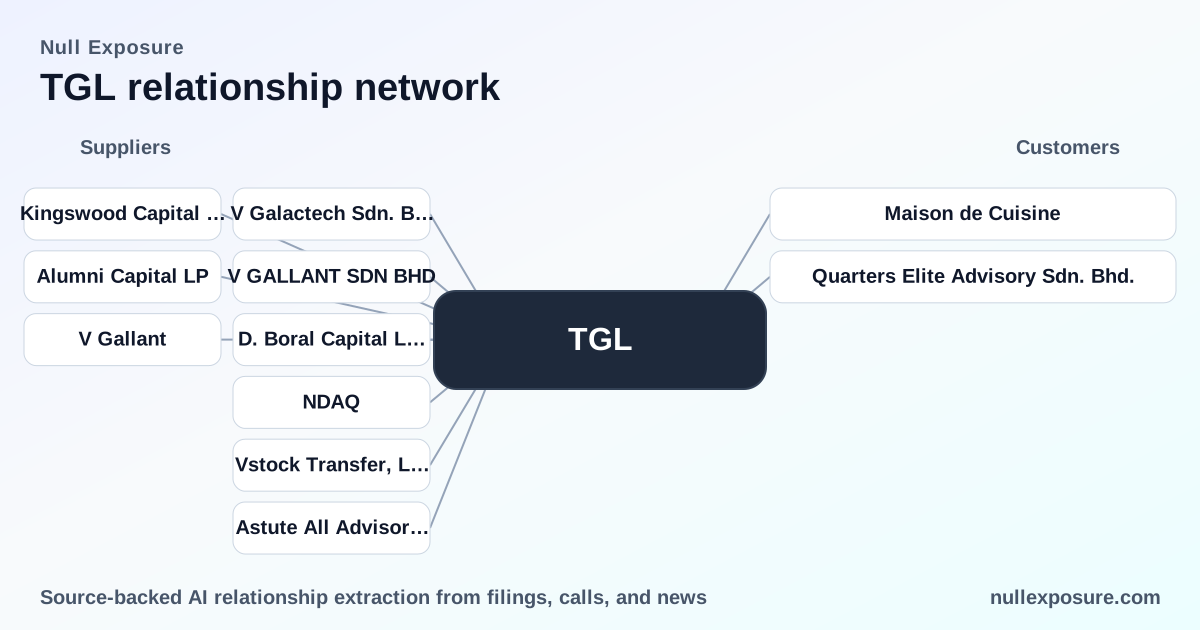
Maison de Cuisine — buyer of Tadaa Ventures / Bowlcrafted
Treasure Global entered into a Share Sale Agreement to sell 100% of Tadaa Ventures, including its Bowlcrafted subsidiary, to Maison de Cuisine, a corporate disposition that reduces TGL’s merchant footprint and transfers operational risk for those assets. This was reported in a TradingView news item on March 10, 2026. (TradingView, March 10, 2026).
Quarters Elite Advisory Sdn. Bhd. — distribution partner for OXI wallet and advisory services
Quarters Elite’s network of over 350 professional consultants serving nearly 3,000 clients is positioned as a distribution channel for TGL’s OXI wallet and future digital asset / RWA products, supporting recurring advisory and wealth‑management fees and potentially amplifying fee‑based revenue streams. This arrangement was described in a company press release published on The Globe and Mail on March 10, 2026. (The Globe and Mail press release, March 10, 2026).
What these links imply about operational maturity and strategic direction
The Maison de Cuisine divestiture signals portfolio pruning and focus on core fintech capabilities, shifting merchant exposures off TGL’s balance sheet. The Quarters Elite relationship signals commercial scaling via third‑party distribution, consistent with a strategy to monetize wallets and advisory services without proportionate headcount growth.
Together these moves: (a) reduce operational complexity from merchant ownership, and (b) expand low‑capex distribution for higher recurring fees—a constructive trade if partner economics are favorable and receivable risk is controlled.
Key investment risks and returns (practical checklist)
- Concentration risk: One unnamed customer represented ~63.5% of revenues in FY2025 and ~92.3% of AR balance—this creates acute cash‑flow and counterparty concentration exposure; model stress scenarios accordingly (company filing, FY2025).
- Revenue volatility from contract structure: Usage‑based, short‑term contracts increase sensitivity to transaction volume; upside is strong in volume expansion, but downside is abrupt if merchant activity declines (company filing excerpts).
- Geographic exposure: Heavy APAC revenue lines (Malaysia figures in filings) focus regional macro and regulatory risk on Southeast Asia.
- Commercial scaling potential: Distribution partnerships like Quarters Elite can generate recurring advisory fees and wallet adoption without heavy CAPEX, offering asymmetric upside if adoption scales.
A brief action checklist for investors: monitor the identity and payment health of large customers, watch receivables aging and concentration metrics each quarter, and track adoption metrics for OXI wallet distribution through partners.
Bottom line — what to watch next
Treasure Global runs a high‑leverage, transaction‑driven business with structural levers that favor rapid scaling but produce meaningful concentration and working‑capital risk. Key near‑term signals are quarterly shifts in customer concentration, receivables aging tied to large counterparties, and uptake metrics from distribution partners such as Quarters Elite. For deal‑level diligence and ongoing monitoring of TGL’s customer relationships, visit https://nullexposure.com/ for structured relationship intelligence and filings linkage.
Bold takeaway: TGL’s model offers asymmetric upside through usage‑based economics and distribution partnerships, but investors must price a material counterparty concentration premium until receivables and client diversity normalize.