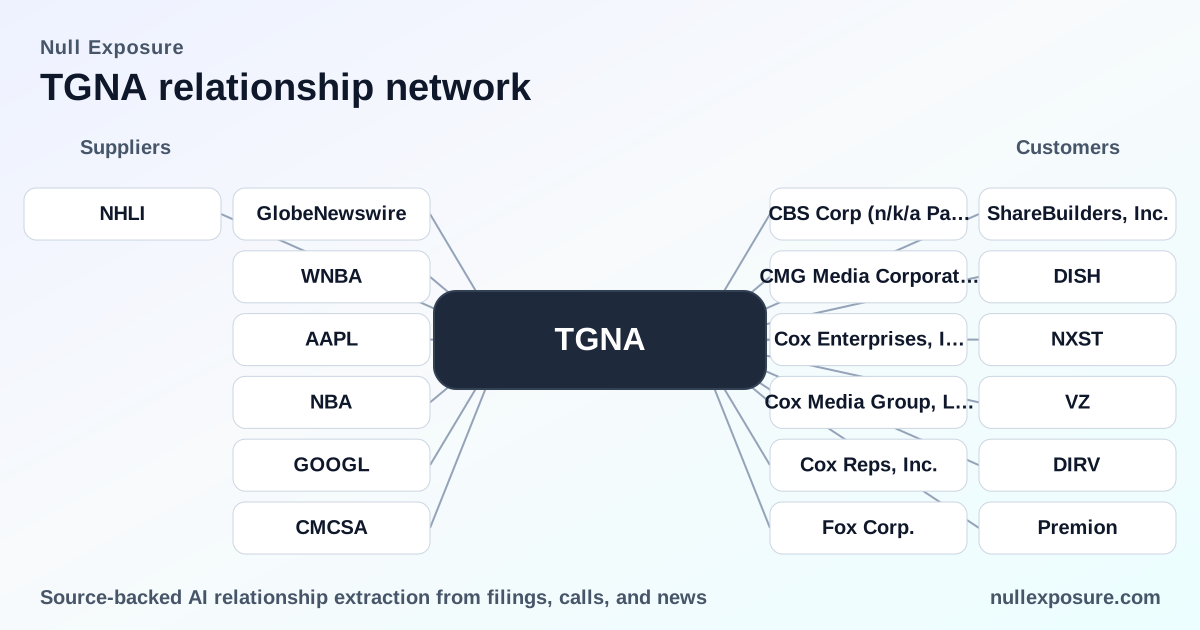
TEGNA (TGNA) — Customer relationships and counterparty map for investors
TEGNA operates a national portfolio of local television stations and digital advertising services and monetizes through two dominant channels: subscription revenue from retransmission agreements with MVPDs and vMVPDs and advertising & marketing services (AMS), including political advertising and digital products such as Premion. Subscription fees are contractually recurring and usage‑based licensed rights, while AMS and political sales are short‑term, campaign‑driven revenue streams. For a consolidated view of TEGNA counterparties and disclosures, visit https://nullexposure.com/.
How TEGNA’s customer posture drives cash flow and risk
TEGNA’s operating model is built on multi-year retransmission contracts that deliver predictable, subscription-like cash flow, alongside a higher‑turnover advertising business that amplifies revenue volatility by election cycle and advertising market conditions. The company’s disclosures establish several structural characteristics that investors should treat as core signals:
- Contracting posture: Retransmission agreements with MVPDs/vMVPDs are multi‑year licensing arrangements recognized on a usage basis, giving TEGNA steady subscription revenue; advertising and political buys are short‑term, often pre‑paid.
- Concentration and criticality: One customer aggregated more than 10% of consolidated revenue in 2024 ($386.9 million), which is material to top‑line stability.
- Revenue mix and maturity: Subscription (retransmission) revenue constituted roughly half of total revenues in recent years, while AMS and political sales account for the remainder and are sensitive to election cycles and ad market dynamics.
- Geography and reach: TEGNA sells local and national ad packages and runs CTV campaigns across all U.S. television markets, making its commercial footprint nationwide but U.S.-centric.
These characteristics should guide due diligence: retransmission contract renewals and carriage disputes are primary operational risks, while AMS performance and reseller partnerships (notably around Premion) are primary growth levers.
For investors seeking the full mapping of TEGNA counterparties and source documents, see https://nullexposure.com/.
Legal settlements and defendants named in the 2024 Form 10‑K
TGNA’s 2024 Form 10‑K discloses several settlements and releases that name media companies as settling defendants. Below are the relationships identified and the company’s statements.
CMG Media Corporation
CMG Media Corporation was listed among settling defendants that collectively agreed to contribute to a $48 million payment in exchange for releases of the plaintiffs’ claims, while expressly denying liability or wrongdoing. Source: TEGNA Form 10‑K FY2024 (document filed for the year ended December 31, 2024).
Cox Enterprises, Inc.
Cox Enterprises, Inc. was identified as a settling defendant in the same collective resolution; the company agreed to participate in the $48 million payment while denying liability. Source: TEGNA Form 10‑K FY2024.
Cox Media Group, LLC
Cox Media Group, LLC appears alongside other Cox entities as a participating settling defendant in the aggregate $48 million resolution, with the same denial of wrongdoing recorded by TEGNA. Source: TEGNA Form 10‑K FY2024.
Cox Reps, Inc.
Cox Reps, Inc. is named as a participant in the collective settlement that provided releases in exchange for aggregate payments totaling $48 million; TEGNA reports the defendants denied liability. Source: TEGNA Form 10‑K FY2024.
CBS Corp (n/k/a Paramount Global)
CBS Corp., now identified in filings as Paramount Global, is listed among the settling defendants that collectively agreed to pay part of the $48 million settlement, with an explicit denial of liability noted in the 10‑K. Source: TEGNA Form 10‑K FY2024.
Fox Corp.
Fox Corp. is included among the defendants who agreed to the collective payment of $48 million to release alleged claims, with TEGNA documenting their denial of liability in the 10‑K. Source: TEGNA Form 10‑K FY2024.
ShareBuilders, Inc.
ShareBuilders, Inc. prevailed on a motion to dismiss, but because the court dismissed the claims without prejudice, ShareBuilders entered into a zero‑dollar settlement to ensure plaintiffs do not re‑file the claims in the future—an outcome TEGNA documents in the 2024 Form 10‑K. Source: TEGNA Form 10‑K FY2024.
(Collectively, the 10‑K’s settlement disclosures identify multiple media and distribution entities as nominal settling defendants; TEGNA records the financial terms and denials of liability in the FY2024 filing.)
Carriage disputes and MVPD customer dynamics
TEGNA’s subscription revenue depends on carriage agreements with pay‑TV platforms; public reporting highlights recent disputes that have led to channel blackouts and negotiation pressure.
Verizon Fios (VZ)
Verizon Fios is listed among MVPDs that have had carriage disputes with broadcasters over retransmission fees, with past incidents where channels owned by broadcasters were dropped for extended periods. TheDesk reported on these disputes in early 2026, citing tension between broadcasters and pay‑TV operators. Source: TheDesk, January 2026.
Dish Network (DISH)
Dish Network is similarly identified as a pay‑TV operator that has dropped broadcaster channels amid retransmission fee disagreements, reflecting the bilateral negotiation leverage dynamics that affect TEGNA’s subscription revenues. Source: TheDesk, January 2026.
DIRECTV (DIRV)
DIRECTV has been involved in past carriage disputes that resulted in channel blackouts; these events are cited as part of the broader negotiation landscape for retransmission consent and fees. Source: TheDesk, January 2026.
Strategic counterparty developments: the Nexstar acquisition and Premion transition
TEGNA’s strategic outlook is materially affected by its pending sale and by changes in its digital ad resale partnerships.
Nexstar Media Group / NXST
Nexstar Media Group is the announced buyer in a proposed $6.2 billion acquisition of TEGNA, which remains conditional on regulatory approvals and potential FCC policy changes. Media coverage in March 2026 notes the transaction remains on track for the second half of 2026, and commentary around potential FCC action to lift the local TV station cap would materially facilitate the deal. TVNewsCheck and other coverage in March 2026 document regulatory momentum and political endorsements affecting the transaction. Sources: TVNewsCheck (March 2026) and Intellectia.ai reporting (March 2026).
Premion
Premion, TEGNA’s connected‑TV and digital reseller platform, is a component of AMS revenue that has experienced temporary headwinds related to the exit of a major exclusive reseller partner, which reduced Premion‑related revenue in the period cited. QuiverQuant’s reporting on TEGNA’s 2025 results notes AMS revenue grew but Premion revenue was partially offset by that reseller exit. Source: QuiverQuant summary of TEGNA financial results (reported March 2026).
Investment implications and the takeaway for operators
- Revenue stability rests on retransmission renewals and MVPD relationships. Long‑term, usage‑based licensing contracts underpin nearly half of revenue, so monitoring carriage negotiations with MVPDs is the primary enterprise risk.
- Advertising volatility is structural. AMS and political ad lines are short‑term and election‑sensitive; management must successfully replace lost reseller partnerships to restore Premion momentum.
- Concentration risk is real. One customer contributed more than 10% of consolidated revenue in 2024, creating single‑counterparty exposure that deserves scrutiny in contract renewals and collections.
- Legal and transactional events are operational headlines. The 10‑K lists several media defendants in settlement activity and the Nexstar acquisition progress is a strategic inflection point that will reshape counterparties and distribution economics upon close.
For decision makers building exposure models or preparing integration playbooks, the crucial data points are contract lengths and renewal timelines for retransmission agreements, the identity and size of top AMS advertisers and resellers, and the regulatory path for the Nexstar acquisition. For a dashboarded, source‑linked view of these counterparties and documents, visit https://nullexposure.com/.