Thor Industries (THO): Customer Map and What It Means for Revenue and Risk
Thor Industries designs, manufactures and sells recreational vehicles and related parts through a wholesale dealer network and company service channels; it monetizes primarily through vehicle sales to independent dealers, parts and accessories, and short‑term service and repair revenues. Revenue is concentrated in North America and Europe, and dealer sales—not long-term contracts—drive cash flow and margin visibility. For rapid access to relationship intelligence, visit https://nullexposure.com/.
The commercial model in one paragraph
Thor operates as a manufacturing-led wholesaler: the company builds RVs in the U.S. and Europe and sells those units to independent, non‑franchise dealers across the U.S., Canada and Europe, while capturing incremental margin from parts and repair activity. Service and repair revenues are recognized on completion because these contracts are short‑term in nature, producing a variable, transaction-driven revenue stream rather than recurring, long‑dated contracted income.
Key operating signals investors should incorporate
- Contracting posture — short term. Service and repair contracts are recognized when completed, which limits recurring revenue predictability and concentrates revenue on vehicle cycles and dealer orders (FY2025 10‑K).
- Geographic exposure — North America and EMEA. Approximately 32% of consolidated net sales in FY2025 were transacted in a currency other than the U.S. dollar, with Euro exposure noted as most material, reflecting meaningful European sales and FX sensitivity (FY2025 10‑K).
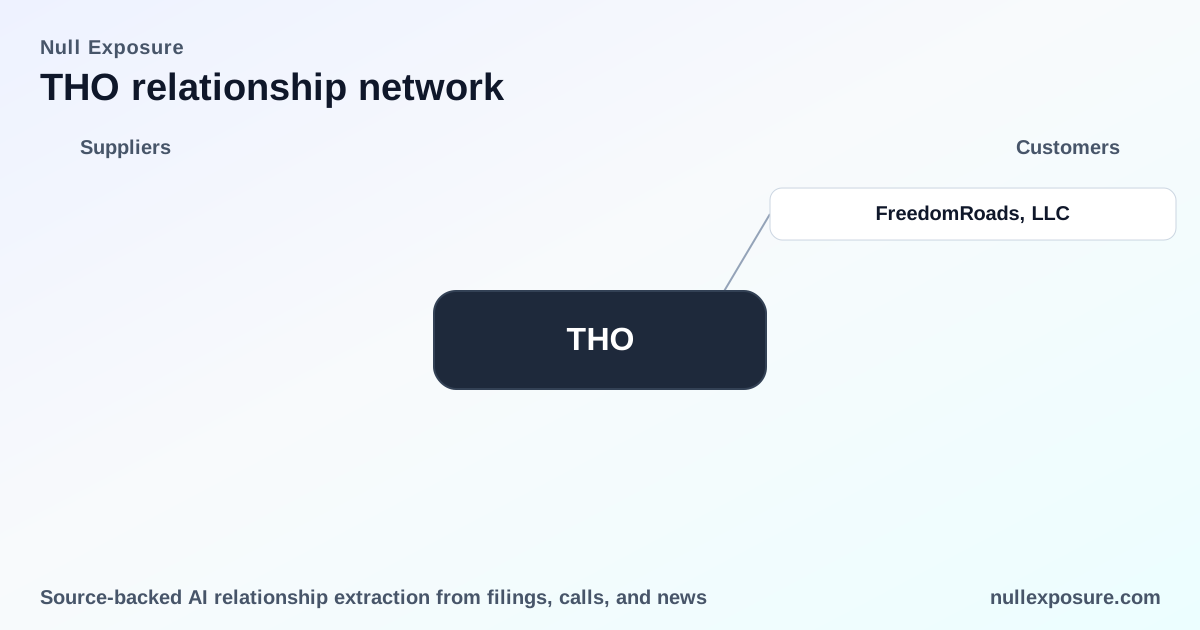
- Concentration risk — material single dealer exposure. One dealer relationship is material to sales (see FreedomRoads below).
- Relationship posture — seller to dealer network and active engagement. Thor’s business model depends on active, ongoing wholesale relationships with independent dealers and large retail channel partners.
What each documented customer relationship contributes
FreedomRoads, LLC
FreedomRoads is a major dealer for Thor: FreedomRoads accounted for approximately 14.0% of Thor’s consolidated net sales in fiscal 2025, and represented about the same share in 2024 and 13% in 2023, making this single-dealer exposure a clear concentration risk on the P&L (FY2025 10‑K).
Source: Thor Industries FY2025 Form 10‑K filing (document covering fiscal year ended July 2025).
CWH — earnings call mention (Q4 2025)
Camping World (CWH) referenced collaboration with manufacturing partners, including Thor, to streamline parts reordering and reduce repair cycle time, indicating an operational partnership on aftermarket logistics that links Thor’s parts flow to retail service outcomes (CWH Q4 2025 earnings call).
Source: Camping World Q4 2025 earnings call transcript (reference to collaboration with Thor).
Camping World Holdings — Investing.com article (analyst note 1)
An analyst report cited a new channel inventory management approach at Camping World as a potential headwind to Thor’s shipments, signaling that retail inventory strategy at large channel partners can compress near‑term orders and shipment volume (Investing.com, May 2026).
Source: news article on Investing.com noting that Camping World’s channel inventory management could pressure shipments (published May 2026).
CWH — Investing.com article (BMO note)
A separate market note similarly flagged that Camping World’s revised inventory approach is potentially pressuring Thor shipments, reinforcing that the same retail channel dynamics have been observed by multiple sell‑side analysts and represent a common short‑term demand risk (Investing.com, May 2026).
Source: Investing.com article reporting BMO’s commentary on Camping World’s inventory management and impact on Thor (published May 2026).
How these relationships shape risk and upside
- Concentration creates a leverage point. With FreedomRoads representing roughly 14% of sales, changes in that dealer’s ordering cadence or financial condition will meaningfully move consolidated revenues; this is a single‑counterparty exposure that investors must monitor as a top‑line risk.
- Channel dynamics can swing shipments quickly. Multiple market notes and a direct retailer mention signal that inventory management at large channel partners—especially Camping World—translates into shipment variability, creating near‑term volatility in production scheduling and working capital.
- Parts and service are operational levers, but short‑term. Parts collaboration with Camping World suggests operational upside in aftersales efficiency, but the underlying contracts are short‑term, meaning margin gains must be captured continuously rather than booked as recurring revenue.
- FX and geography matter. With roughly one third of sales transacted in non‑USD currencies and Euro exposure singled out, currency fluctuations and European demand cycles are important drivers of consolidated sales and margin.
Practical signals operators and investors should monitor now
- Dealer order books and published dealer inventories, with special focus on FreedomRoads and major retail channels like Camping World.
- Quarterly shipment levels versus dealer inventory changes—watch whether reduced retail ordering is a structural shift or temporary inventory digestion.
- Parts reorder cadence and aftermarket service metrics as indicators of durable demand vs. one‑time order patterns.
- FX movement in EUR/USD and reported European end‑market trends.
- Quarterly disclosures for any change in customer concentration or material dealer relationships in the 10‑K/10‑Q cycle.
For ongoing, structured tracking of how these dealer and retailer relationships evolve and what that means for revenue risk, see https://nullexposure.com/.
Bottom line: what this says about the investment case
Thor’s topline is heavily dealer‑driven; a small set of large relationships and major retail channels can swing shipments and working capital rapidly. The company’s operational strength—scale manufacturing across North America and Europe and aftermarket engagement—creates durable competitive position, but investors must underwrite concentration risk (FreedomRoads) and channel inventory dynamics (Camping World) when valuing medium‑term earnings power. Monitor dealer order flows, retail inventory policies, and FX trends as the primary near‑term value drivers.