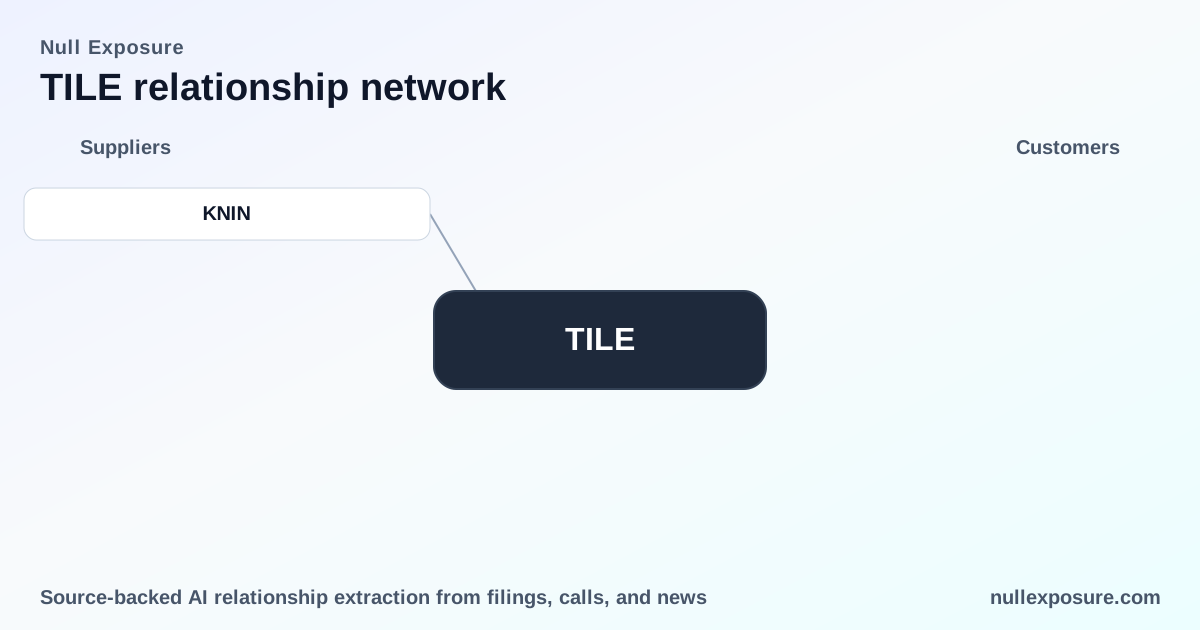
Interface (TILE) — Customer Relationships and Operational Implications for Investors
Thesis: Interface monetizes a global portfolio of modular flooring and related installation services by selling carpet tile, resilient flooring (including luxury vinyl tile), and rubber flooring through direct and indirect channels to large enterprise accounts and specifiers; the business converts project-based installation work into near-term revenue and supplements product sales with turnkey services under InterfaceSERVICES. Investors should value TILE as a product-led industrial with a service layer that stabilizes bid-to-bill cycles, where project cadence, large-account exposure, and global footprint drive both upside and cyclical risk.
If you want a consolidated view of Interface’s customer relationships and how they affect commercial risk, see more at https://nullexposure.com/.
Market context and scale Interface reported roughly $1.387 billion in trailing twelve‑month revenue with EBITDA of about $203.7 million as of the latest quarter (2025-12-31), making it a mid‑cap industrial within furnishings and fixtures. The business mixes product margins with lower‑margin, higher‑service deployment through installers and contractors; the financials show operating leverage but also sensitivity to project timing given the short-duration nature of many installations.
How Interface sells, and why that matters to revenue quality Interface’s commercial model is dual‑track. It sells physical flooring products as its core offering while operating a services franchise that handles installation, replacement, and project management. According to the company’s filings, approximately 97% of revenue in 2024 came from modular carpet, resilient flooring, rubber flooring and related products, and the company “provides specialized carpet replacement, installation and maintenance services.” The firm distributes through (1) direct sales to end users and (2) indirect channels — independent contractors, installers and distributors — with a strategic emphasis on major national and multinational accounts and specifying professionals such as architects and designers.
Key operating constraints and what they imply
- Contracting posture: Project‑level, short‑term contracts dominate. The company explicitly states that over 85% of installation projects complete in less than five days, and most large installation customers engage on a project‑by‑project basis. This structure produces fast revenue recognition but increases exposure to quarter‑to‑quarter variability and demand shifts in commercial construction and office refits.
- Customer concentration and purchasing profile: Interface targets large enterprise buyers and national accounts, and focuses on relationships with specifiers who influence long‑run product selection. That strategy lowers customer acquisition cost over time but concentrates exposure to a smaller set of high‑value accounts.
- Geographic diversification: Interface is a global operator, selling across the Americas, Europe and Asia‑Pacific, which moderates region‑specific downturns but raises complexity in supply chain and local contracting.
- Materiality and core reliance: The company is product‑centric, with core flooring products representing the overwhelming majority of revenue; services act as both a margin buffer and strategic stickiness through turnkey project delivery.
- Relationship maturity and role: Interface’s commercial ties are mature—the company builds lasting relationships with specifiers and accounts—and Interface functions both as seller of goods and a service provider through its InterfaceSERVICES business line. That dual role increases customer switching costs but requires operational coordination across manufacturing and installation teams.
How those constraints shape investment considerations Because customer engagements are high‑value but largely short‑duration and project‑based, working capital and order timing are primary drivers of quarterly performance. The emphasis on large enterprise accounts amplifies concentration risk, although mature relationships and specifying behavior generate recurring demand over cycles. Global reach improves addressable market but increases exposure to FX and regional construction cycles. Overall, Interface’s contracting posture suggests a high turnover, low recurring subscription-style revenue mix, with services smoothing but not eliminating cyclicality.
Customer‑level intelligence: the universe of observed relationships The data pulled against the customer scope returned a single match; it requires careful reading to avoid confusion.
Life360 (LIF) — single mention, not an Interface customer
- A news item indexed on March 10, 2026 references Life360 (ticker LIF) and notes the company “runs a family safety and location‑sharing mobile app and sells Tile tracking devices, with subscriptions as its core revenue engine.” This mention concerns consumer tracking hardware and subscription revenue and does not describe a customer relationship with Interface’s flooring business. (Source: TS2.Tech news coverage, March 10, 2026.)
That single result is a name collision rather than an on‑file buyer: the search hit references “Tile” as a tracking product rather than Interface’s carpet tile business. Investors reviewing Interface customer risk should not treat the Life360 mention as evidence of a commercial link to Interface.
Complete relationship list (as returned)
- LIF / Life360 — The indexed article describes Life360’s sale of Tile tracking devices and subscription services; the content does not connect to Interface’s customers or distribution channels. (TS2.Tech, 2026-03-10.)
Commercial risk checklist for diligences
- Revenue concentration in product sales: core flooring products account for the majority of top line, so product price/mix and volume swings are primary P&L levers. (Company filing commentary, 2024.)
- Short‑term project contracting increases quarterly volatility despite long‑standing account relationships; expect lumpiness in bookings and receivables. (Company filing commentary on installation duration.)
- Large‑enterprise focus reduces breadth—winning or losing a few national accounts materially affects demand for certain regions or product lines.
- Services add stickiness but compress margins; InterfaceSERVICES is strategically important for maintaining client relationships during downturns but is not a substitute for product revenue.
- Global footprint is both a diversifier and complexity driver—logistics, FX and regional construction cycles will matter to execution.
Actionable investor takeaways
- Value TILE as an industrial growth‑through‑penetration story with cyclical exposure: strong margins on product sales are offset by project timing volatility and concentration in large accounts.
- Monitor order backlog, large account renewals, and installation throughput as leading indicators of near‑term earnings, and track regional revenue splits for signs of geographic stress.
- For a deeper operational view and consolidated relationship signals across customers, consider reviewing enhanced exposure mapping at https://nullexposure.com/.
Conclusion Interface’s customer profile is built on mature, enterprise relationships and short‑duration project contracting, with a clear split between product revenue and services that together determine near‑term earnings volatility and long‑term stickiness. The single indexed “customer” match in publicly accessible results is a false positive tied to a different “Tile” brand, so investor diligence should rely on company filings, order books and account renewal signals rather than that external reference.