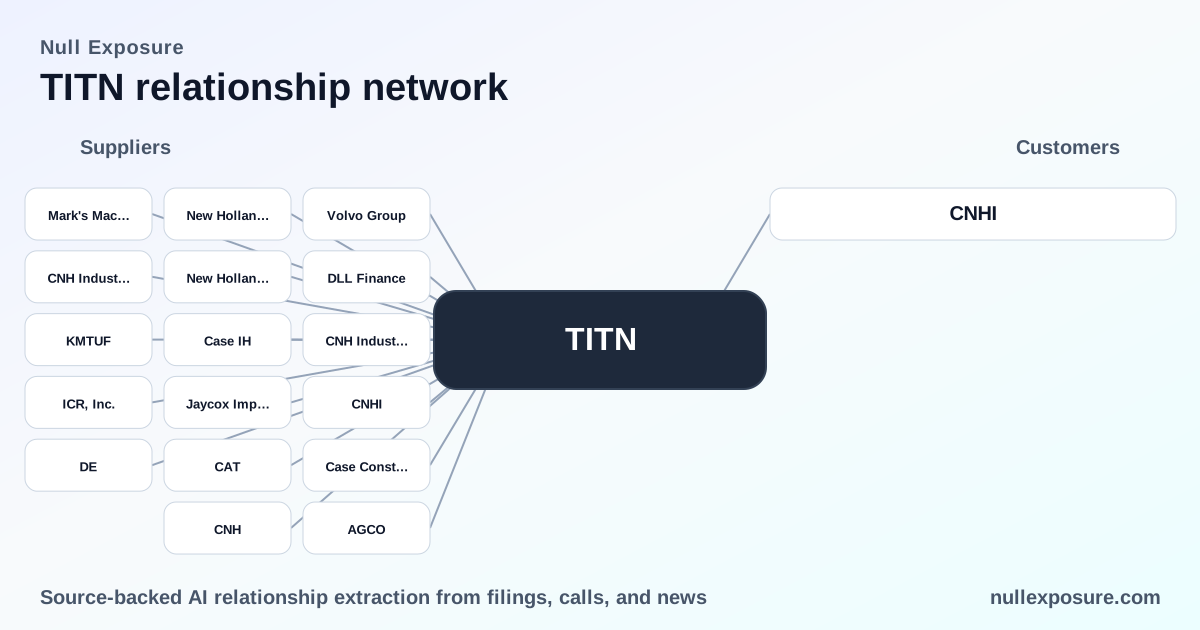
Titan Machinery (TITN): Customer Relationships That Drive Revenue and Service Lead Gen
Titan Machinery operates a vertically integrated retail and service platform for agricultural and construction equipment, monetizing through the sale of new and used equipment, parts and service, and short-term equipment rentals. The company’s customer relationships span small family farms, large enterprise operators, construction contractors and public-sector entities across North America, Europe and Australia, with service and warranty work creating recurring revenue and parts margins that stabilize cyclical new-equipment sales. For a deeper look at how these customer ties affect operational risk and upside, visit https://nullexposure.com/.
Why customer relationships are the core revenue lever
Titan’s business mixes transactional equipment sales with service-heavy, recurring revenue streams. Sales of new and used machines create large, lumpy top-line events, while parts, maintenance and rental contracts convert installed equipment into a longer-duration revenue funnel. The company discloses that it provides warranty and non-warranty repair services and recognizes service and parts revenue over time, which makes aftermarket economics a material driver of margins.
The firm’s geographic footprint—North America, Europe and Australia—creates diversification but also raises operating complexity, particularly around inventory, warranty obligations and dealer-level coordination.
What the record shows: every cited customer relationship
Titan’s public commentary and recent earnings call transcripts identify two related customer counterparty references in our source set. Both originate from an earnings call transcript published March 10, 2026.
-
CNH dealers — Titan said that during a recent integration process it divested certain stores outside its core footprint and sold them to local CNH dealers in those areas, signaling a tactical retreat from non-core locations and coordination with local CNH dealer networks. According to the Q3 FY2026 earnings call transcript published on InsiderMonkey (March 10, 2026), those disposals were part of integration activity. (InsiderMonkey earnings call transcript, March 10, 2026: https://www.insidermonkey.com/blog/titan-machinery-inc-nasdaqtitn-q3-2026-earnings-call-transcript-1651215/)
-
CNHI — The company’s comments also reference the CNH Industrial family of brands indirectly through the same integration narrative; Titan sells CNH-brand equipment and, where stores were outside its strategic footprint, transferred locations to local CNH-affiliated dealers as part of post-acquisition reshaping. This was disclosed in the same Q3 FY2026 call transcript. (InsiderMonkey earnings call transcript, March 10, 2026: https://www.insidermonkey.com/blog/titan-machinery-inc-nasdaqtitn-q3-2026-earnings-call-transcript-1651215/)
These entries are short and specific: both point to discrete store divestitures to CNH-aligned dealers during integration rather than to a long-term strategic alliance or exclusive distribution arrangement.
How those dealings affect operating posture and contract characteristics
Company-level disclosures and excerpts produce a coherent operational profile:
-
Contracting posture: largely short-term in rentals, transactional in sales. Titan rents equipment “on a short-term basis for periods ranging from a few days to a few months,” which makes rental revenue elastic to utilization and seasonality and reduces long-term financing exposure for the firm relative to long-term lease models.
-
Customer heterogeneity reduces single-point concentration but increases servicing complexity. Titan serves small single-machine owners, large agricultural enterprises and a roster of construction and public-works entities, which spreads counterparty risk across segments but requires differentiated sales, financing and aftermarket approaches.
-
Geographic diversification is real and intentional. The company operates in North America, EMEA and APAC (specifically Australia), which provides growth avenues but imposes foreign-operating and supply-chain complexity.
-
Role duality: seller and service provider. Titan is both distributor for manufacturers (including CNH Industrial brands) and an in-market service organization providing warranty repairs, parts and maintenance—making aftermarket operations strategically critical to margins and customer retention.
-
Relationship maturity is active and transactional. Titan describes its stores as one-stop solutions—sales, parts, service and rental—indicating ongoing, operationally intensive relationships rather than passive, low-touch customer accounts.
These signals together characterize Titan as a dealer/operator that monetizes installed equipment via parts and service while depending on short-term rentals and periodic new-equipment cycles for growth.
Investor implications: where value and risk concentrate
-
High aftermarket leverage. The business model’s profitability is heavily contingent on service and parts margins; these are typically higher-margin and recurring, and therefore critical to sustaining profitability during equipment-sales troughs.
-
Operational execution matters more than product exclusivity. Divesting stores to local CNH dealers suggests Titan is optimizing footprint and focusing on profitable, core locations; this reduces capital drag but entrusts market share in peripheral areas to third parties. That tactical move supports margin and working-capital programs while ceding some local presence.
-
Seasonality and utilization sensitivity. Short-term rentals and the agricultural cycle make revenue lumpy and sensitive to utilization rates, commodity prices and manager-level inventory decisions.
-
Geographic complexity is a two-edged sword. International operations give revenue diversification but also expose Titan to FX, local demand cycles, and different dealer/brand dynamics—factors institutional holders should stress-test against macro scenarios.
-
Counterparty mix lowers concentration risk but raises service cost. Serving both small operators and large enterprises reduces dependence on a few big customers, but maintaining distributed parts inventory and skilled service technicians is capital and labor intensive.
Tactical takeaways for investors and operators
-
Operational focus wins: Investors should prioritize evidence of improved same-store margins and parts/service growth as the best near-term signal of durable margin improvement.
-
Watch integration outcomes: The divestitures to CNH dealers are a signal that management is trimming non-core assets; monitor follow-through on capital redeployment and same-store performance after the integration.
-
Service capacity is the lever: For operators, investments in technician productivity and parts-logistics will yield outsized returns relative to marginal new-equipment sales.
For readers who want a structured, comparable analysis of dealer and customer relationships across industrial distributors, explore our analytical tools at https://nullexposure.com/.
Bottom line
Titan’s commercial model is service-centric distribution: equipment sales generate scale, but aftermarket parts, maintenance and short-term rentals drive margin stability and customer retention. Management’s recent store divestitures to local CNH dealers reflect a strategic concentration on core, profitable locations—an operational choice that reduces geographic overreach while preserving aftermarket revenue streams where Titan is strongest. Investors should weight aftermarket execution and integration discipline more heavily than cyclical equipment order books when judging near-term valuation upside.