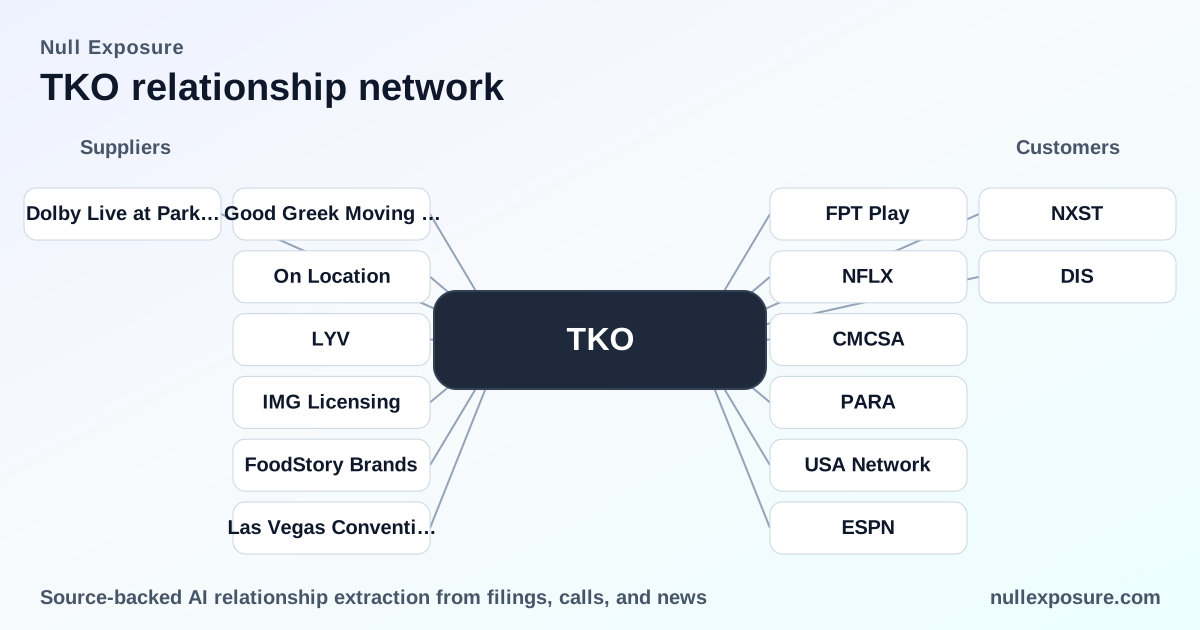
How TKO Monetizes a Global Sports & Entertainment Engine
TKO Group Holdings owns the UFC and WWE franchises and monetizes those assets through a mix of multi‑year media rights, direct‑to‑consumer subscriptions, live event ticketing, sponsorships, and consumer licensing. The company sells large, long‑dated distribution agreements to major broadcasters and streamers, captures subscription and pay‑per‑view revenue directly from fans, and licenses its brands for consumer products and promotional tie‑ins — a model built to convert intellectual property into predictable contractual cash flows and high‑margin licensing revenue. For a concise data feed and monitoring of these counterparty relationships visit https://nullexposure.com/.
How the contracts and footprints shape revenue quality
TKO runs an asset‑heavy IP model but with many asset‑light revenue streams. The company recognizes revenue from subscriptions (WWE Network, UFC Fight Pass) that are ratably recognized, usage‑based and pay‑per‑view royalties, and large multi‑year sublicensing deals for media rights. Public disclosures show media agreements typically run three to 10 years, and the company holds material receivables concentrated across a small number of large distributors, creating both revenue visibility and counterparty credit concentration. Geographically, the business is global — with significant revenue in North America and meaningful international contributions across EMEA and APAC — so currency and regional distribution dynamics are structurally relevant for investors.
Below I catalog every partner mentioned in the reporting set and summarize the commercial role each plays for TKO.
Who TKO is working with — relationship snapshots
FPT Play
TKO’s UFC business signed a multi‑year exclusive media rights agreement to broadcast UFC events in Vietnam, expanding direct distribution in APAC markets. This move was reported in Sahm Capital’s coverage of the UFC‑Vietnam deal in early 2026. (Sahm Capital, Jan 25, 2026)
Netflix
Netflix distributes WWE programming (including "WWE Raw") under an expanded content distribution relationship; the streamer celebrated the first anniversary of WWE Raw on its platform and is a strategic partner for premium WWE content. Multiple reports and corporate notices describe Netflix as a leading worldwide distribution partner for WWE in FY2026. (WrestlingInc, Mar 2026; WWE corporate release, Mar 2, 2026; Sahm Capital, Mar 2026)
NBCUniversal (Comcast)
NBCUniversal is identified as one of WWE’s world‑class distribution partners, placing WWE content across its networks and platforms and contributing to the brand’s reach into more than a billion households. (WWE corporate release, Mar 2, 2026)
The CW
The CW is listed alongside other large distributors that carry WWE’s TV‑PG programming globally, further evidencing TKO’s strategy of selling broad distribution to legacy broadcast and cable partners. (WWE corporate release, Mar 2, 2026)
USA Network
USA Network is another linear distribution partner for WWE content, supporting the company’s hybrid model of streaming plus traditional cable placement. (WWE corporate release, Mar 2, 2026)
ESPN / The Walt Disney Company (DIS)
ESPN secured a $1.6 billion agreement to be the exclusive home for WWE’s premium live events including WrestleMania, positioning ESPN as the primary premium‑event partner in North America. This deal was disclosed in TKO’s Q4 2025 earnings call. (TKO 2025 Q4 earnings call, Mar 2026)
Paramount Global (PARA / Paramount)
UFC agreed to a large media rights package with Paramount — cited at $7.7 billion in commentary — moving significant UFC content into a subscription‑centric distribution model via Paramount platforms. The deal’s size and term materially reshape UFC’s media economics. (TKO 2025 Q4 earnings call, Mar 2026; Sahm Capital, Mar 3, 2026)
Dave & Buster’s (PLAY)
Dave & Buster’s deepened its partnership with UFC by launching an exclusive UFC Challenge game, which integrates UFC content into on‑premise entertainment venues and amplifies fan engagement outside the home. (Tyler Paper, Mar 13, 2025)
Fanatics Casino
TKO launched WWE‑branded online slot titles into regulated U.S. iGaming markets through a partnership with Fanatics Casino, reflecting an asset‑light extension of the WWE brand into gambling products. (Sahm Capital, Mar 14, 2026)
White Hat Studios
White Hat Studios is a gaming partner for WWE’s online slot offerings, indicating TKO’s strategy of outsourcing game development while capturing licensing and revenue shares. (Sahm Capital, Mar 14, 2026)
Turning Point Brands (TPB)
TKO entered a multi‑year marketing partnership with Turning Point Brands to promote FRE nicotine pouches, demonstrating cross‑category sponsorship revenue streams tied to consumer product placements. (The Globe and Mail/press release, May 2026)
Mitsui
Mitsui is referenced in the coverage as a financing and offtake backer in commercial contexts; this indicates TKO’s relationships extend into strategic commercial partners that support monetization or distribution structures in some territories. (Simply Wall St./news coverage, 2026)
What the relationship map implies for investors
- Media rights are the core cash engine: Multi‑year, high‑value deals with Paramount and ESPN anchor long‑term revenue visibility and justify sizable upfront and committed payments that TKO can monetize over time.
- Subscriptions and direct revenue are durable: WWE Network and UFC Fight Pass deliver ratable subscription revenues and recurring cash flow, establishing a recurring revenue baseline.
- Material counterparty concentration is real: Filings note two customers accounted for more than 10% of revenue in 2024; investors must track renewal timing and credit health of major distributors.
- Contract diversity limits single‑mode exposure: TKO mixes subscriptions, licensing, usage‑based royalties, and sponsorships, which spreads commercial risk across different monetization mechanisms.
- Geographic diversification requires operational scale: Significant audiences in North America, EMEA, and APAC mean distribution and currency exposures are meaningful drivers of top‑line volatility.
If you want a tailored counterparty dashboard or recurring alerts on contract announcements and renewal risk, explore our coverage at https://nullexposure.com/.
Bottom line for operators and research teams
TKO has designed a distribution‑first monetization engine: lock long‑term media agreements with global broadcasters and streamers, monetize fans directly with subscriptions and pay‑per‑view, and augment margins via licensing and sponsorship. Investors should weigh the upside of large, multi‑year rights deals and recurring subscriber revenue against the concentration risk of a small number of large distributors and evolving streaming economics. The company-level signals in public filings — subscription recognition, usage royalties, long contract terms and >$100m remaining performance obligations — point to predictable but contract‑dependent cash flows that require active monitoring ahead of renewal windows.