Tandy Leather Factory (TLF): What the Colonna Brothers Transaction Reveals About Customer Risk and Capital Strategy
Tandy Leather Factory is a specialty retailer that monetizes via direct sales of leather goods and tools through company-owned stores, e-commerce, and a commercial sales division; revenue is recognized at the point of transfer of merchandise and from commercial accounts serviced by account representatives. Recent corporate real estate activity — a $26.5 million sale of the Fort Worth headquarters and primary distribution center to Colonna Brothers, Inc. — is a capital-management move that converts real estate into cash while preserving distribution capability through a lease arrangement. For investors evaluating TLF’s customer footprint, the transaction is important, but the core credit and revenue story remains driven by broad-based retail demand across North America and low revenue concentration. For broader coverage and monitoring of counterparties and corporate filings, see https://nullexposure.com/.
How Tandy Leather sells and where the money comes from
Tandy Leather operates a classic omnichannel specialty retail model. The company sells merchandise:
- At company-operated store counters (flagship retail presence).
- Via shipments tied to web orders from global websites.
- Through a commercial division selling directly to business accounts and larger craft operations.
Revenue is predominantly retail-driven and geographically North America-focused, with reported net sales concentrated in the United States and Canada. The company records gift card liabilities and recognizes breakage over a short redemption window (one year), which signals short-term contract exposure on part of its customer liabilities. Tandy’s customer base spans hobbyist individuals, small businesses, and larger enterprise commercial accounts — a deliberate mix that produces low customer concentration: no single customer accounted for more than 0.5% of consolidated revenues in 2023–2024 and the top five customers together represented less than 2.0% of revenue. This structure makes TLF’s revenue less sensitive to any single counterparty.
Why the Colonna Brothers sale is material to investors
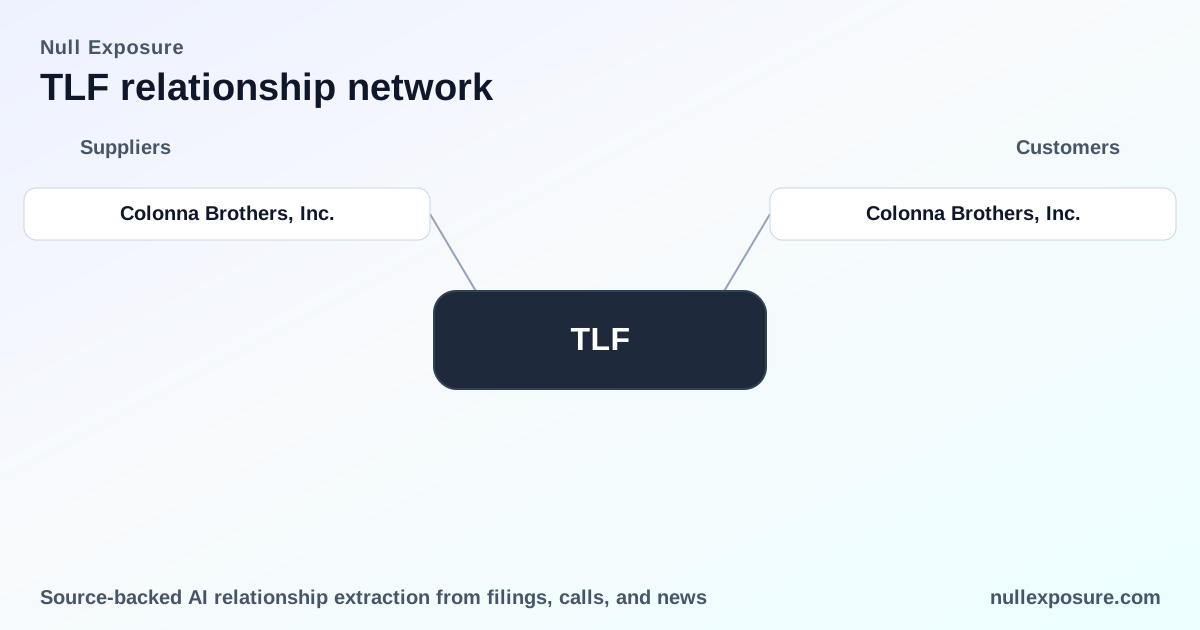
Tandy sold its Fort Worth headquarters, distribution center, and flagship retail store for $26.5 million to Colonna Brothers, Inc. The company closed the sale and executed a lease of new space while also announcing a cash distribution to shareholders as part of the transaction communications. This is a capital recycling event that:
- Unlocks balance-sheet liquidity via sale proceeds, boosting short-term financial flexibility.
- Converts owned distribution real estate into a leased logistics footprint, which reduces fixed-asset exposure but preserves operational continuity if lease terms are favorable.
- Signals management willingness to monetize non-operating assets to return capital to shareholders.
Accordingly, this is a material corporate action for asset allocation and near-term cash flows, but it does not change Tandy’s underlying retail revenue model or its diversified customer base.
For continued monitoring of counterparty-level news and filings, visit https://nullexposure.com/.
Documented relationship evidence with Colonna Brothers (each result)
Below are the individual reports in the record; each entry is summarized in plain English with its source.
Tandy Leather announced completion of sale (International Leather Maker)
Tandy Leather announced it had completed the sale of its corporate headquarters facilities in Texas — including the primary distribution center and flagship store — to Colonna Brothers, Inc. International Leather Maker covered the closing and implications for the Fort Worth footprint. Source: International Leather Maker (news report, referenced in March 2026).
Purchase and Sale Agreement signed (QuiverQuant report)
Tandy Leather publicly disclosed that it signed a Purchase and Sale Agreement to sell its headquarters facilities, including the primary distribution center and flagship retail store, to Colonna Brothers, Inc. The QuiverQuant item reported the executed agreement and commercial terms. Source: QuiverQuant news item (FY2024 disclosure).
Local coverage of $26.5M deal and relocation plans (FWTx)
Local news reported that Tandy Leather agreed to a $26.5 million deal to sell the Fort Worth headquarters to Colonna Brothers Inc., and that the company planned a local relocation of operational activity consistent with the sale and leaseback approach. Source: Fort Worth local news (FWTx, coverage dated 2026).
GlobeNewswire press release: closing, lease of new space and shareholder distribution
Tandy Leather issued a GlobeNewswire press release announcing the closing of the HQ sale, execution of a lease for new space, and a cash dividend to stockholders tied to the transaction proceeds. The release frames the move as a strategic capital redeployment. Source: GlobeNewswire press release (January 29, 2025).
NBCDFW local report on buyer profile (NBCDFW)
NBCDFW reported the sale and noted that Colonna Brothers is a New Jersey-based food distributor, providing context on the purchaser and local reaction to the corporate real estate transaction. Source: NBCDFW local news report (2026 coverage).
What the relationship and corporate disclosures imply about TLF’s operating constraints
The company’s public descriptions and filings convey several operating-model characteristics that are relevant to investors assessing counterparty risk and revenue durability:
- Contracting posture: short-term. Gift card breakage is recognized over a one-year expected redemption period, which indicates short contractual exposure in redeemable liabilities and implies quick turnover in certain customer obligations.
- Customer mix: broad and retail-centric. Language in filings explicitly lists hobbyists, small businesses, and large businesses as core customer types, producing a mix of individual and commercial counterparties.
- Geographic concentration: North America. Revenue is disaggregated by region with the United States and Canada accounting for the vast majority of sales, so macro conditions in North America will disproportionately affect topline performance.
- Concentration risk: immaterial at the customer level. No single customer exceeded 0.5% of revenues and the five largest customers contributed under 2.0% of revenues in 2023–2024, reducing counterparty concentration risk.
- Relationship role: seller of core product. Tandy’s revenue is earned by selling merchandise through stores, web, and commercial channels, confirming the company’s role as a merchant rather than as a service provider to a small set of large customers.
- Spend profile: generally sub-$100k per customer, with commercial threshold. Most customer spend sits below $100k; the commercial division typically serves accounts spending above $20,000 annually, which establishes a two-tier customer engagement model (retail hobbyists vs. higher-spend commercial accounts).
These signals combine into an operational profile of low counterparty concentration, short-term transactional contracts with customers, and a North America-centric revenue base. The sale of the headquarters to Colonna Brothers is a corporate balance-sheet and logistics event that does not materially change these customer-facing dynamics, although the distribution-center sale and subsequent leasing arrangements warrant monitoring for potential logistics cost or service-level impacts.
Bottom line for investors
- Key positive: Tandy Leather’s diversified, retail-heavy customer base and immaterial single-customer exposure limit counterparty risk to revenue.
- Key strategic move: The $26.5 million sale to Colonna Brothers converts real estate into distributable cash while retaining operational continuity through lease arrangements; this strengthens short-term liquidity and supports shareholder distributions.
- Watch items: Monitor lease economics on the disposed distribution asset, any changes to fulfillment costs or service levels, and North American retail trends that drive the core merchandising business.
For a consolidated view of filings, news, and counterparty relationships relevant to TLF, visit https://nullexposure.com/.