Ten‑League International (TLIH) — customer relationships that shape the next phase of revenue
Ten‑League International Holdings (NASDAQ: TLIH) operates as a Singapore‑based seller, lessor and turnkey project contractor for heavy equipment and port engineering solutions; the company monetizes through equipment sales and rentals, project engineering contracts, and post‑delivery commissioning and service (notably port electrification assets such as battery charging and swap stations). Recent customer announcements show a deliberate shift from one‑off equipment transactions toward higher‑value project work with strategic port operators and infrastructure contractors. For a concise view of Ten‑League’s research and relationship coverage visit https://nullexposure.com/.
Why the customer map matters now
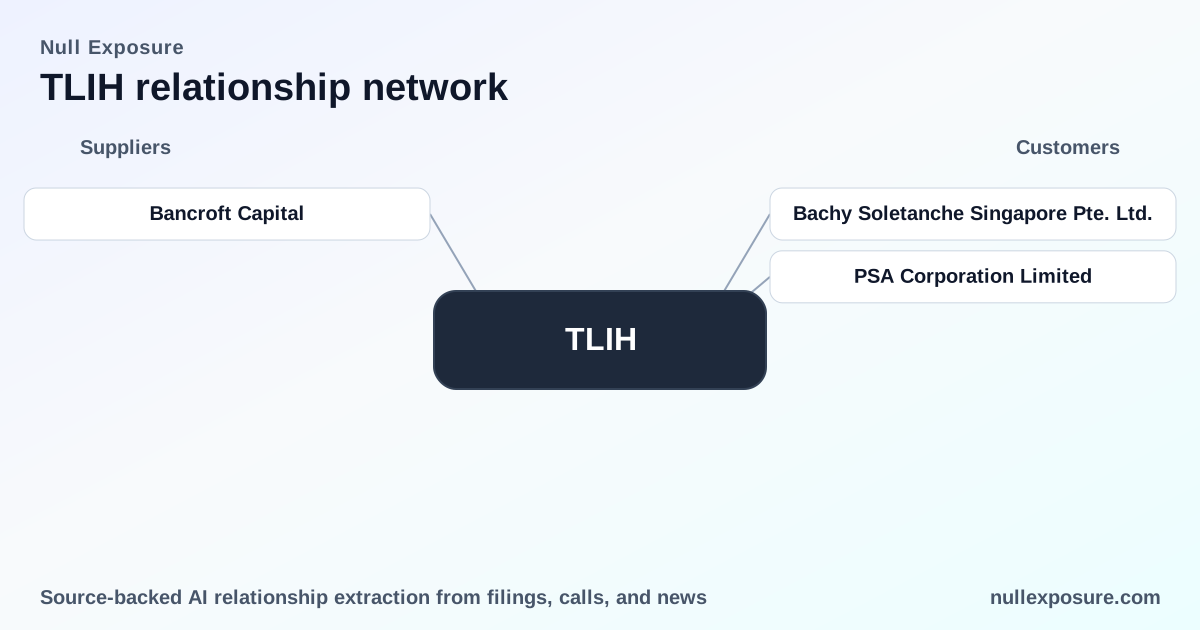
Ten‑League’s public disclosures during FY2025–FY2026 highlight two categories of commercial counterparties: a major port operator (PSA Singapore) and an engineering contractor (Bachy Soletanche Singapore). Both relationships are operationally meaningful: one expands Ten‑League’s electrification play in ports, the other confirms delivery capability on large rail and civil projects. For investors, these customers convert technical capability into reference clients and recurring project pipeline potential.
PSA Corporation Limited — port electrification partner
Ten‑League’s subsidiary Ten‑League Port Engineering Solutions secured a follow‑on order from PSA Corporation Limited to expand an electrification program after delivering Singapore’s first Battery Charging and Swap Station (BCSS) at the end of 2024. According to a GlobeNewswire press release dated November 14, 2025, the new order builds on the BCSS deployment and positions Ten‑League as a supplier of electrification infrastructure for terminal operations. Market commentary and company reporting in FY2026 reiterate the significance of the PSA engagement as a strategic account for port‑side electrification work.
Bachy Soletanche Singapore Pte. Ltd. — handover on Cross Island Line equipment
Ten‑League completed the handover of five hydraulic grabs to Bachy Soletanche Singapore in December 2025 for use on the Cross Island Line project, demonstrating capability on rail and geotechnical contracts. The handover was announced in a GlobeNewswire release on December 19, 2025 and was repeated across market outlets in late FY2025; MarketScreener’s FY2025/FY2026 reporting also references this project handover as supporting Ten‑League’s operational positioning in infrastructure projects.
All reported customer relationships — compact summary
- PSA Corporation Limited: Ten‑League PES has a confirmed order to expand port electrification following the company’s delivery of the BCSS, establishing PSA as a named customer for electrification infrastructure (GlobeNewswire, Nov 14, 2025; FY2026 company commentary).
- Bachy Soletanche Singapore Pte. Ltd.: Ten‑League completed delivery and handover of five hydraulic grabs for the Cross Island Line, evidencing execution on civil/rail project equipment and handover processes (GlobeNewswire, Dec 19, 2025; Marketscreener, FY2026 reporting).
Each relationship listed above is reflected in company press releases and third‑party market reports during FY2025–FY2026 and is included in Ten‑League’s operational disclosures and investor communications.
Company‑level operating signals and constraints
The public relationship data did not include formal constraint entries; this absence is itself an informative company‑level signal: Ten‑League’s publicly reported customer interactions are disclosed primarily through press releases and market summaries rather than detailed contract schedules or constraint filings. From the activity set and financial snapshot, several operating characteristics emerge as company‑level signals:
- Contracting posture: project‑based, turnkey delivery with explicit post‑delivery commissioning and handover activity (BCSS and hydraulic grabs), implying revenue recognition tied to milestones and equipment commissioning.
- Concentration and governance: very high insider ownership (≈80%) and minimal institutional ownership, indicating founder/control concentration that can speed decision‑making but also concentrates shareholder risk.
- Criticality of customers: engagements with a major port operator and a leading geotechnical contractor indicate high operational criticality for the specific projects — performance and reputation on these accounts are commercially meaningful.
- Maturity signal: development from equipment sales/rental into electrification systems and commissioned projects signals an evolution from commodity distribution to engineered project delivery, which increases potential margin upside but also execution risk.
Investment implications — growth and risk profile
Ten‑League’s financials present a compact, low‑capitalization industrial operator: Revenue TTM ≈ $76.2M, EV/EBITDA ≈ 3.7, trailing P/E ≈ 3.7, and high insider stake. The customer wins translate into two primary investment implications:
- Growth vectors: port electrification and infrastructure project delivery create a pipeline for recurring project work and aftermarket services (charging stations, swap station maintenance, equipment handovers).
- Execution and concentration risk: project timing, single‑customer order sizes and the company’s small market cap concentrate downside if landmark projects are delayed or margins compress.
Key takeaway — customer references with PSA and Bachy Soletanche materially increase Ten‑League’s commercial credibility in electrification and large infrastructure corridors, but investors should weigh order visibility and execution risk alongside the company’s governance structure.
For a concise project and customer intelligence feed, see https://nullexposure.com/.
Tactical next steps for operators and research teams
- Validate order size and milestone terms with company filings or direct investor relations outreach before modeling revenue recognition.
- Monitor operational updates and commissioning notices for PSA BCSS expansions — these events are the likeliest near‑term drivers of revenue and margin recognition.
- Track tender pipelines for Singapore infrastructure projects where Ten‑League has proven delivery capability; maintenance and service contracts will convert one‑time sales into annuity‑like revenue.
Bottom line
Ten‑League’s disclosed customer relationships for FY2025–FY2026 show strategic wins with a national port operator and a leading engineering contractor, signaling a move up the value chain into electrification and project delivery. These wins increase commercial credibility and potential margin expansion, but they also heighten dependency on a small number of large, execution‑sensitive contracts and are concentrated under an insider‑dominated ownership structure. Operational diligence on milestone timing, contract terms and post‑delivery service commitments will be decisive for near‑term investor outcomes.