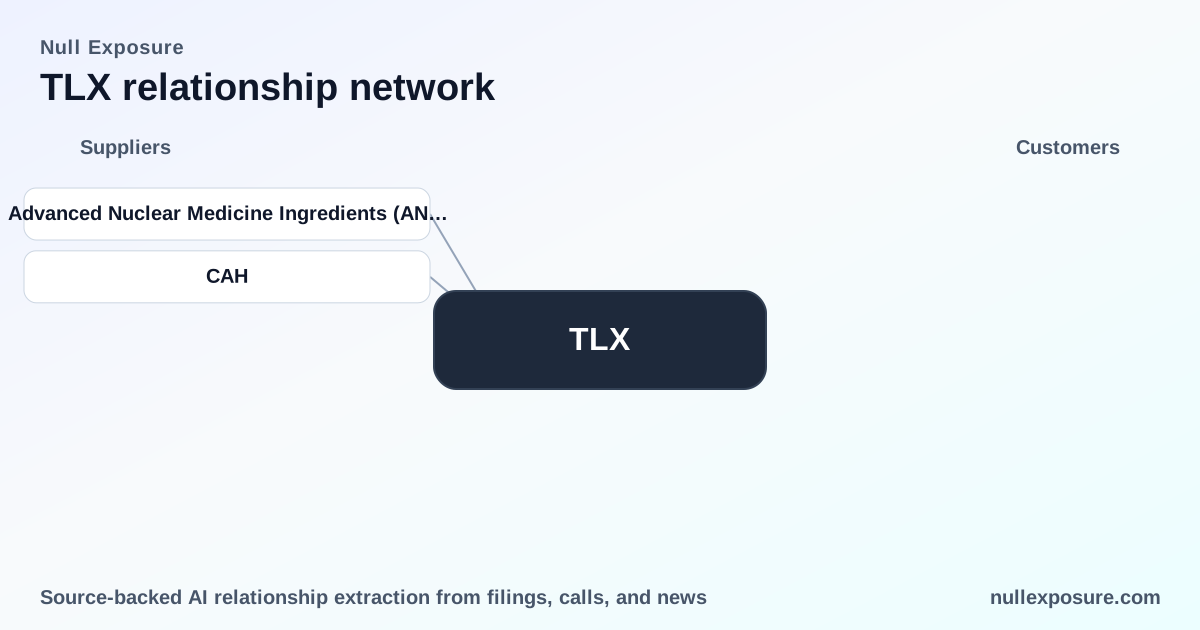
Telix Pharmaceuticals (TLX): Customer relationships that underwrite a radiopharma growth platform
Telix operates as a commercial-stage radiopharmaceutical company that monetizes through product sales, third‑party manufacturing services, and structured co-development deals. The business mixes recurring revenue from diagnostic and therapeutic products with higher‑leverage milestone and profit‑share agreements that convert R&D value into near‑term cash (for example, upfront payments) and long‑term royalties. Telix’s financial scale—roughly $804M revenue (TTM) and ~$3.78B market capitalization—reflects that hybrid model: steady commercial revenues plus episodic partner payments that accelerate valuation when deals execute.
For investors tracking customers and counterparty concentration, Telix’s active commercial partnerships and its Telix Manufacturing Solutions (TMS) arm are the operational levers that drive near‑term revenue and medium‑term margin expansion. Learn more about how we surface these relationship signals at https://nullexposure.com/.
How partner flows shape the business model
Telix’s operating model combines three revenue vectors:
- Direct product sales for approved radiopharmaceuticals.
- Third‑party manufacturing via TMS, which converts excess capacity into fee income.
- Collaborative development and commercialization, typically structured as upfront payments, shared development costs, and milestone/royalty economics.
These vectors produce a contracting posture that is mixed — fee‑for‑service revenue from manufacturing alongside asymmetric, milestone‑driven licensing receipts. Concentration is meaningful: Telix explicitly notes third‑party manufacturing revenue that is “predominantly driven” by a named partner, which implies single‑partner materiality in that revenue stream. The relationships are operationally critical because supply of radionuclide isotopes and reliable GMP manufacturing are essential to product launches and to partner trial timelines. Company maturity is commercial but still transitionary: commercial revenues exist, but growth remains partner and pipeline dependent.
No explicit constraints were reported in the customer dataset; at the company level this signals that public customer coverage is current but not constrained by reported counterparty disputes or contract term redactions.
The relationships investors should track
Below I cover every customer/counterparty mention found in the collected signals and what each means for TLX’s commercial and manufacturing economics.
Plus Therapeutics (PSTV) — isotope supplier relationship referenced in partner manufacturing plans
Plus Therapeutics’ recent manufacturing announcements identify Rhenium‑186 isotope supply coming from Telix, positioning Telix as a critical isotope supplier in a multi‑partner GMP supply chain supporting Plus’s pivotal trial readiness in FY2026. According to a GlobeNewswire release and a Yahoo Finance sector item in May 2026, Telix’s isotope supply role strengthens the reliability of Plus’s manufacturing footprint and underlines Telix’s commercial exposure on isotope logistics.
Source: GlobeNewswire press release (April 23, 2026) and Yahoo Finance sector coverage (May 3, 2026).
Key takeaway: Telix is not only a product developer but a critical materials supplier for external clinical programs, which produces steady TMS-like commercial flows and strategic leverage in trials.
Regeneron Pharmaceuticals (REGN) — 50/50 cost-and-profit global collaboration with significant upfront cash
Telix entered a global 50/50 cost‑and‑profit collaboration with Regeneron to co‑develop next‑generation radiopharmaceutical oncology agents, including a US$40 million upfront payment and potential upside of up to US$2.1 billion in milestones and royalties. Multiple business press items in April–May 2026 report the structure and upfront consideration and note that Telix’s IP and platform capabilities triggered renewed investor interest and the start of a pivotal Phase 3 program.
Source: SimplyWall.st coverage and Investing.com analyst note (April–May 2026).
Key takeaway: The Regeneron deal is a transformational commercial collaboration that converts Telix’s R&D into immediate cash and aligns risk‑sharing, materially de‑risking certain pipeline programs while creating large upside via milestones.
RLS Radiopharmacies — third‑party manufacturing revenue driver for TMS
Telix’s Q1 FY2026 reporting called out Telix Manufacturing Solutions’ third‑party revenue as predominantly driven by RLS Radiopharmacies, explicitly excluding Illuccix and Gozellix sales from that metric. GlobeNewswire’s Q1 release in April 2026 identifies RLS as the main external customer for TMS third‑party revenue.
Source: Telix Q1 FY2026 company release via GlobeNewswire (April 6, 2026).
Key takeaway: RLS represents a material, recurring manufacturing customer for TMS, creating a steady revenue base distinct from milestone and product sales.
What these relationships imply for revenue quality and risk
These customer signals collectively describe a company with diversified but concentrated commercial characteristics:
- Revenue quality has two layers: stable manufacturing and product sales (TMS + diagnostic/therapeutic revenue) and lumpy, high‑value partner payments (Regeneron upfronts and potential milestones).
- Concentration risk exists in the manufacturing book because third‑party revenue is “predominantly driven” by a named customer (RLS), making TMS exposure sensitive to contract renewals or volume shifts.
- Operational criticality is high where Telix serves as an isotope supplier; any disruption in isotope supply or GMP capacity would have outsized effects on partner trial timelines and associated revenues.
- Deal maturity is mixed: the company is commercial-stage with established product sales and manufacturing clients, but growth trajectory depends on successful execution of partnerships and clinical programs.
From a financial standpoint, Telix posts ~$803.8M revenue (TTM) and $381.8M gross profit, with operating margin signals and a sizeable market cap that reflect investor expectations for partner‑driven growth; analysts aggregate a target price of about $21.61 with multiple buy recommendations noted in market coverage for FY2026.
Investment implications and risk checklist
- Upside: Regeneron collaboration accelerates de‑risking and provides immediate cash to fund pipeline advancement; TMS third‑party revenue provides margin diversification.
- Downside: Concentration in TMS customers and dependence on isotope supply chains create single‑point operational risks that could compress revenue visibility.
- Catalysts to watch: milestone announcements and Regeneron program readouts; contract renewals and volume trends with RLS; any public updates from customers like Plus Therapeutics regarding isotope sourcing or trial timelines.
A targeted, relationship‑aware monitoring plan—tracking press releases from partners, TMS bookings, and direct Telix quarterly disclosures—will separate headline noise from financially material developments.
Conclusion — what investors should do next
Telix’s customer footprint demonstrates a blend of recurring commercial cash flow and milestone‑dependent upside. The Regeneron collaboration is the standout value‑creating arrangement, while RLS and third‑party manufacturing anchor near‑term revenue. Investors and operators should prioritize counterparty monitoring, contract renewal timing, and isotope logistics when modeling near‑term cash flows.
For a deeper, relationship‑level view and ongoing signal monitoring, visit https://nullexposure.com/ for how we track and surface these commercial dependencies.