T‑Mobile (TMUSL) — customer relationships that underwrite a long‑duration credit
T‑Mobile monetizes through a high‑scale, subscription‑driven services business complemented by device sales and equipment financing, plus selective wholesale and reseller channels that wholesale broader broadband capacity. The TMUSL security is a long‑dated senior note (6.250% due 2069) that is ultimately backed by T‑Mobile’s recurring service cash flows, device finance receivables, and diversified channel revenues; investors should evaluate how wholesale acquisitions and reseller relationships affect revenue stability, cash‑flow timing, and receivable risk. For a concise view of relationship-level disclosures, visit https://nullexposure.com/.
How to read the customer disclosures — one clear lens for credit investors
T‑Mobile’s customer disclosures in the FY2025 filing show a company that runs a recurring, predominantly monthly subscription model with significant device financing and wholesale distribution layers. That operating posture produces predictable recurring revenue but also concentrates default and collection risk in postpaid and device receivables, and concentrates geographic exposure in the U.S. The 10‑K lists both consumer and small business customers as the core counterparty base and documents active wholesale and reseller arrangements that expand distribution while changing revenue recognition and cash collection profiles (T‑Mobile FY2025 Form 10‑K).
Kaʻena Corporation: what the filing actually says and why it matters
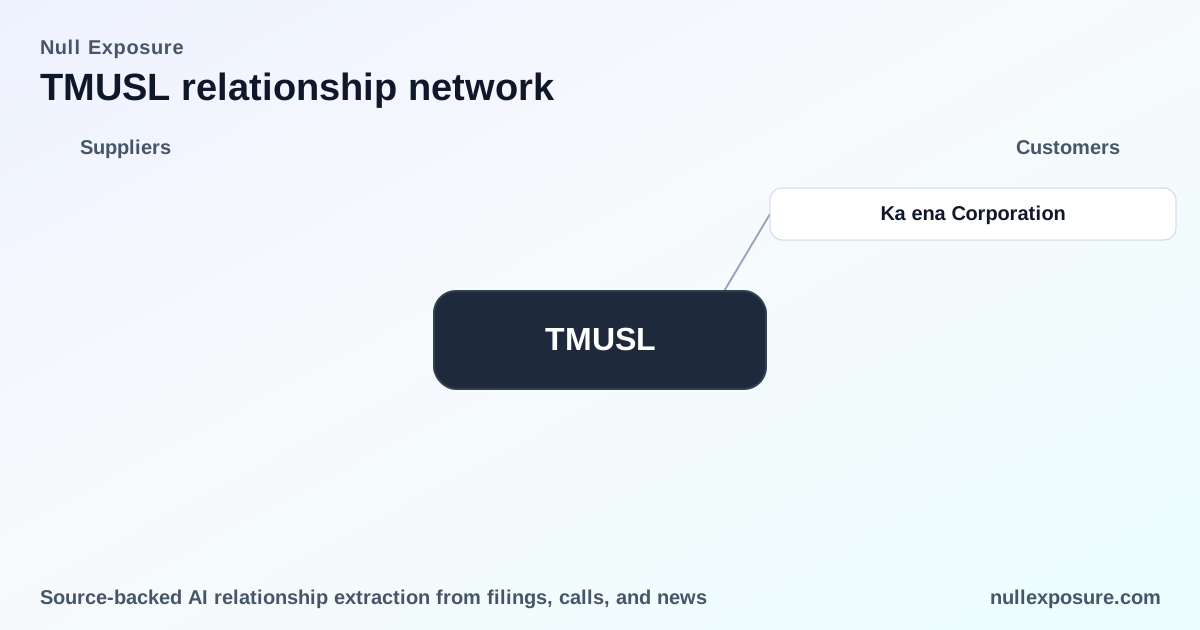
Kaʻena was a wholesale partner of T‑Mobile prior to a later acquisition, and the company recognized service revenues from that relationship within its wholesale and other service revenues line. This indicates Kaʻena historically contributed wholesale service revenue rather than being a direct retail postpaid account, with the relationship changing legal form post‑acquisition. (Source: T‑Mobile FY2025 10‑K, tmusl‑2025‑12‑31.)
Company‑level operating signals that shape customer risk
The FY2025 disclosures generate a set of company‑level signals investors should treat as structural inputs to any TMUSL credit view:
- Contracting posture — subscription and short‑duration monthly contracts. The filing explicitly excludes remaining performance obligations for contracts with an original expected duration of one year or less, which the company says “primarily consists of monthly service contracts.” That denotes high levels of recurring monthly revenue and relatively short contractual notice for churn, but also better near‑term cash predictability. (Source: FY2025 10‑K.)
- Customer mix — individual and small business focus. The filing describes postpaid and prepaid consumers and business customers (T‑Mobile for Business) as primary end users and highlights that some acquired customers transitioned into wholesale models; this points to a counterparty base dominated by individuals and small businesses rather than large enterprise contracts. (Source: FY2025 10‑K.)
- Product mix — services first, hardware second. The company derives revenue primarily from wireless communications and broadband services while also selling devices and offering equipment installment plans; services provide the durable cash flow base, while hardware and EIP introduce financing and receivable duration. (Source: FY2025 10‑K.)
- Geographic concentration — U.S. centric. “Substantially all” revenue and long‑lived assets are located in the United States, Puerto Rico and the U.S. Virgin Islands, making the credit exposed to U.S. regulatory, economic and competitive cycles rather than geographic diversification. (Source: FY2025 10‑K.)
- Relationship roles — buyer and reseller channels. T‑Mobile serves as a direct seller to end customers and as a supplier to dealers and third‑party distributors that resell devices and services, which diversifies channels but layers on counterparty and inventory risk in distribution. (Source: FY2025 10‑K.)
- Relationship stage and maturity — active, large scale customer base. The company reported providing services to 142.4 million postpaid and prepaid customers as of December 31, 2025, demonstrating a mature and large scale subscriber base that underpins long‑term cash flow generation. (Source: FY2025 10‑K.)
These signals together create a classic telco credit profile: stable recurring revenue tempered by receivable and device financing risk, strong U.S. market position, and operational scale that supports long‑dated liabilities like TMUSL.
For direct access to the underlying disclosure extraction and to track any new customer‑level disclosures, see https://nullexposure.com/.
Why wholesale partners and acquisitions matter to noteholders
The Kaʻena disclosure is short but instructive: T‑Mobile converts some partner relationships from wholesale supplier arrangements into owned customer relationships through acquisition. That dynamic has three effects relevant to TMUSL investors:
- It converts wholesale revenue lines into direct service revenue, changing cash‑flow timing and potentially increasing receivable and amortization profiles (the filing notes intangible assets recognized for acquired customers and amortized over useful lives).
- It increases operational complexity — integrating wholesale partners creates transition risk and potentially short‑term costs but also gives the company control over revenue streams.
- It signals management is willing to use capital to consolidate distribution and customer relationships, which affects leverage and capital allocation decisions relevant for long‑dated bond holders. (Source: FY2025 10‑K.)
All customer relationships disclosed in the results (complete list)
- Kaʻena Corporation: Prior to its acquisition, Kaʻena functioned as a wholesale partner for T‑Mobile and generated service revenues classified within the wholesale and other service revenues line of the FY2025 financials. (Source: T‑Mobile FY2025 Form 10‑K, tmusl‑2025‑12‑31.)
Investor implications for the TMUSL tenor and coupon
- Credit strength driver: The subscription‑heavy business and 142.4 million customer base give predictable base cash flows that support long‑dated senior debt. (Source: FY2025 10‑K.)
- Credit risk pressures: Device financing (EIP), wholesale/reseller channels, and active M&A in the customer base introduce receivable duration, integration costs, and counterparty concentration in distribution that can pressure liquidity if competition or macro shocks accelerate churn. (Source: FY2025 10‑K.)
- Structural profile: The TMUSL 6.250% senior note is secured by the issuer’s unsecured senior credit standing; evaluate cash‑flow coverage and free cash generation after capex to judge the margin of safety for this coupon and long maturity. (Security description per company materials.)
Bottom line and recommended focus areas for research teams
T‑Mobile is a cash‑generative, subscription‑centric operator with large scale U.S. exposure and a mix of direct retail and wholesale channels that both stabilize and complicate revenue streams. For TMUSL holders and analysts, prioritize:
- Monitoring device receivable trends and EIP delinquencies.
- Tracking wholesale partner conversions and the pace of customer M&A (integration costs and amortization).
- Watching churn and ARPU trends in the U.S. consumer and small business segments.
For continued tracking of customer‑level disclosures and to see how new relationships roll up into the credit story, visit https://nullexposure.com/.