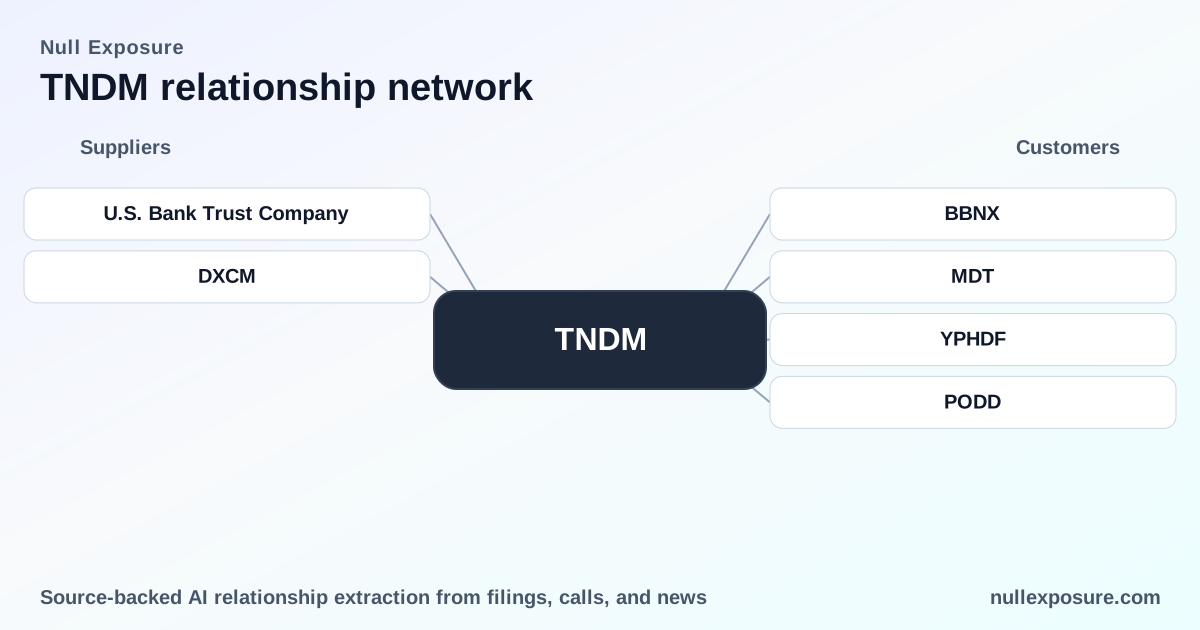
Tandem Diabetes Care (TNDM): customer relationships, competitive set and commercial constraints investors should track
Tandem Diabetes Care designs, manufactures and sells insulin pumps, consumables and complementary software, monetizing through device sales, recurring supplies (cartridges and infusion sets) and an expanding web/mobile data platform. The company sells primarily through a mix of national/regional distributors and direct channels in North America, and through distribution partners internationally; its revenue profile is therefore a hybrid of one-time hardware sales and recurring consumables, with an increasingly important software layer for engagement and retention.
For a concise overview of Tandem’s commercial posture and customer relationships, visit https://nullexposure.com/.
How Tandem’s commercial engine actually runs
Tandem’s operating model is centered on a hardware-first product stack supported by recurring consumables and software-enabled care. Pumps are the gateway product: they generate up-front revenue and create a four‑year replacement/reimbursement cadence that drives future consumables and service interactions. According to the company’s Form 10‑K for the year ended December 31, 2024, insulin pumps are sold alongside single‑use insulin cartridges, infusion sets and a web-based data management platform (Tandem Source) that launched in the U.S. in 2023 and began scaling internationally in 2024.
Key commercial characteristics that shape investor risk and upside:
- Contracting posture and maturity: Reimbursement cycles are long-dated — Tandem cites a typical four‑year reimbursement cycle — which underwrites a predictable replacement pattern but slows rapid top-line expansion. The company has shipped more than 480,000 pumps in the four‑year period ended December 31, 2024, indicating a sizable in‑warranty installed base supporting recurring revenue.
- Channel concentration and criticality: Tandem sells primarily through distributors outside the U.S. and through a mix of distributors and direct sales in the U.S. and Canada. Sales to distributors accounted for the majority of outside‑U.S. revenue and for a large share of U.S. sales; two independent distributors each represented more than 10% of worldwide sales in 2024. Distributor relationships are therefore commercially material.
- Customer type and retention: The primary end user is an individual living with type 1 diabetes, and the company runs retention programs to drive renewal purchases — Tandem explicitly expects renewal purchases to represent an increasing portion of pump shipments over time.
- Product mix: Tandem reports a single operating segment — Insulin Pumps and Supplies — but revenue drivers include hardware, consumables and a growing software/data layer that can improve lifetime value.
Competitive set named in the filing — what Tandem is measuring itself against
Tandem’s 2024 Form 10‑K lists several named competitors when discussing market acceptance for insulin pumps and related products. Each of the relationships identified in the filing is summarized below with a direct source reference.
-
Beta Bionics — Tandem lists Beta Bionics among the companies whose market acceptance of insulin pumps affects Tandem’s competitive positioning. According to the 2024 Form 10‑K, Beta Bionics is explicitly named as a key competitor in the insulin pump market. (Source: Tandem Diabetes Care 2024 Form 10‑K.)
-
Medtronic (MDT) — Medtronic is cited in Tandem’s 10‑K as a major competitor in the insulin pump and related diabetes therapy markets, and is part of the group of companies Tandem monitors for market acceptance. (Source: Tandem Diabetes Care 2024 Form 10‑K.)
-
Ypsomed — Ypsomed is included in the same competitor list in the 2024 filing, indicating Tandem views Ypsomed’s pump offerings as part of the external competitive landscape. (Source: Tandem Diabetes Care 2024 Form 10‑K.)
-
Insulet (PODD) — Insulet is named in the 2024 Form 10‑K as a competitor influencing market acceptance for insulin pumps; Insulet’s Omnipod platform has been a persistent competitive reference point for Tandem. (Source: Tandem Diabetes Care 2024 Form 10‑K.)
-
PODD (ticker duplicate of Insulet) — The results include a duplicate entry listing PODD; the company filing references Insulet by name and ticker when describing competitive dynamics. This duplicate confirms Insulet’s prominence in Tandem’s competitive considerations. (Source: Tandem Diabetes Care 2024 Form 10‑K.)
What the constraints in the filing signal for investors
Tandem’s own disclosures reveal a mix of stabilizing and risk factors that should influence valuation and operating assumptions:
- Predictable replacement cadence reduces short‑term churn but caps rapid re‑purchase frequency. The four‑year reimbursement cycle anchors lifetime value calculations and supports recurring consumables, but it also imposes a deliberate pace on device refresh cycles.
- Distributor dependence is a material commercial concentration. Sales to distributors represented the vast majority of outside‑U.S. sales (96% in 2024) and a substantial portion of U.S. sales; two distributors accounted for more than 10% of worldwide sales in 2024. This creates counterparty concentration risk if distributor terms, service levels or channel access change.
- End‑user orientation constrains selling mechanics but elevates brand and clinical performance as drivers of retention. The primary customer is the individual with type 1 diabetes, making patient outcomes, device reliability and clinician adoption central to retention and referrals.
- Global footprint is meaningful but U.S.‑centric in dollars. Tandem reports strong North American sales ($672.7m in the disclosure excerpt) alongside growing international presence in 25 countries; investors should model both domestic scale and international expansion costs.
- Software is an emerging value lever, not a standalone revenue engine yet. Tandem Source adds engagement and potential stickiness, but the company still operates as a single reporting segment focused on pumps and supplies.
Practical investment takeaways and monitoring checklist
- Competitive pressure is real and named. Tandem lists Insulet, Medtronic, Ypsomed and Beta Bionics — positioning suggests competition on product acceptance and reimbursement dynamics; monitor market share and new product launches from these peers.
- Evaluate distributor concentration risk quarterly. Changes to distributor revenue share or two large distributor relationships will materially affect near‑term cash flows; track the company’s disclosure on distribution partners and any effort to diversify channels.
- Model a four‑year replacement cycle. Use the stated reimbursement cadence and the installed base shipment history (480k pumps over four years) to estimate recurring consumable revenue and hardware refresh timing.
- Watch Tandem Source adoption as a retention metric. Software engagement metrics and international scaling of the platform are key indicators of customer lifetime value expansion.
For additional research tools and to benchmark these relationship signals across other medical device companies, visit https://nullexposure.com/.
Final verdict
Tandem’s commercial model combines the stability of long replacement cycles with exposure to channel concentration and intense competitive pressure from established device makers. Investors should value the installed base and recurring consumable economics while discounting for distributor concentration risk and competitive threats to market acceptance. Continuous monitoring of distributor disclosures, device shipment trends and software adoption will be the most effective way to track execution against the company’s long‑term value thesis.