Tango Therapeutics (TNGX): Customer Relationships That Drive Near‑term Revenue and Strategic Optionality
Tango Therapeutics builds and monetizes value by discovering targeted oncology assets and partnering those assets with larger biopharma companies through licensing, clinical collaborations, and supply agreements. Revenue to date is concentrated around a small set of collaborations whose contractual milestones and deferred payments drive episodic, high‑value recognition, while the company retains upside through program‑level milestones and downstream royalties on commercialized products.
Learn more background and source links at https://nullexposure.com/.
What the relationship map reveals at a glance
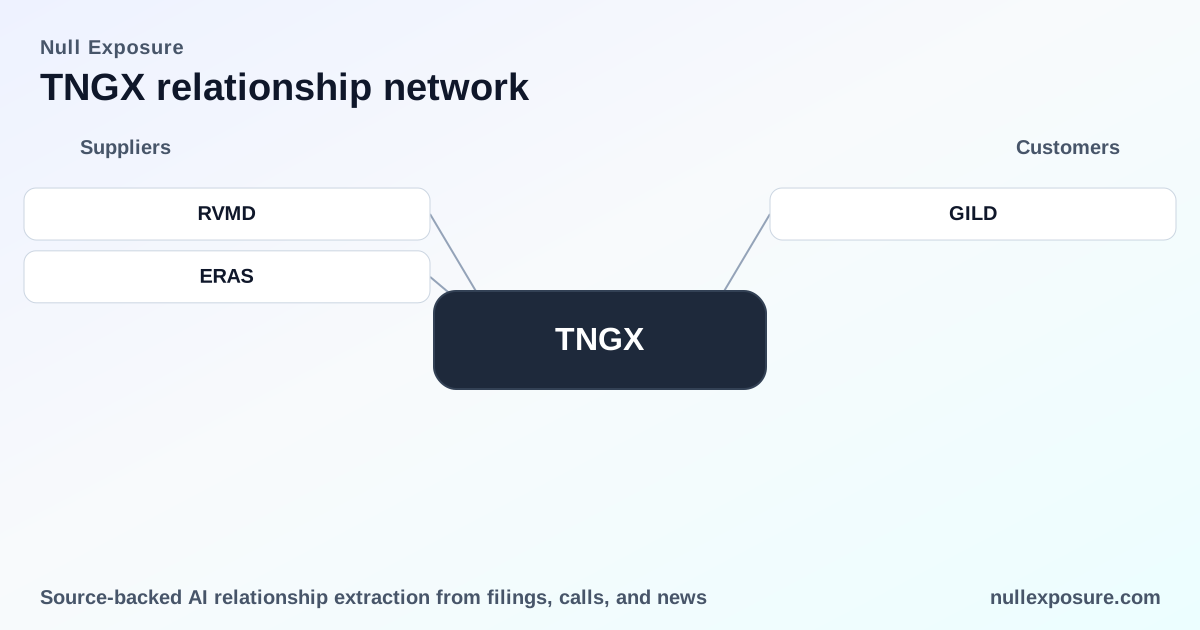
Tango’s customer/partner profile is compact and strategic: a legacy collaboration with Gilead that produced a material, one‑time recognition of deferred revenue, an active clinical supply and combo‑trial arrangement with Erasca, and combination studies with Revolution Medicines. These relationships are not broad commercial customers — they are program partnerships that fund R&D, accelerate clinical testing, and create milestone upside.
Relationship details — concise, source‑backed takeaways
-
Gilead (GILD) — Tango recognized remaining deferred collaboration revenue from Gilead that materially drove full‑year reported revenue. According to TradingView’s coverage of Tango’s 2025 filings, the company reported $62.4 million of total revenue for the year driven by recognition of the remaining deferred collaboration revenue from Gilead, which followed truncation of the collaboration and the conclusion of the research activities (SAHM Capital also summarized the same recognition in Tango’s FY2025 results). (TradingView report on Tango 2025 10‑K; SAHM Capital earnings summary, March 2026)
-
Erasca / ERAS (ERAS) — Tango entered a clinical trial collaboration and supply agreement with Erasca to test Erasca’s ERAS‑0015 in combination with Tango’s PRMT5 inhibitor vopimetostat (TNG462), focused on targeted indications including pancreatic cancer and MTAP‑deleted RAS‑mutant tumors. Multiple market reports and analyst notes (SimplyWall.St, Investing.com, InsiderMonkey) described the March 2026 collaboration and clinical supply arrangement and noted its strategic potential to expand combination study opportunities. (SimplyWall.St clinical collaboration note, May 2026; Investing.com analyst coverage, May 2026)
-
Revolution Medicines (RVMDW) — Revolution Medicines publicly described an active collaboration testing its RAS(ON) inhibitors in combination with Tango’s vopimetostat in patients with tumors carrying both a RAS mutation and MTAP deletion, confirming an ongoing clinical program and supply/combination trial activity. This detail was disclosed during Revolution’s Q4 2025 earnings call. (Revolution Medicines Q4 2025 earnings call transcript)
How these relationships translate into Tango’s operating model
-
Contracting posture: Tango operates as a partner‑first biotech — it licenses targets and trial designs and structures collaborations that include upfronts, deferred revenue, and sizable milestone pools. The company’s disclosures show structured licensing economics that can include sales‑based royalties and program milestones. This posture aligns revenue recognition with contractual milestones and the completion of research obligations rather than stable recurring sales.
-
Revenue concentration and timing: Revenue is concentrated and episodic. The Gilead relationship produced a lump‑sum recognition event when the collaboration activities were truncated and deferred revenue was recognized; Tango’s reported FY results reflect that episodic recognition rather than sustained commercial income. Investors should treat near‑term revenue as milestone‑driven and lumpy.
-
Criticality and optionality: Partnerships with Erasca and Revolution Medicines are strategically critical for Tango’s PRMT5 program development and for validating combination regimens in MTAP‑deleted, RAS‑mutant tumors. These collaborations de‑risk clinical pathways and create multiple commercial upside vectors (milestones + royalties) without forcing Tango to build a large commercial infrastructure.
-
Maturity of relationships: The portfolio shows a mix of legacy (Gilead, now recognized) and active clinical collaborations (Erasca, Revolution). The Gilead arrangement has passed into wind‑down/recognition; Erasca and Revolution relationships are actively executing combination studies and supply agreements, which implies continued near‑term cash flow optionality from milestone triggers and potential future licensing economics.
Contracts and financial constraints investors should factor in
-
Tango’s contract structure supports large per‑program upside: the company disclosed eligibility to receive up to $410 million per program in license, option, clinical/regulatory and commercial milestones, plus royalties on future sales. That establishes the ceiling on program economics and informs valuation scenarios for each partnership.
-
Licensing provisions include royalty frameworks and sales‑based milestones, but Tango has not yet reported royalty revenue — current revenue recognition policies tie payments to completion of performance obligations or to underlying sales events. This explains why booked revenue is event‑driven rather than recurring.
-
The company signals an active relationship stage for certain partnerships: remaining long‑term deferred revenue is expected to be recognized proportionally over an expected remaining contractual term of about 2.6 years, indicating ongoing contractual obligations tied to the recognized collaborations.
(These contract excerpts and timing signals derive from Tango’s public disclosures and its 2025 financial summary reporting.)
If you want the primary documents and reporting that informed this analysis, visit https://nullexposure.com/.
Investment implications and operational takeaways
-
Balance sheet support is partnership‑derived. Tango’s near‑term top‑line strength and cash runway are driven by collaboration economics rather than product sales. That reduces capital intensity for commercialization but increases binary clinical and milestone risks.
-
Concentration risk is material. A small number of partners produce both revenue and development validation; a setback in a key combo study or withdrawal by a partner would have outsized financial and development consequences.
-
Upside is programically asymmetric. Each successful trial or milestone unlocks multi‑hundred‑million dollar contractual payments and royalties, so upside is concentrated at the program level. Investors should model scenarios around the probability and timing of those clinical readouts and regulatory events.
Bottom line
Tango’s partner network is compact, clinical‑stage, and economically structured to produce episodic, high‑value revenue tied to licensing milestones and combination study execution. Gilead produced a one‑time recognition event; Erasca and Revolution Medicines are active collaborators who drive ongoing clinical validation and future milestone potential. The business model reduces commercialization overhead and concentrates both risk and upside at the program/collaboration level.
For a deeper dive into the source material and relationship flow, visit NullExposure’s homepage: https://nullexposure.com/.