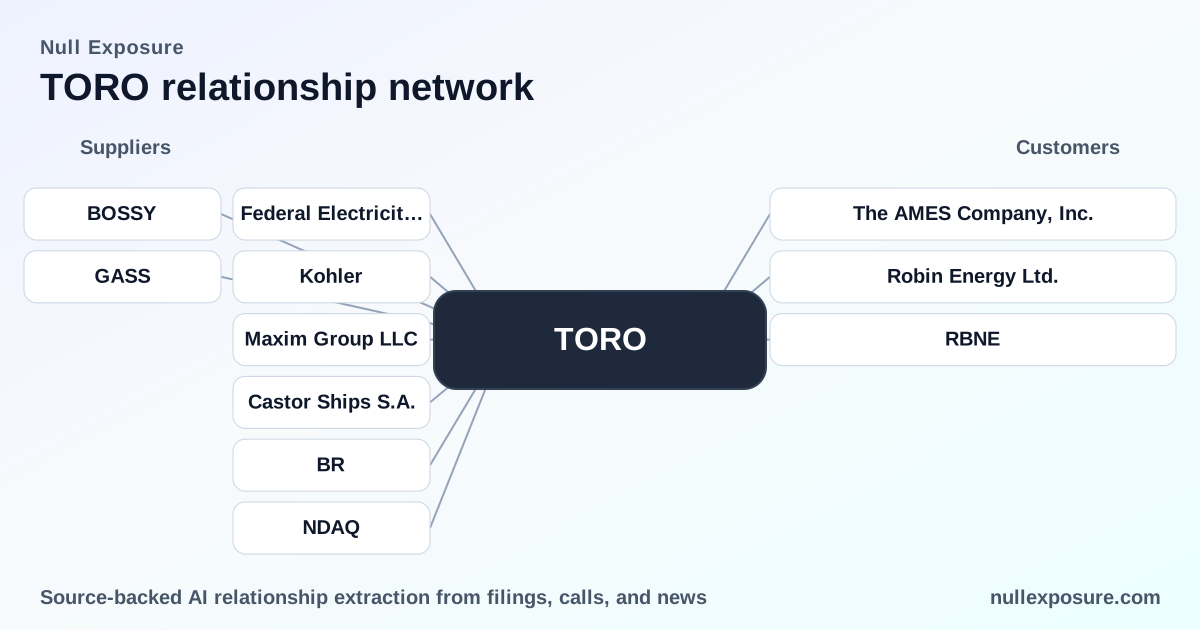
Toro Ltd (TORO) — Asset sales and capital deployment in midstream shipping
Toro Ltd operates as an owner/operator in the oil & gas midstream space, monetizing primarily through ownership, disposition and financing of LPG carriers and related maritime assets. The company converts capital tied up in vessels into cash via targeted sales and lends or invests that capital back into shipping counterparties, creating a hybrid asset-manager / financier profile that drives both one-time gains and recurring financing income.
For an immediate deep dive into relationship-level evidence and how these transactions affect cash flow and concentration risk, visit https://nullexposure.com/ for our primary interface.
How Toro monetizes and where the cash flow comes from
Toro’s recent public disclosures show a clear commercial pattern: disposition of LPG carriers to affiliated or spin-off shipping entities and the provision of large financing facilities to maritime companies. These activities generate material cash inflows (sale proceeds) and create credit exposures tied to a small number of shipping counterparties and related-party structures. Given Toro’s modest revenue base and small market capitalization, these single-transaction flows disproportionately influence reported earnings and liquidity.
Relationship compendium — every reported customer relationship in the file
Below are the individual relationships captured in the public record. Each entry is a plain-English snapshot with the original source noted.
-
RBNE (Robin Energy Ltd) — GlobeNewswire FY2026: Toro sold a 2015-built 5,000 cbm LPG carrier, Dream Syrax, to a Robin Energy subsidiary for $18.0 million (reported July 10, 2025 transaction; cited in Robin Energy’s FY2026 GlobeNewswire release).
Source: GlobeNewswire, FY2026. -
The AMES Company, Inc. — Golf Industry Central FY2024: The excerpt references The Toro Company (NYSE: TTC) selling its Australia-based Pope Products business to The AMES Company; this item concerns the well-known turf/outdoor brand and is included in results although it relates to NYSE-listed Toro Company rather than Toro Ltd (NASDAQ: TORO).
Source: Golf Industry Central, FY2024. -
CTRM (Castor Maritime Inc) — Manila Times / GlobeNewsWire FY2026: Castor repaid a $100 million senior term loan that had been provided by Toro, indicating Toro’s role as a direct lender to maritime counterparties and demonstrating material credit exposure and capital recycling.
Source: Manila Times (citing Castor filings), FY2026. -
LOW (Lowe’s Companies, Inc.) — InsiderMonkey FY2026: A Lowe’s transcript cites Toro as a leading gas-powered outdoor power equipment brand sold through Lowe’s, reflecting a brand relationship tied to The Toro Company (TTC) rather than Toro Ltd (TORO); included for completeness.
Source: InsiderMonkey, FY2026 earnings call transcript. -
RBNEV (Robin Energy Ltd.) — Yahoo Finance FY2025: Robin Energy announced purchase of a 2020-built 5,000 cbm LPG carrier from Toro for $20.0 million, and disclosed that Toro is controlled by the same individual who chairs Robin, indicating related-party transaction dynamics.
Source: Yahoo Finance, FY2025. -
Robin Energy Ltd. — GlobeNewswire FY2026: Robin’s FY2026 release reiterates the Dream Syrax sale to a Robin subsidiary for $18.0 million, confirming consistency across Robin’s public statements and Toro’s disposals.
Source: GlobeNewswire, FY2026. -
Robin Energy Ltd. — ADVFN (Brazil) FY2026: International coverage duplicated Robin Energy’s disclosure of the $18.0 million Dream Syrax sale, reinforcing market awareness of the transaction.
Source: ADVFN (GLOBE), FY2026. -
RBNEV (Robin Energy) — Yahoo Finance FY2025 (second entry): An additional Yahoo Finance notice repeats the 2015-built carrier sale for $18.0 million, aligning with Robin’s public notices and Toro’s reported vessel dispositions.
Source: Yahoo Finance, FY2025. -
Robin Energy Ltd. — Yahoo Finance Singapore FY2026: Yahoo’s Singapore feed republished Robin’s disclosure that Dream Syrax sold for $18.0 million, adding cross-market confirmation.
Source: Yahoo Finance Singapore, FY2026. -
Robin Energy Ltd. — GlobeNewswire FY2025 (Toro press release): Toro’s own report for the quarter ending September 30, 2025, records the July 10, 2025 agreement to sell Dream Syrax for $18.0 million, establishing Toro as the selling party in its financial statements.
Source: GlobeNewswire (Toro release), FY2025. -
CTRM (Castor Maritime Inc) — GlobeNewswire FY2024: Castor announced securing a $100 million senior term loan and $50 million from convertible preferred issuance, both provided by Toro, showing a structured financing relationship between Toro and Castor.
Source: GlobeNewswire (Castor release), FY2024. -
Robin Energy — Baird Maritime FY2026: Baird Maritime reported that Toro sold two LPG carriers (Dream Syrax and Dream Terrax) to Robin Energy for a combined $38 million, summarizing multiple transactions that materially affect Toro’s asset base and cash position.
Source: Baird Maritime, FY2026. -
RBNE / Robin Energy — Tradewinds FY2025: Tradewinds coverage described Toro offloading a second gas carrier to Robin Energy in the context of a Robin spin-off, highlighting an operational strategy of transferring vessels to an affiliated shipping platform.
Source: Tradewinds, FY2025.
What these relationships say about Toro’s operating model and commercial posture
-
Contracting posture: Toro operates as an active seller and financer. It converts vessel ownership into liquidity through asset sales to affiliated or related shipping entities and extends large-scale loans or preferred investments to maritime counterparties. This posture is more opportunistic and balance-sheet dependent than recurring-operational revenue driven.
-
Concentration: The company shows high concentration risk. A small set of shipping counterparties (notably Robin Energy and Castor Maritime) account for material sales and financing flows; those few transactions drive a large portion of cash movement relative to Toro’s reported revenue and market cap.
-
Criticality: For Toro, individual transactions are highly critical to near-term earnings and liquidity given the company’s modest revenue base (Revenue TTM ~$21.1M) and limited institutional ownership; each vessel sale or loan repayment meaningfully alters reported profit and net cash.
-
Maturity and governance signals: Public filings and press notices indicate use of related-party and spin-off channels to monetize assets. Insider ownership is particularly high (72% insiders) which concentrates control and makes related-party transactions a central operating mechanism; institutional ownership is low (≈2.9%), which limits external governance pressure.
Note: the public record provided contains no explicit regulatory or counterparty constraints; the above are company-level commercial signals derived from the disclosed transactions and equity structure.
Key takeaways for investors and operators
-
Toro is executing a capital-recycling strategy: sale of LPG carriers and provision of large loans/pref shares to shipping firms are the primary levers for cash generation. Recent sales to Robin Energy total roughly $18–$20 million per vessel with at least two vessels disclosed, and a combined figure of ~$38 million referenced in press coverage.
-
Returns are lumpy and counterparty-dependent: with EBITDA negative on the latest reported basis and a small revenue base, earnings volatility will persist until Toro diversifies its counterparty book or establishes more recurring income streams.
-
Governance and concentration are top risk vectors: very high insider ownership and frequent related-party transactions require investors to prioritize transparency on pricing, terms and arm’s-length treatment of prior and future dispositions or financing.
For a systematic view of these relationship signals and to track new filings as they publish, explore our research portal at https://nullexposure.com/.
Bold, disciplined monitoring of deal cadence, repayment performance (e.g., Castor’s $100M term loan repayment) and any movement in insider/institutional stakes will determine whether Toro transforms these episodic gains into durable investor value.