Theriva Biologics (TOVX): Licensing-led commercialization with milestone economics
Theriva Biologics operates as a clinical-stage biopharma that advances early-stage therapeutic candidates and monetizes primarily through out-licensing and milestone/royalty agreements rather than product sales. For investors and operators, the company’s economics hinge on low current revenue, episodic upfront cash, contingent milestone receipts, and downstream royalty streams tied to partner execution and commercial success.
If you track partner exposures and license economics for small-cap clinical companies, this relationship profile is worth adding to your model. For more syndicated coverage and relationship intelligence, visit https://nullexposure.com/.
How Theriva translates science into cashflow
Theriva’s operating model centers on developing assets to a value-inflection point and transferring development/commercial risk to third parties through exclusive licenses. The firm collects modest upfront fees, development and regulatory milestone pools, and tiered single-digit royalties on future net sales. That structure produces immediate liquidity events but leaves meaningful upside contingent on partner execution and market approvals.
This licensing posture creates these practical characteristics for the business:
- Contracting posture: Transactional — exclusive out‑licensing with sublicense rights transfers downstream development responsibility to partners while retaining upside through conditional payments.
- Revenue concentration and timing: Episodic, binary receipts rather than recurring product revenue; cash flows are lumpy and milestone-driven.
- Criticality to operations: High strategic importance for near-term liquidity but not a recurring operational revenue base; the company remains clinical-stage with no product sales to date (Revenue TTM = $0).
- Maturity signal: Early-stage profile; value depends on partner progression through development and commercialization.
Company filings and public financial data reflect a clinical-stage balance sheet profile (Revenue TTM of $0, negative EPS and operating losses), underscoring reliance on deals and capital markets until partner-led approvals or product launches occur.
The Rasayana Therapeutics deal — what happened and why it matters
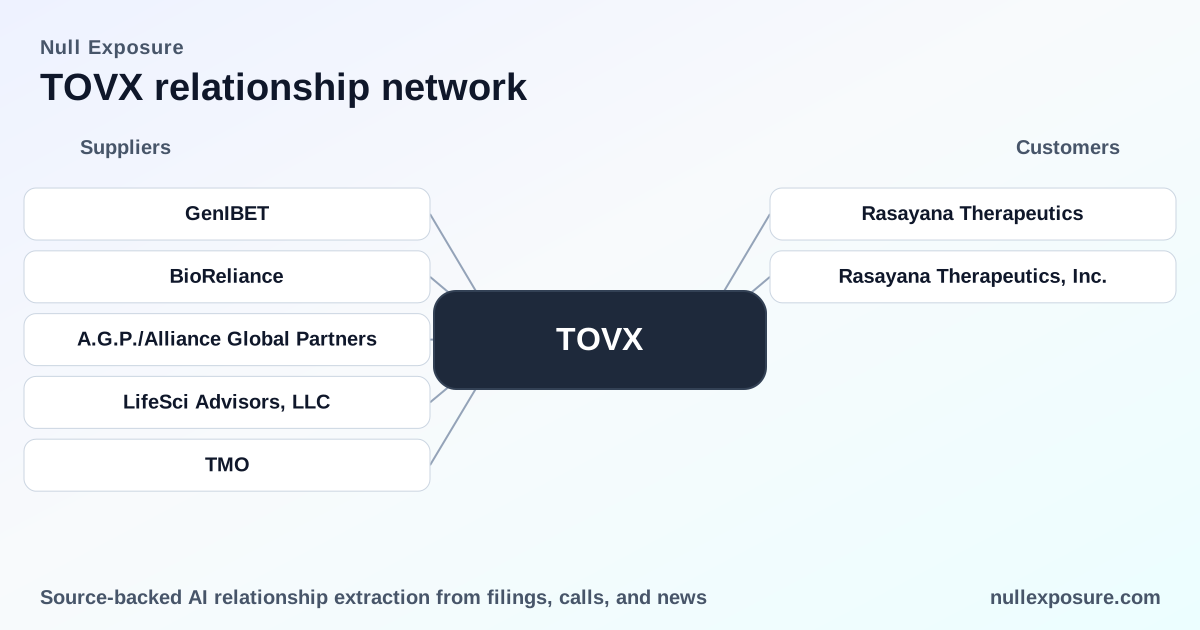
Rasayana Therapeutics, Inc. — Theriva granted an exclusive, worldwide license to develop and commercialize SYN‑020 (recombinant bovine intestinal alkaline phosphatase), receiving $300,000 upfront and eligibility for milestone payments and tiered single‑digit royalties. The arrangement includes up to $16 million in development/regulatory milestones plus up to $22 million in sales-related milestones (a combined ceiling commonly reported as $38 million), with sublicensing rights granted to Rasayana. (Source: Theriva press release, GlobeNewswire, Feb 18, 2026; Theriva full‑year 2025 operational highlights, Mar 12, 2026.)
This out‑license was widely distributed in financial media and wire reporting, including Reuters coverage republished by TradingView and supplemental notices on investor wires; all sources reiterate the exclusive nature of the license and the financial structure featuring an upfront payment, milestone pools, and royalty upside. (Source: Reuters/TradingView, Mar 10, 2026; stock‑news syndications, Feb–Mar 2026.)
Single-relationship coverage (complete): Rasayana Therapeutics
Rasayana Therapeutics — Theriva’s counterparty for SYN‑020: exclusive worldwide license, $300k upfront, eligibility for development/regulatory milestones ($16M) and sales milestones ($22M), plus tiered single‑digit royalties; sublicensing rights included. (Sources: GlobeNewswire press release, Feb 18, 2026; Theriva full-year 2025 results, Mar 12, 2026; Reuters/TradingView coverage, Mar 10, 2026.)
All news items and operational notices returned in the public record for TOVX’s customer relationships reference this single, material licensing transaction; no other active customer relationships are reported in the sources provided.
What this relationship signals for investors and operators
- Immediate liquidity is limited but real. The $300k upfront provides a near-term cash inflow; the material value sits in milestone pools and royalties that translate into revenue only upon Rasayana’s development and commercialization success.
- Downside protection is thin. Upfront consideration is small relative to the headline milestone pool; Theriva retains exposure to partner execution, regulatory outcomes, and commercial adoption.
- Concentration risk is meaningful. With public filings showing no product revenue, out‑licensing agreements such as the Rasayana deal act as the primary monetization pathway — when a single partner holds development/commercial responsibility, progress is a binary driver for future revenue recognition.
- Contract design transfers program risk. The exclusive license with the right to sublicense indicates Theriva prioritized capitalizing the asset and reducing operational burden rather than retaining later-stage development risk.
Financial and ownership context that shapes the deal’s impact
Theriva’s latest public financials present a small market capitalization and clinical-stage P&L, with negative earnings metrics and no recorded sales — a profile that forces the company to rely on licensing and capital raises for runway. Ownership concentration is low among institutions and insiders, increasing the stock’s sensitivity to news flow tied to partner milestones and clinical updates. (Company public filings and financial summary data, latest quarter ended 2025‑12‑31.)
For operators negotiating deals with similarly structured companies, this is a textbook licensing arrangement: limited upfront for downside protection, structured upside via milestones and royalties, and broad exclusivity to accelerate partner investment.
Key risks and upside to track going forward
- Risk — Execution dependency: Theriva’s revenue realization for SYN‑020 is contingent on Rasayana meeting development and regulatory milestones and converting sales thresholds into milestone payments.
- Risk — Timing and recognition: Milestones can be multi-year and conditional; investors should model delayed cash conversion and binary outcomes.
- Upside — Scaling royalties: If Rasayana advances SYN‑020 through pivotal studies and into commercial markets, tiered royalties can create long-duration revenue streams that materially outsize the upfront payment.
- Catalyst list: Rasayana’s development milestones, regulatory submissions/approvals, and any sublicense deals or partner expansion will be immediate value drivers for Theriva.
Practical takeaways for portfolio construction
- Treat Theriva as a milestone/partner-risk exposure rather than a revenue-generating operating company today. Position sizing should reflect the high binary nature of milestone realization.
- Monitor Rasayana’s development timetable and regulatory filings as primary lead indicators for Theriva cash flow prospects.
- Maintain close watch on company disclosures (Form 10-K/8-K equivalents and press releases) that document milestone achievement or changes to the license terms.
For a granular view of partner exposures across small-cap life sciences and to track similar licensing relationships, explore additional relationship intelligence at https://nullexposure.com/.
Bottom line
Theriva’s commercial strategy is clear: de-risk assets through exclusive licenses, capture modest upfront cash, and retain upside through milestone and royalty economics. The Rasayana Therapeutics license for SYN‑020 exemplifies that model — it provides short-term liquidity and potential long-term upside, but the value realization for TOVX investors is tightly coupled to Rasayana’s execution and the timing of milestone events.