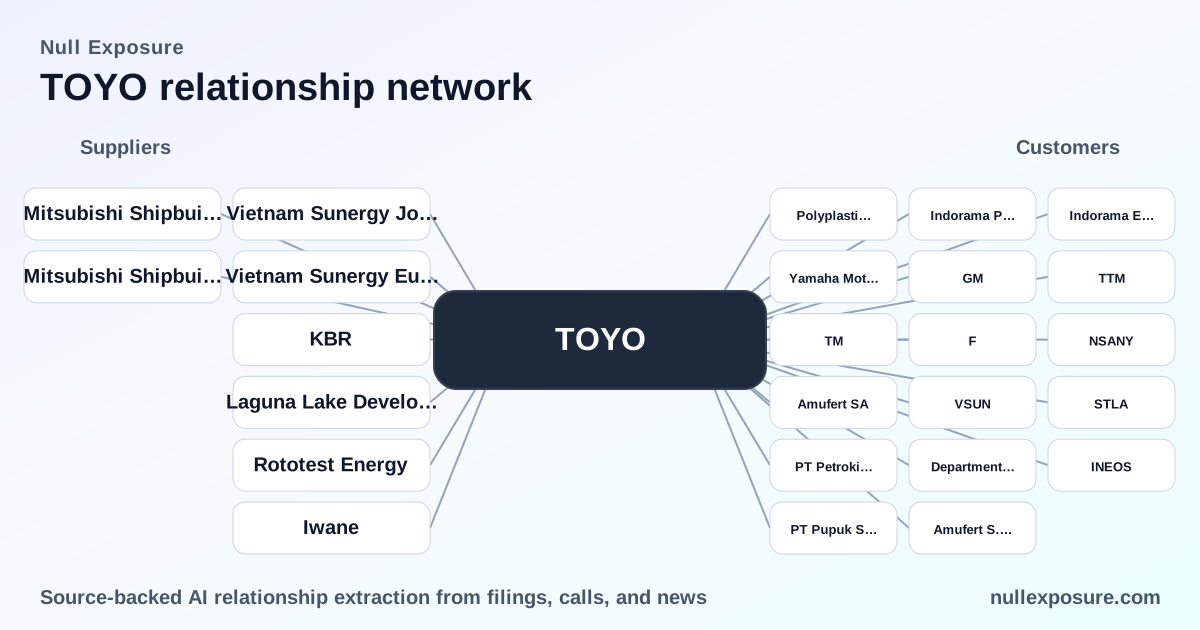
TOYO Co., Ltd.: Customer Relationships That Drive an engineering‑heavy, product‑led monetization
TOYO Co., Ltd. operates as a Japan‑headquartered industrial manufacturer and engineering services provider, monetizing through the sale of manufactured products (including solar components and industrial tooling) and long‑cycle engineering, licensing and project delivery contracts. Revenue is driven by a blend of product sales and large, milestone‑based engineering contracts, which explains the company’s mid‑single‑digit EV/Revenue multiple and healthy operating margin profile reported in recent filings. For a concise investor primer and ongoing monitoring, visit https://nullexposure.com/.
How to read TOYO’s customer map: convergence of manufacturing and project contracts
TOYO’s public relationships show a clear two‑pronged commercial model: OEM and product supply for vehicle and solar customers, and engineering, licensing and EPC work for large chemical and fertilizer projects. This combination produces a contracting posture that alternates between high‑volume, lower‑margin product flows (repeatable supply to vehicle OEMs and solar partners) and episodic, high‑criticality engineering contracts that carry project concentration risk and revenue lumpiness.
Because the captured sources do not list explicit contractual constraints, treat that absence as a company‑level signal: no single documented supply constraint or public concentration covenant was recorded in the dataset, but project concentration and long receivable cycles remain intrinsic to the business model given the nature of large EPC customers and licensing deals.
Relationship roll call — every customer mention in the record
Below is a plain‑English summary of each relationship in the results feed, with the reporting source for verification.
-
LOOP — Toyo was hired to complete detailed engineering for a LOOP plant, with engineering work beginning November 1 and extending through construction. Source: InsiderMonkey Q3 2026 earnings‑call transcript (reported March 10, 2026).
-
Polyplastics Co., Ltd — Toyo Engineering (China) secured the contract to build a Polyacetal (POM) plant in Nantong, China for a new Polyplastics subsidiary, indicating continued Asia EPC activity. Source: Indian Chemical News report (FY2022 coverage).
-
Voltec Solar — Under a partnership, Toyo will supply high‑performance, low‑carbon solar cells to Voltec Solar to support carbon‑footprint certification for Voltec’s products. Source: HC Wainwright initiation coverage reported on Investing.com (May 4, 2026).
-
Toyota — Product fitment commentary shows Toyo’s parts and product lines are used on vehicles including Toyota models, underscoring OEM channel penetration. Source: Modern Tire Dealer article on Toyo sales (FY2025 coverage).
-
Amufert SA — Toyo secured an order to license its proprietary urea technology for Amufert’s 4,000 tpd urea plant in Angola, representing a large licensing/EPC engagement. Source: Indian Chemical News and Chemanalyst coverage of the Angola project (FY2025 reports).
-
Yamaha Motor Co., Ltd. — Yamaha initially invested in TOYO in 2019 and the relationship includes OEM supply of industrial robot models such as motorless single‑axis actuators. Source: Yamaha Motor press release (October 2025).
-
PT Petrokimia Gresik — Historical partnership evidence: Toyo partnered on major Indonesian fertilizer projects including work for PT Petrokimia Gresik in 2015, demonstrating long‑standing regional EPC relationships. Source: Chemanalyst project overview (FY2025 context).
-
PT Pupuk Sriwidjaja Palembang — Toyo partnered on the construction of a urea plant for PT Pupuk Sriwidjaja Palembang in 2023, reinforcing repeat project capability in Indonesia. Source: Chemanalyst project recap (FY2025 coverage).
-
Indorama Power Plant — Toyo completed two large 4,000 tpd urea plants for Indorama in Nigeria (2016 and 2021) using its own urea technology, underscoring technical track record in fertilizer EPC. Source: Indian Chemical News project history (FY2025 mention).
-
Chevrolet — Product fitment listings identify Chevrolet among popular vehicle applications for Toyo products, supporting aftermarket and OEM channel breadth. Source: Modern Tire Dealer sales coverage (FY2025).
-
Ford — Toyo’s product fitment extends to Ford vehicles, indicating penetration across major North American OEMs. Source: Modern Tire Dealer sales coverage (FY2025).
-
GM — Toyo product fitment includes GM platforms, reinforcing multi‑OEM reach in automotive channels. Source: Modern Tire Dealer (FY2025).
-
VSUN — Following TOYO Group’s acquisition of VSUN trademarks, TOYO granted a one‑year license back to VSUN to continue operations under those marks, reflecting a strategic IP and brand management move. Source: TOYO press release covered by The Globe and Mail (Sept 2025).
-
Department of Public Works and Highways (DPWH) — Toyo Construction acted as contractor on a DPWH river improvement project in the Philippines, responsible for hauling and disposal of dredged material conditional on permits and environmental compliance. Source: Philippine Journal report on DPWH agreement (FY2021 context).
-
H.C. Wainwright & Co. — TOYO entered into a sales agreement with H.C. Wainwright & Co., marking an engagement with capital markets sell‑side partners for distribution or advisory services. Source: Bitget report summarizing the sales agreement (May 4, 2026).
-
Roth Capital Partners — TOYO also executed a sales agreement with Roth Capital Partners alongside H.C. Wainwright, signaling parallel placement or coverage arrangements. Source: Bitget summary of the sales agreement (May 4, 2026).
-
Amufert S.A. — Same Angola engagement noted elsewhere in the feed: Toyo Engineering awarded the proprietary urea technology contract to Amufert S.A., confirming the strategic importance of the Angola project. Source: Chemanalyst project announcement (FY2025).
-
Indorama Eleme Fertilizer & Chemicals Limited — Toyo has delivered two large urea plants (4,000 tpd) to Indorama Eleme in Nigeria, establishing a repeatable project delivery relationship in Africa. Source: Chemanalyst project summary (FY2025).
-
Land Rover — Product fitment lists include Land Rover among vehicle makes served, reinforcing global OEM and aftermarket exposure. Source: Modern Tire Dealer sales coverage (FY2025).
-
Nissan — Toyo products are fit for Nissan models, reflecting penetration with Japanese OEMs in addition to international automakers. Source: Modern Tire Dealer (FY2025).
-
Ram — Toyo’s product lines cover Ram vehicles as part of the broader OEM fitment set. Source: Modern Tire Dealer (FY2025).
-
Jeep — Toyo identifies Jeep among popular vehicle fitments, demonstrating presence across off‑road and light truck segments. Source: Modern Tire Dealer (FY2025).
-
PT Pupuk Sriwidjaja Palembang (second entry) — IndianChemicalNews notes Toyo’s collaboration with Wuhuan on Indonesian projects including the Palembang urea plant, confirming a multi‑partner delivery model. Source: Indian Chemical News (reported in FY2025 summary).
-
PT Petrokimia Gresik (second entry) — IndianChemicalNews also cites Toyo’s collaborative projects with Indonesian partners for PT Petrokimia Gresik, again highlighting regional repeat business. Source: Indian Chemical News (FY2025 mention).
-
INEOS — INEOS is listed among vehicle makes for which Toyo products are popular fitments, indicating reach into industrial and specialty vehicle markets. Source: Modern Tire Dealer (FY2025).
Investment implications and risk checklist
- Revenue model: TOYO combines product sales (OEM and aftermarket) with lucrative, milestone‑driven engineering and licensing contracts; this diversification supports margin resilience but creates revenue volatility tied to project timing.
- Customer concentration: The record shows multiple large, repeat EPC customers (Indorama, Amufert, Indonesian state firms) and cross‑industry OEM exposure. Project concentration is the principal operational risk—single large EPC awards can swing annual results.
- Commercial posture: Evidence of licensing deals and trademark licensing (VSUN) indicates sophistication in monetizing IP alongside engineering services. Intellectual property and proprietary process technology are strategic assets.
- Capital markets engagement: Sales agreements with Roth Capital and H.C. Wainwright suggest active capital markets access for equity distribution or investor outreach, which supports financing optionality for project execution.
- Operational counterparty risk: Public contracting with government agencies (DPWH) and cross‑border EPC projects imply exposure to permitting, environmental compliance and geopolitical execution risk.
For a deeper, regularly updated view of TOYO’s customer and contract footprint, see the TOYO investor page and monitoring tools at https://nullexposure.com/.
Bold takeaways: TOYO’s growth is driven by repeatable large EPC wins plus stable OEM product revenue, but earnings remain project‑timing sensitive and concentrated around a handful of large customers—a core consideration for valuation and risk modeling.