Tempest Therapeutics (TPST): Customer relationships that shape a clinical-stage commercialization path
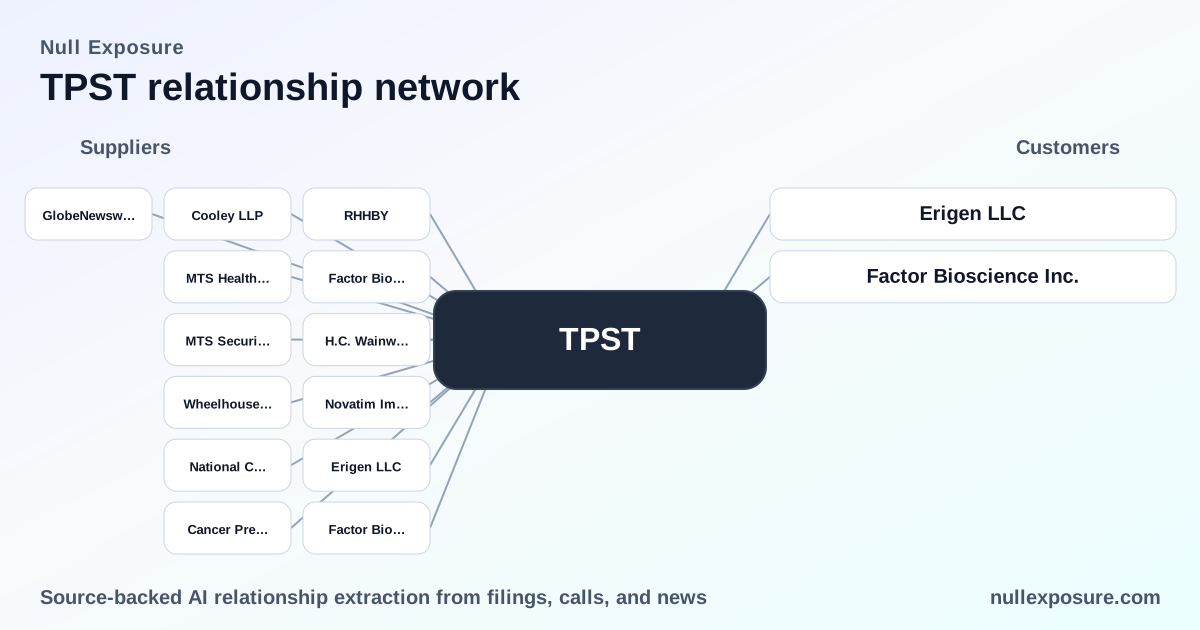
Tempest Therapeutics is a clinical-stage oncology company that develops small molecules and immune-mediated therapeutics and advances cell therapy assets through partnered manufacturing and regional licensing. The company monetizes through a combination of retained commercialization rights in core markets, strategic out-licenses for regional development, manufacturing partnerships for pivotal-stage assets, and selective asset sales that return value to shareholders. For investors tracking pathway risk and partner exposure, the relationship map around TPST-2003 and the recently announced asset transaction are the primary determinants of value realization. Learn more about the mapped relationships at Null Exposure: https://nullexposure.com/
How Tempest operates in practice — concise operating model signals
Tempest runs a focused, single-segment oncology research and development business concentrated on small-molecule and immune-mediated cancer therapies. The company is U.S.-centric in its asset base and operations and explicitly intends to retain significant development and commercialization rights, particularly in the United States, while partnering for regional development or manufacturing where strategically advantageous. Financially, Tempest is pre-revenue and clinical-stage (latest public figures show no revenue and a negative EBITDA), so partner execution and asset monetization events are the near-term drivers of enterprise value.
- Contracting posture: seller/retainer — Tempest structures deals that preserve core rights and uses partners selectively for development, manufacturing, and regional commercialization.
- Concentration and criticality: operations hinge on a small number of programmatic relationships (notably TPST-2003 partners and manufacturing sites), so partner performance is mission-critical.
- Maturity: clinical-stage, no commercial revenues; balance-sheet management and asset transactions are active levers to fund development.
Relationship-by-relationship overview (complete coverage)
Below are plain-English summaries for every customer relationship found in the recent coverage, each paired with the originating press release.
-
Cincinnati Children’s Applied Gene and Cell Therapy Center — delivery enabling manufacturing (GlobeNewswire, Apr 14, 2026). Tempest reported delivery of the TPST-2003 lentiviral vector to Cincinnati Children’s to enable manufacturing activities required for pivotal development of its dual-targeting CD19/BCMA CAR-T program. (See GlobeNewswire press release, April 14, 2026: https://www.globenewswire.com/news-release/2026/04/14/3273302/0/en/tempest-appoints-andrew-fang-ph-d-as-head-of-business-development-to-advance-strategic-partnerships-and-global-licensing-efforts.html)
-
Novatim Immune Therapeutics — regional development partner in China for TPST-2003 (GlobeNewswire, Apr 22, 2026). Tempest confirmed that TPST-2003 is being developed in China by its partner Novatim, establishing a clear licensing route for the Chinese market that shifts regional development responsibility to Novatim. (See GlobeNewswire press release, April 22, 2026: https://www.globenewswire.com/news-release/2026/04/22/3278911/0/en/tempest-announces-key-manufacturing-milestone-for-tpst-2003-dual-targeting-cd19-bcma-car-t.html)
-
Cincinnati Children’s Applied Gene and Cell Therapy Center — clinical update linkage (GlobeNewswire, Apr 29, 2026). Tempest reiterated that delivery of the TPST-2003 vector to Cincinnati Children’s supports manufacturing required for pivotal development and announced a clinical update at the ISCT 2026 meeting reflecting forward progress. (See GlobeNewswire press release, April 29, 2026: https://www.globenewswire.com/news-release/2026/04/29/3283678/0/en/tempest-to-advance-dual-targeting-car-t-platform-with-clinical-update-at-isct-2026-annual-meeting.html)
-
Erigen LLC — counterparty in an Asset Purchase Agreement and warrant distribution (GlobeNewswire, Jan 20, 2026). Tempest disclosed an Asset Purchase Agreement with Erigen LLC that underpins a planned distribution of warrants to shareholders as part of the transaction structure, signaling active asset portfolio management. (See GlobeNewswire press release, January 20, 2026: https://www.globenewswire.com/news-release/2026/01/20/3222341/0/en/Tempest-Announces-Record-Date-for-Anticipated-Dividend-Distribution-of-Warrants-to-Stockholders.html)
-
Factor Bioscience Inc. — co-counterparty in the Asset Purchase Agreement (GlobeNewswire, Jan 20, 2026). Factor Bioscience is the named co-party to the Asset Purchase Agreement alongside Erigen, and its inclusion establishes the transaction counterparties for the divestiture and related warrant distribution. (See GlobeNewswire press release, January 20, 2026: https://www.globenewswire.com/news-release/2026/01/20/3222341/0/en/Tempest-Announces-Record-Date-for-Anticipated-Dividend-Distribution-of-Warrants-to-Stockholders.html)
What these relationships mean for investors
The relationship set reveals a deliberate dual strategy: retain U.S. commercial rights while partnering for regional development and third-party manufacturing. The Cincinnati Children’s relationship is a manufacturing-critical engagement that transitions TPST-2003 from research into pivotal production phases; manufacturing delivery is a tangible de-risking step for an asset entering pivotal development. The Novatim agreement removes China development from Tempest’s internal constraints and creates a route to value capture in a large market without direct commercialization expense. The Asset Purchase Agreement with Erigen and Factor and the associated warrant distribution are explicit capital-recycling measures that shift non-core assets off Tempest’s balance sheet while returning optional upside to shareholders.
Key financial context: Tempest’s most recent public metrics show no revenue, negative EBITDA (approximately -$26.3M), and a modest market capitalization (about $30.3M), underscoring the dependence on partnerships and transaction execution to create liquidity and sustain development. Insider ownership is meaningful, signaling alignment; institutional ownership is material but not dominant.
Practical due-diligence checklist for operators and investors
- Confirm manufacturing scope and capacity at Cincinnati Children’s and the timetable for pivotal batch release and regulatory filings.
- Review the Novatim license terms for China: exclusivity, milestones, and royalties to quantify upside and downside risk.
- Obtain full terms of the Asset Purchase Agreement with Erigen and Factor, and model the economic effect of the warrant distribution on dilution and future capital needs.
- Monitor upcoming clinical readouts and ISCT disclosures tied to TPST-2003 for milestone triggers that influence partner payments or regulatory submissions.
Bottom line: partner execution is the proximate value driver
Tempest’s path to commercialization is partner-dependent but strategically controlled—the company keeps core U.S. rights while leveraging external manufacturing and regional development partners to accelerate TPST-2003. If manufacturing execution at Cincinnati Children’s and regional development by Novatim proceed on schedule, Tempest converts clinical progress into tangible de-risking; if those partners falter, the company’s clinical-stage, pre-revenue profile leaves limited alternative levers beyond further transactions. For a structured relationship map and ongoing monitoring, visit Null Exposure: https://nullexposure.com/