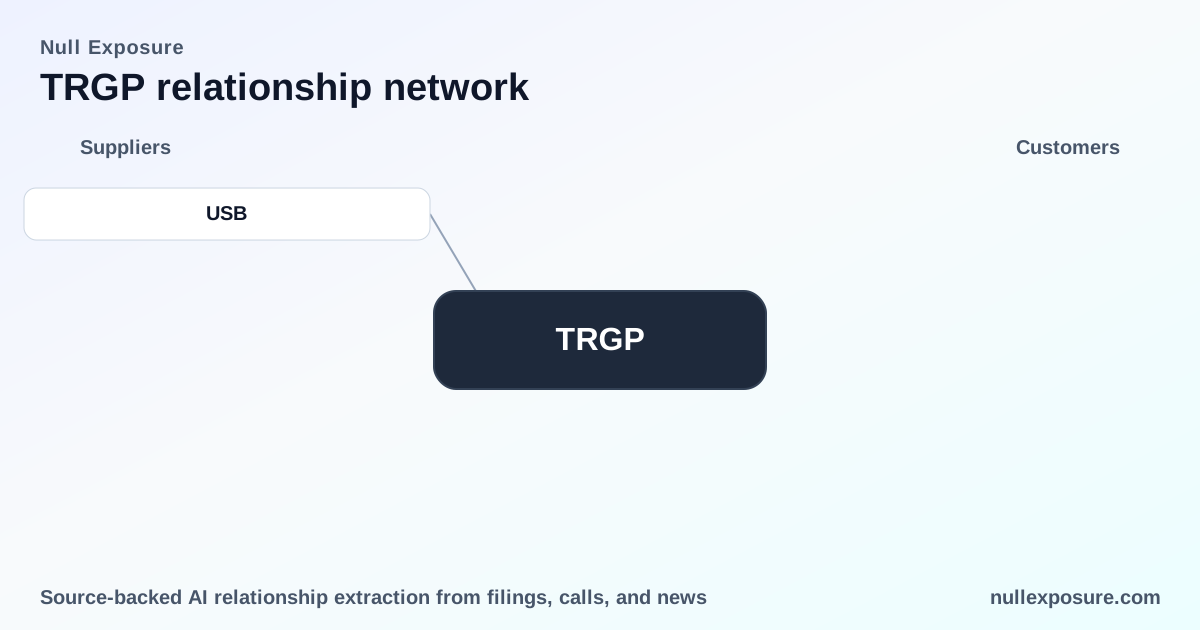
Targa Resources (TRGP) — Customer Relationship Profile and Strategic Implications
Targa Resources operates as a large North American midstream energy platform that monetizes via a mix of fee-based throughput contracts and commodity sales — gathering, processing, treating, fractionation, terminaling, storage and export services for natural gas, NGLs, condensate and crude. The business model combines long-term fee stability from minimum-volume contracts with spot exposure when Targa acts as the principal in commodity transactions, producing a cash flow profile that is predictable at the contract level but sensitive to upstream activity and commodity cycles. For more context on the data sources used to build these customer insights, visit https://nullexposure.com/.
Quick investor takeaways
- Contracting posture: Predominantly long-term, fee-based arrangements with remaining terms typically ranging from 1 to 15 years, providing predictable revenue under minimum-volume commitments.
- Revenue mix: Targa earns both service fees (gathering/processing, fractionation, terminaling, storage, transportation) and product sales (natural gas, NGLs, condensate, crude), and reports sales gross when acting as principal.
- Concentration: Customer concentration is low — no single customer accounted for 10% or more of consolidated revenues in 2024 or 2023 — reducing single-counterparty counterparty risk.
- Geography: Operations are predominantly North American (Mont Belvieu, Galena Park, Lake Charles) with export channels that create international exposure.
- Counterparties: End-users include large commercial and industrial customers, utilities and other major energy companies; the counterparty mix skews toward large enterprises.
- Strategic optionality: Long-term dedications and infrastructure allow Targa to capture development volumes from producers and third-party growth through services like acid gas treating.
Detected customer relationships (what the market cited)
Below are the customer relationships surfaced in external coverage and their plain-English implications.
Battalion Oil & Gas (BATL) — Finviz (May 2, 2026)
Targa provides acid gas treating capacity that Battalion expects to rely on for future development of the Sundown assets, effectively supporting Battalion’s ability to develop sour gas acreage. This is a concrete example of Targa’s role as an enabling midstream counterparty supplying critical downstream services. Source: Finviz news report, May 2, 2026.
Battalion Oil & Gas (BATL) — Markets Business Insider (May 2, 2026)
Markets Business Insider reported the same operational point: Battalion’s capital-efficient development plans will benefit from a recent acid gas treating agreement with Targa, which secures treatment capacity for sour gas produced on the acquired acreage. This demonstrates Targa’s strategic position as a service provider enabling upstream development. Source: Markets Business Insider, May 2, 2026.
What the company disclosures and constraints reveal about the operating model
Use the following signals as company-level characteristics rather than relationship-level assertions.
- Long-term, fee-based contracts anchor the revenue base. According to Targa’s filings, the company benefits from long-term fee arrangements, producer dedications and customer relationships tied to acquisitions; contracts are largely gathering/processing, fractionation, export, terminaling and storage agreements with remaining terms from 1 to 15 years. That contracting posture supports revenue visibility and bankable minimums while still leaving exposure to volume risk.
- Low counterparty concentration reduces single-client risk. Targa disclosed that in 2024 and 2023 no customer comprised 10% or more of consolidated revenues — a materiality signal that customer-level revenue risk is immaterial at present.
- Counterparty profile skews to large enterprises and utilities. End-users of residue gas include large commercial/industrial customers and natural gas/electric utilities, indicating counterparty credit profiles that are generally investment-grade or large corporate, which improves receivable quality.
- Geographic base is North America with export channels. Primary downstream facilities are concentrated in Texas and Louisiana, anchoring operational advantage in US Gulf Coast hubs, while Galena Park Marine Terminal exports create international market access and additional price/volume exposure.
- Targa plays both buyer and seller roles. The company sells natural gas, NGLs and condensate to a variety of purchasers and usually charges fees for throughput; it also records certain sales on a gross basis when it controls commodities, creating episodic commodity P&L sensitivity.
- Business segments are hybrid: core products plus services. Operating revenues derive from both sales of hydrocarbons and an array of services (gathering, compressing, treating, processing, fractionation, terminaling, storage and transportation), signaling a diversified midstream revenue stack with different margin and sensitivity profiles.
Strategic implications for investors and operators
- Stability with embedded cyclicality. The fee-based, long-term contracts deliver predictable minimum revenues and support valuation multiples for infrastructure, while commodity-sales exposure and upstream drilling activity introduce cyclicality — especially if state-level fracking restrictions or reduced drilling volumes occur.
- Infrastructure as a growth enabler. Agreements such as the acid gas treating contract with Battalion show how Targa leverages specialized services to capture growing upstream production; these service arrangements can be incremental, capital-light revenue drivers with outsized strategic value.
- Low customer concentration is favourable for credit and takeover defensibility. No single customer dominance reduces susceptibility to counterparty loss and supports the investment thesis that Targa’s cash flows are diversified across many producers and end-users.
- Export optionality increases market access but adds volatility. International demand for NGLs creates upside to margins in tight export markets but also links portions of Targa’s commercial outcomes to global price dynamics and shipping/terminal constraints.
Risk factors to monitor closely
- Volume risk from upstream activity and regulatory changes. State hydraulic fracturing limitations could reduce throughput and undercut utilization of Targa’s assets — a primary top-line sensitivity.
- Commodity P&L and working capital exposure. When acting as principal, Targa carries inventory and price risk; movements in NGL and natural gas prices will footprint reported revenues and margins.
- Contract term concentration by service type. While many contracts are long-term, the remaining term distribution (1–15 years) requires monitoring of renewal risk and potential re-contracting at lower rates.
- Export and logistics constraints. Marine terminal and fractionation capacity utilization and global shipping dynamics can amplify price and volume swings.
Bottom line: how investors should view TRGP customer relationships
Targa's customer base and contract structure create a resilient midstream cash flow foundation supported by long-duration fee contracts and diversified counterparties, while selective commodity exposure and export channels introduce cyclical upside and downside. The Battalion filings highlight Targa’s strategic, service-driven role that enables upstream development — precisely the type of relationship that converts infrastructure into recurring, contractually backed revenue. For investors and operators assessing counterparty credit and growth optionality, focus on throughput trends at core Gulf Coast assets, contract renewal cadence, and any changes in customer-level concentration.
Explore more tailored relationship intelligence and source-backed signals at https://nullexposure.com/.