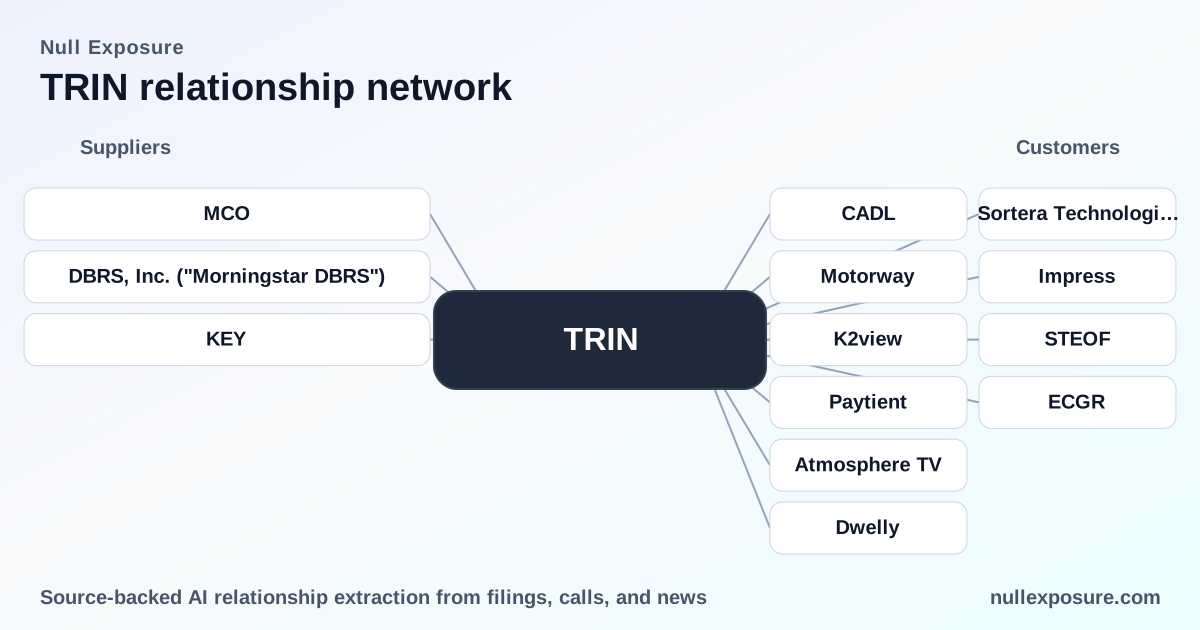
Trinity Capital (TRIN): A clear playbook on venture debt and growth finance
Trinity Capital operates as a specialty lender and alternative asset manager that provides secured loans, equipment financing and growth capital to venture- and growth-stage companies, monetizing through interest income, financing fees and advisory/management fees from related adviser vehicles. For investors, Trinity’s model is fee-plus-yield: predictable cash flows from multi-year loan contracts combined with portfolio appreciation and advisory fee capture. Read a concise company dossier here: NullExposure homepage.
Operational thesis and what matters for investors
- Trinity’s business mixes secured term loans (up to 60 months) and equipment financings with an emphasis on growth-stage, institutional-backed borrowers; this underwriting stance drives yield but concentrates exposure in a handful of material relationships.
- Portfolio concentration is meaningful: the ten largest portfolio companies represented ~26.7% of fair value at year-end 2024, so credit outcomes for a small number of borrowers are systemically important to performance.
- The firm runs both an originating lending platform and an adviser subsidiary that provides services to third-party vehicles, creating multiple revenue streams (interest, fees, advisory) and internal resource-sharing mechanics.
A mid-article briefing and additional research tools are available on the home page: NullExposure homepage.
How Trinity’s book shapes contracting, concentration and criticality
- Contracting posture: long-term financing is core — Trinity describes typical loan and equipment financing terms of up to 60 months, which implies multi-year cash flow visibility and longer credit duration on the balance sheet.
- Geography and sector posture: Trinity primarily underwrites in the United States, while retaining a capability to invest globally when opportunities justify it; this drives a domestic-first, high-growth sector focus that concentrates portfolio risk in North American SaaS, healthcare and tech-enabled services.
- Role and revenue diversity: Trinity is both a lender (seller of credit) and a service provider via its Adviser Sub, which generates advisory fees and allows balance-sheet-originated assets to be monetized through third-party vehicles.
- Materiality: secured loans and equipment financings dominate the portfolio (75% and 18% of cost/fair value respectively), reinforcing a lending-first identity rather than equity underwriting.
Portfolio relationships — what Trinity is funding now Below are every customer relationship reported in the available results, summarized in plain English with source attribution.
Candel Therapeutics (CADL)
Trinity provided a five-year, $130 million term loan facility to Candel Therapeutics, with $50 million drawn at closing and capacity for additional draws, bolstering the company’s clinical funding runway. According to The Pharma Letter and company filings (reported March 10, 2026; GlobeNewswire November 2025), the facility is structured to support Candel’s pipeline and balance sheet.
Angel Studios (ANGX)
Trinity closed a $100 million credit facility to Angel Studios to expand its Angel Guild and content pipeline, and subsequently served as administrative agent on amended loan documents tied to that facility. PR Newswire and multiple market reports documented the $100 million commitment and related amendments (March–May 2026).
Motorway
Trinity committed £25 million in growth capital to Motorway, the UK online used-car marketplace, supporting the company’s expansion in the UK market. PR Newswire announced the commitment on March 10, 2026.
Dwelly
Trinity committed $50 million in growth capital to Dwelly, a UK property-management marketplace, indicating focused growth investments in European marketplaces. The commitment was disclosed via PR Newswire on March 10, 2026.
K2view
Trinity committed $15 million in growth capital to K2view, an enterprise data management company positioning for AI-driven operational data products. PR Newswire reported the funding on March 10, 2026.
Paytient
Trinity provided $40 million in growth capital to Paytient, the healthcare payments company, to accelerate market expansion and product rollouts. PR Newswire issued the announcement on March 10, 2026.
Sortera Technologies
Trinity provided equipment financing to Sortera Technologies to scale its AI-powered materials upcycling operations, reflecting Trinity’s equipment-finance vertical into industrial tech. PR Newswire confirmed the transaction on March 10, 2026.
Atmosphere TV
Trinity committed $62.7 million in capital to Atmosphere TV, the ad-supported streaming platform for business venues, highlighting non-traditional media exposure in the portfolio. TVTechnology covered the announcement on March 10, 2026.
Steno (STEOF)
Trinity committed $20 million in growth capital to Steno, a tech-enabled legal support and court reporting provider, underlining exposure to service-oriented SaaS and platform operators. PR Newswire published the commitment on March 10, 2026.
Iantrek
Trinity provided $30 million in growth capital to Iantrek to accelerate commercial expansion and product development, disclosed in corporate communications tied to Trinity’s leadership transition filing. PR Newswire and related company notices referenced this funding (FY2023 disclosures reported later).
Torus
Trinity provided $35 million in equipment financing to Torus to support American-made energy systems, reflecting a mandate into energy equipment finance under its equipment financing sleeve. The financing was described in Trinity’s press disclosures tied to executive transition announcements.
RxAnte
Trinity provided a $25 million growth financing facility to RxAnte, a pharmacy care management business, as previously reported in 2022 and referenced in later summaries. Finsmes documented the RxAnte facility (reported December 2022; referenced in 2026 summaries).
Impress
Trinity participated in a financing round backing Impress (a dental/healthcare company) that was part of a broader syndicate including other institutional backers, reflecting co-investment behavior across private rounds. SiliconCanals covered the Impress round (reported FY2024).
Kinetic
Trinity committed growth capital to Kinetic, an insurtech/claims platform and managing general underwriter focused on workers’ compensation, signaling targeted insurtech exposure across underwriting and tech stacks. SahmCapital and TipRanks reported Trinity’s commitment (coverage in late 2025 / early 2026).
Taysha Gene Therapies (TSHA)
Taysha recorded debt-issuance costs related to a refinancing of a loan and security agreement with Trinity Capital, showing Trinity’s role in restructuring existing credit facilities for biotech borrowers. InvestingNews noted the accounting impact in Taysha’s Q3 2025 results (reported March 2026).
Constraints and operational signals that matter for credit and underwriting
- Contract tenor is long-term: Trinity’s loans and equipment financings typically run up to 60 months, supporting multi-year borrower capitalization but increasing duration and credit monitoring requirements.
- Portfolio concentration is material: the top ten portfolio companies represented roughly 26.7% of portfolio fair value at year-end 2024, which elevates idiosyncratic credit risk and amplifies sensitivity to a handful of workouts or exits.
- Geographic posture is North America-first with global optionality: portfolio composition shows heavy U.S. exposure by region, while filings permit global deployment where appropriate.
- Role complexity boosts revenue diversification: Trinity functions as both lender and service provider through its Adviser Sub, creating fee capture from external investor vehicles and resource-sharing arrangements; receivables from the Adviser Sub were disclosed as part of routine financials.
Investment implications — risks and positives
- Positive: diversified revenue mix (interest + advisory fees) and a lending-first portfolio that generates steady cash yield; valuations indicate reasonable multiples relative to book (Price/Book ~1.26).
- Risk: concentration and multi-year tenors create tail risk if several material borrowers underperform; investors must watch borrower covenants, drawn vs undrawn commitments, and covenant amendments (as seen with Angel Studios).
- Structural advantage: control of both origination and advisory operations provides earnings leverage when markets or fundraising activity accelerate.
Key takeaway: Trinity is a specialized lender that translates underwriting into recurring interest income while monetizing through advisory relationships; its performance is driven by credit selection, portfolio concentration and the success of several large, material customer commitments. For disciplined underwriting-focused investors and operators assessing exposure to TRIN, these relationship-level commitments and the company-level operational constraints are the primary levers to monitor.
For a consolidated research package and ongoing surveillance on TRIN customer relationships, visit NullExposure: https://nullexposure.com/.