Trinity Industries (TRN): Customer Relationships and What Investors Should Know
Thesis: Trinity Industries monetizes a vertically integrated rail franchise by manufacturing new railcars for sale, operating a large leased fleet that generates recurring rental income, and selling maintenance and logistics services to railroads and industrial shippers. Revenue derives from point-of-sale manufacturing, fixed multi-year leases, and usage‑sensitive per‑diem arrangements; capital intensity and backlog visibility drive near‑term earnings and cash flow timing. For a concise partner and counterparty view, see https://nullexposure.com/.
A single counterparty move with outsized operational consequences
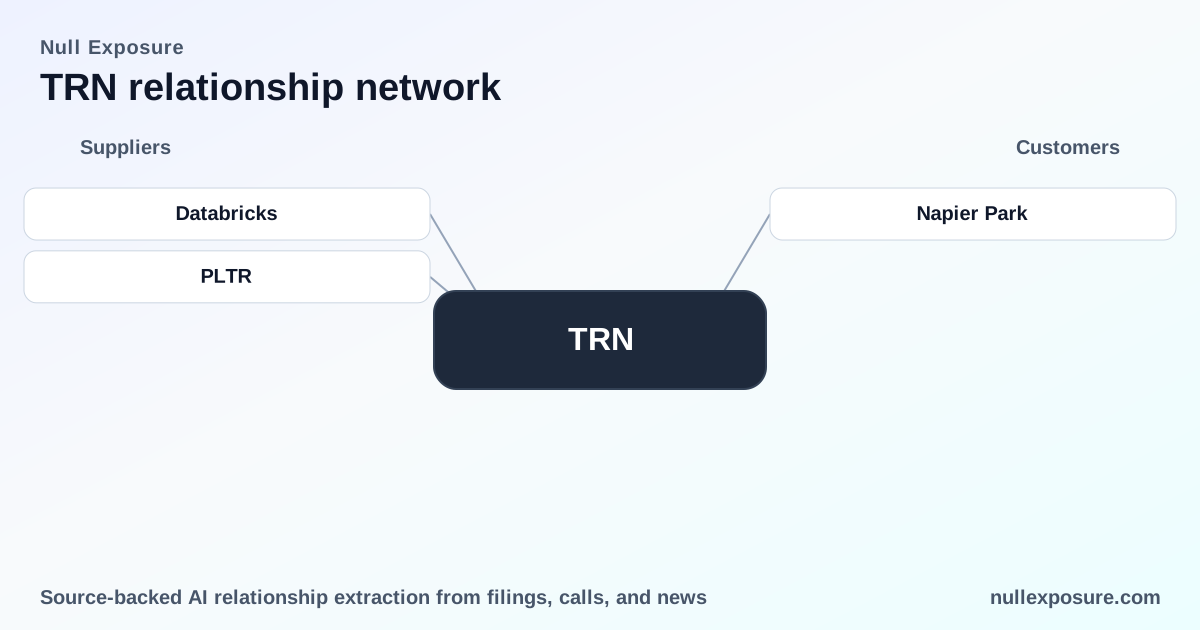
Two recent public disclosures show a major portfolio transfer from Trinity’s managed fleet into investor ownership under Napier Park. That transfer changes who carries asset ownership risk while leaving Trinity’s platform—manufacturing, management, and service capabilities—as the revenue engine for new builds and aftermarket work.
According to an InsiderMonkey transcript of Trinity’s FY2026 earnings call (March 2026), Napier Park assumed full ownership of the TRIUMPH fleet, approximately 10,850 railcars, signaling a handoff of a large asset pool to an institutional owner. A Globe and Mail press release (May 2026) added that a related Napier Park transaction shifted about 6,100 railcars into an investor‑owned fleet structure after quarter‑end. Both disclosures are affirmative public records of a substantive portfolio re‑allocation.
Visit https://nullexposure.com/ for the full relationship mapping and primary-source links.
Relationship catalog: the public record (each disclosed relationship)
-
Napier Park — InsiderMonkey (FY2026 earnings call, Mar 2026): Napier Park assumed full ownership of the TRIUMPH fleet of roughly 10,850 railcars, transferring title and ownership of a core fleet previously associated with Trinity’s platform.
Source: InsiderMonkey transcript of Trinity Industries’ FY2026 earnings call (first reported Mar 10, 2026). -
Napier Park — The Globe and Mail (press release, May 2026): After quarter‑end, Trinity completed a transaction that shifted about 6,100 railcars into an investor‑owned fleet structure under Napier Park, further crystallizing investor ownership of a substantial portion of Trinity‑related rolling stock.
Source: Globe and Mail press release summarizing the post‑quarter transaction (reported May 4, 2026).
How Trinity’s customer relationships are structured in practice
Trinity’s commercial model blends discrete manufacturing sales with recurring leasing and aftermarket services. The company’s public disclosures and filings collectively describe the following operating characteristics as company-level signals:
-
Contracting posture: mix of long-term fixed rentals and usage‑based leases. Trinity recognizes new‑car revenue at legal title transfer, while lease contracts range from one to ten years with fixed monthly rentals; a portion of the fleet operates on per‑diem, usage‑sensitive leases that produce variable cash flows.
-
Geographic concentration: North America‑centric. The business operates principally in North America, with Mexico as the primary foreign outpost and limited material revenue from international operations.
-
Segmented revenue model: manufacturing and services. Trinity runs two complementary segments: a Rail Products manufacturing arm that sells new cars and parts, and a Railcar Leasing and Services platform that provides third‑party leasing, fleet management, maintenance, and logistics.
-
Materiality and concentration: a single customer can be meaningful. Filings show one Rail Products customer accounted for about 22% of consolidated revenues in 2024, highlighting counterparty concentration risk in certain contracts.
-
Capital and backlog: significant near‑term deliveries. External railcar backlog stood near $1.9 billion at a recent year‑end, with management projecting nearly half of that backlog delivered within a single year—evidence of substantial capital commitments and revenue visibility.
-
Roles across the chain: manufacturer, seller and service provider. Public excerpts describe Trinity defending product liability cases tied to prior-manufactured products, recognizing title transfers on sale, and operating leased assets—illustrating cross‑functional exposure.
Operational and financial implications of the Napier Park transactions
The Napier Park ownership transfers are strategically important for both counterparty risk and Trinity’s capital allocation:
-
Ownership vs. service economics: When investor groups assume ownership of fleets, Trinity’s balance‑sheet capital needs can decline if the company sells assets to investors; however, service and management revenues—maintenance, modifications, fleet administration—remain addressable revenue pools for Trinity.
-
Revenue timing and predictability shift: Moving assets into investor ownership can convert capital‑intensive balance‑sheet income into transactional or service revenue, changing the mix between recurring lease income and lower‑margin services or aftermarket work. The public notes do not quantify margin shifts, but the structural change alters cash‑flow composition.
-
Capital redeployment optionality: Disposals to investors can free capital for manufacturing backlog execution or shareholder returns—or reduce fleet exposure depending on management priorities disclosed in filings.
Risk profile and concentration considerations
- Concentration risk is real. Public filings report a customer that comprised ~22% of consolidated revenue in 2024; investors must track counterparty exposures and contract renewal timing.
- Litigation and product risk exist. Trinity has reported defending product‑liability actions related to legacy products, a vector that can affect both manufacturing and aftermarket service economics.
- Lease structure complexity affects cash flow volatility. The coexistence of fixed‑term rentals and per‑diem, usage‑based payments creates a cash‑flow profile that is part recurring, part cyclical, tied to utilization and commodity cycles.
Practical takeaways for investors and operators
- Napier Park’s fleet purchases materially reassign ownership risk away from Trinity while preserving opportunities for maintenance and fleet management revenue. Investors should re‑price the earnings mix to reflect a potential shift from asset‑based rental margins toward services and new‑car sales recognition.
- Backlog and delivery schedules drive near‑term earnings visibility. A ~$1.9 billion external backlog (company disclosure) and planned deliveries across years create identifiable revenue windows—but also require capital and execution discipline.
- Monitor customer concentration and litigation exposure. One customer historically represented a meaningful revenue share and product‑liability claims remain on the balance sheet; both are ongoing risk vectors for valuation multiples and free‑cash‑flow forecasts.
For a clean, relationship‑level view of these and other counterparties, the Trinity customer map and primary source links are available at https://nullexposure.com/.
Bottom line
Trinity operates a capital‑intensive, vertically integrated rail franchise with mixed revenue streams—manufacturing sales, multi‑year leases, and aftermarket services—and recent transactions with Napier Park shift a sizable portion of fleet ownership into investor hands. The net effect for investors is a changed earnings composition and a clarified counterparty landscape: asset ownership risk transfers to institutional investors while Trinity retains operational leverage through manufacturing and service channels. Continued monitoring of backlog execution, customer concentration, and litigation exposures is essential for modeling TRN going forward.