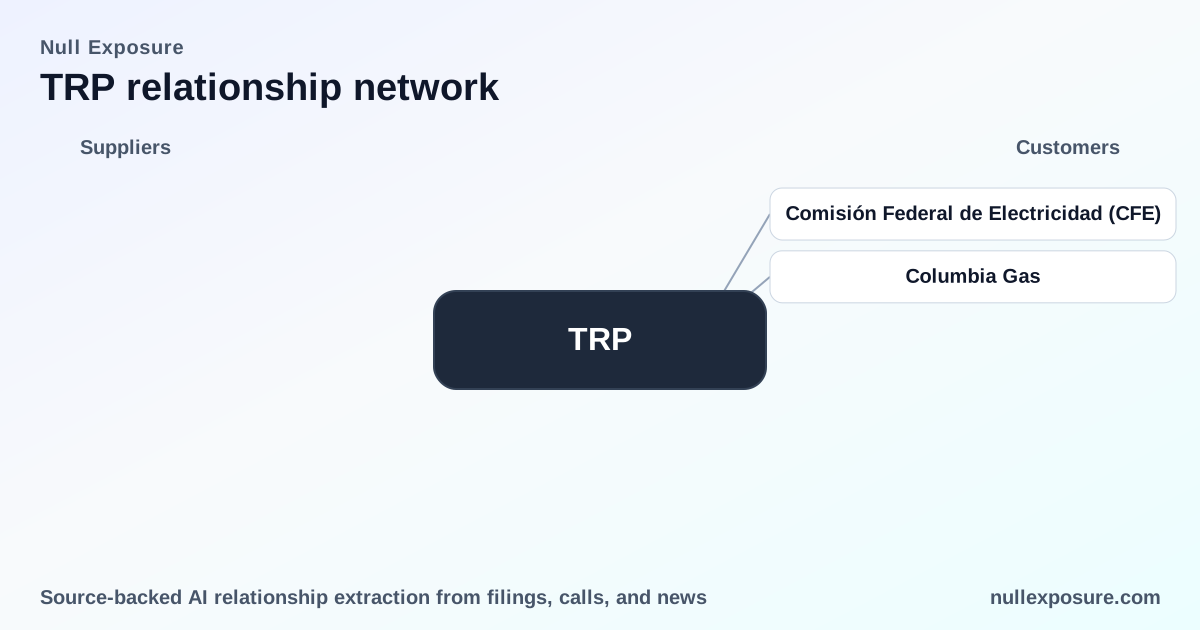
TC Energy (TRP) — customer relationships that underpin fee-bearing pipelines and LNG linkage
TC Energy operates and monetizes a portfolio of North American energy infrastructure assets — principally long-haul natural gas pipelines, regional gas distribution systems and related services — through a mix of regulated tariffs, long-term commercial contracts, project services and gas marketing. The company’s revenue profile is dominated by contracted throughput and fee-based earnings that are highly sensitive to project-level expansions (notably Coastal GasLink and LNG Canada) and legacy settlements in U.S. midstream assets. Investors should view customer ties as the primary transmission mechanism from project development into stable cash flow and dividend support.
For a concise vendor-risk and customer-readiness audit of TRP’s external counterparties, see NullExposure’s coverage: https://nullexposure.com/ (visit for full relationship detail and monitoring).
Why customer links matter for TRP’s valuation
TC Energy’s business model converts large capital investments into annuity-like cash flows when customers commit capacity or when projects reach commercial operations. Customers that drive incremental capex — like LNG exporters — directly influence future fee growth and capital deployment, while legacy customers and settlements adjust near-term EBITDA. Understanding each relationship clarifies whether future growth is fee- and contract-driven, or exposed to commodity-linked marketing volatility.
- Core commercial driver: long-duration take-or-pay style contracts and project service agreements.
- Earnings lever: capacity expansions for LNG export translate to incremental, durable tariff revenue.
- Earnings drag / upside: settlements or re-contracting of regional assets can materially adjust near-term cash flow.
Explore TRP customer coverage and tracking at NullExposure: https://nullexposure.com/
Customer relationships mapped (concise summaries and sources)
LNG Canada — critical anchor for Coastal GasLink and Phase 2 expansion
TC Energy’s Coastal GasLink pipeline is the supply backbone for the Shell-led LNG Canada export plant in Kitimat, and TC Energy has entered commercial agreements that establish LNG Canada as the execution manager for a proposed Coastal GasLink Phase 2 expansion, with CGL providing technical advisory services to LNG Canada. These arrangements position LNG Canada as the primary commercial counterparty for growth on the Pacific corridor and embed project management responsibilities with the LNG buyer. Source: TC Energy press release and related reporting (GlobeNewswire, May 1, 2026 — https://www.globenewswire.com/news-release/2026/05/01/3285790/0/en/tc-energy-reports-strong-first-quarter-2026-operating-and-financial-results.html) and coverage in The Globe and Mail (May 2026 — https://www.theglobeandmail.com/business/industry-news/energy-and-resources/article-tc-energy-results-earnings-estimates-us-canada-operations/).
LNG Canada — additional media confirmation of construction role and timeline
Multiple industry outlets report that LNG Canada will lead construction execution for the CGL Phase 2 expansion and that Coastal GasLink supplies the existing LNG export plant, reinforcing that TC Energy’s growth optionality in Canada is tightly coupled to LNG Canada’s expansion schedule and decision-making. Source: Business in Vancouver reporting (May 4, 2026 — https://www.biv.com/news/resources-agriculture/tc-energy-ceo-urges-quicker-timelines-as-globe-clamours-for-stable-energy-supplies-12026982) and BIC Magazine coverage (May 2026 — https://www.bicmagazine.com/industry/pipelines/tc-energy-inks-new-deals-for-gaslink-expansion/).
Comisión Federal de Electricidad (CFE) — long-term Mexican power customer relationship
TC Energy identifies a longstanding commercial relationship with Mexico’s state utility, CFE, noting a 30‑year relationship that underpins cross-border gas flow and power-sector demand; this tie supports TC Energy’s exposure to rising Mexican gas imports and associated project economics in the region. Source: Natural Gas Intelligence reporting (March 10, 2026 — https://naturalgasintel.com/news/tc-energy-bets-on-rising-mexico-natural-gas-imports-power-expansion/).
Columbia Gas — settlement-driven earnings impact in U.S. operations
U.S. operations benefited from a material settlement with Columbia Gas that contributed to a reported EBITDA increase, alongside contract sales and higher realized earnings in the company’s U.S. natural gas marketing business; the Columbia Gas settlement is an example of legacy portfolio items producing one-time or transitional earnings shifts. Source: Q4/2025 earnings call transcript coverage (InsiderMonkey, March 2026 — https://www.insidermonkey.com/blog/tc-energy-corporation-nysetrp-q4-2025-earnings-call-transcript-1696013/).
What these relationships tell investors about TRP’s operating model
- Contracting posture: TC Energy relies predominantly on long-duration commercial frameworks and tariffed capacity; LNG Canada arrangements and cross-border contracts illustrate a posture that prioritizes multi-decade revenue visibility where counterparties commit to construction and capacity allocations.
- Concentration and counterparty significance: A handful of large counterparties — notably LNG Canada and national utilities like CFE — account for the majority of incremental project-driven upside, concentrating execution and off-take risk in a few high-impact relationships.
- Criticality of assets: Coastal GasLink’s role as the direct supply link to the only major Canadian LNG export terminal makes the pipeline functionally critical to LNG Canada’s export economics; disruption or re-contracting would have outsized cash-flow consequences.
- Maturity profile: The company’s portfolio blends mature, regulated pipeline earnings and legacy settlements (e.g., Columbia Gas) with earlier-stage project expansion risk (CGL Phase 2), producing a mixed maturity ladder of cash generation.
These observations are company-level signals driven by the relationship evidence above and by how pipeline operators structurally monetize capacity and project services.
Investment implications — risks and optionality
- Upside: Execution of CGL Phase 2 under LNG Canada’s leadership translates directly into incremental fee revenue and improved long-term cash flow visibility; successful delivery also derisks related capital allocation and supports dividends.
- Risk: Concentration around a small set of counterparties raises project execution and counterparty-concentration risk; delays or changes in LNG Canada’s expansion timeline would materially affect projected tariff growth. Legacy settlements such as Columbia Gas can swing near-term EBITDA and complicate quarterly comparability.
- Portfolio tilt: For investors targeting stable, yield-oriented exposure, TC Energy’s fee-based and contracted elements are attractive; for growth-oriented strategies, the realized timing and governance of LNG project expansions determine material upside.
Final read and next step
Key takeaway: TC Energy’s customer base is concentrated but functionally strategic — LNG Canada is the principal growth counterparty for Coastal GasLink expansions, CFE represents durable cross-border demand in Mexico, and Columbia Gas items illustrate how legacy settlements can alter near-term earnings. Monitoring counterparties’ project execution plans and contract re-negotiation windows is essential for modeling TRP’s future cash flows.
For ongoing tracking of TRP counterparties and a structured supplier/customer risk view, consult NullExposure’s relationship intelligence at https://nullexposure.com/.