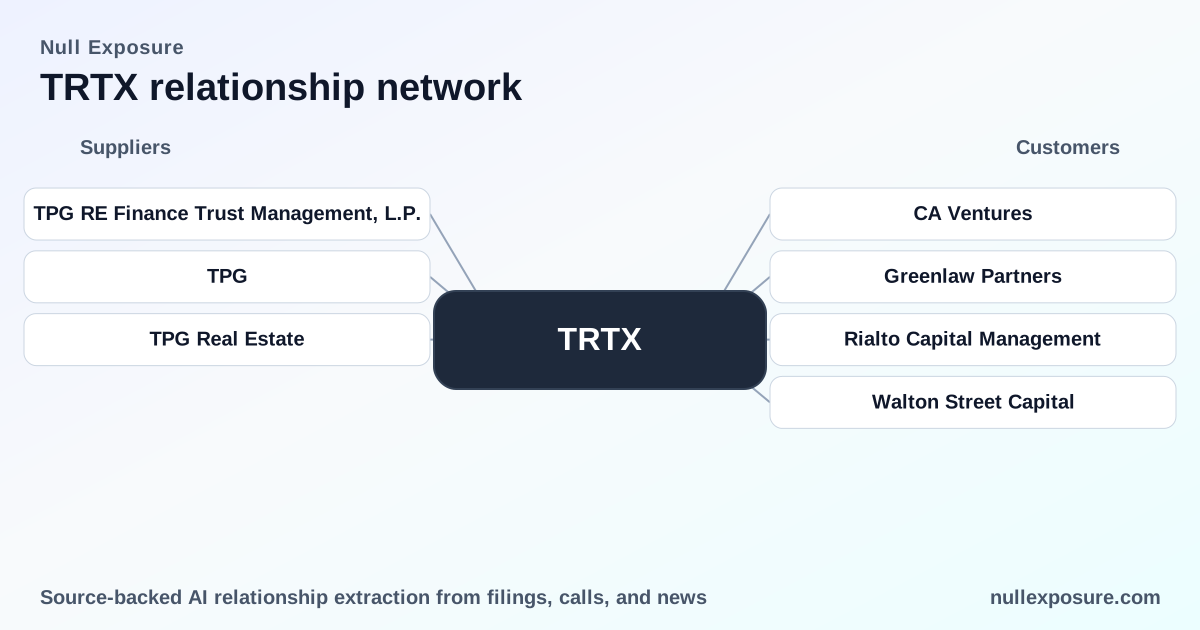
TRTX customer relationships: a hands‑on ledger of loans reclaimed, foreclosures and workout activity
TPG RE Finance Trust (TRTX) is a U.S.-focused commercial mortgage lender that originates, acquires and manages first‑mortgage and mezzanine loans secured by institutional real estate and monetizes through interest income, loan fees and realized gains when collateral is repossessed or sold. For investors evaluating credit exposure and operational execution, the recent news cycle delivers clear evidence that TRTX operates as an active creditor and workout counterparty — winning control of assets when borrowers default and enforcing remedies to preserve principal and recover value. For background on our coverage and related signals, visit the Null Exposure research hub: Null Exposure.
Executive snapshot: what the customer relationships tell you about the operating model
TRTX runs a direct-lender model concentrated in the United States, focusing on primary and selected secondary markets. The company books revenue primarily from loan yields and related servicing, and its capital deployment is structured around mortgage loans and participation interests rather than equity stakes. This produces several persistent characteristics investors must price into valuation and risk models:
- Contracting posture: TRTX is a creditor with the contractual right and operational capacity to foreclose and take possession of collateral; observed recoveries indicate an assertive workout playbook.
- Geographic concentration: All investment loans are U.S.-secured, which creates single‑country macro‑risk exposure but also deep market expertise.
- Business maturity and model: TRTX operates as a single reporting segment; lending and loan management are recurring, mature activities with predictable interest income and episodic realized gains/losses when assets are repossessed.
- Counterparty profile: Borrowers are institutional developers and private equity sponsors; defaults and repossessions are important leading indicators of sector stress and of TRTX’s underwriting resilience.
These firm‑level signals should be factored alongside balance‑sheet metrics such as book value, dividend yield and interest coverage when sizing positions.
Recent asset recoveries and defaults — relationship-by-relationship review
CA Ventures
TRTX seized a 263‑unit Arlington Heights rental property after CA Ventures surrendered the asset; the original loan was an $80 million advance made in 2021. According to The Real Deal (March 1, 2024), TRTX exercised lender remedies and took possession to preserve creditor value: https://therealdeal.com/chicago/2024/03/01/tpg-seized-arlington-heights-apartments-from-ca-ventures/.
Takeaway: This transaction demonstrates TRTX’s willingness to convert problem loans into owned real estate to protect principal.
Greenlaw Partners
TRTX took control of 1 City Boulevard West in Orange after borrowers, including Greenlaw Partners, defaulted on a $64 million obligation; the property is a 350,000‑square‑foot office asset. The Real Deal reported the transfer of control tied to borrower defaults (March 20, 2024): https://therealdeal.com/san-francisco/2024/03/20/rialto-capital-loses-san-mateo-office-building-to-tpg/.
Takeaway: TRTX enforces remedies across large office exposures, indicating active portfolio surveillance in Southern California markets.
Rialto Capital Management
Rialto Capital handed back the keys to an office building in San Mateo after falling behind on a $60 million loan, with TRTX reasserting control as lender. The Real Deal covered the case on March 20, 2024: https://therealdeal.com/san-francisco/2024/03/20/rialto-capital-loses-san-mateo-office-building-to-tpg/.
Takeaway: TRTX’s credit playbook includes repossession of regional office collateral where sponsor performance deteriorates.
Walton Street Capital
Walton Street Capital was reported among borrowers on the Orange property where TRTX assumed control following default on a $64 million loan; the operational outcome was the same lender repossession. See The Real Deal (March 20, 2024): https://therealdeal.com/san-francisco/2024/03/20/rialto-capital-loses-san-mateo-office-building-to-tpg/.
Takeaway: TRTX enforces lender positions against large sponsor groups, underlining sponsor concentration as an underwriting exposure.
Beacon Capital Group
TRTX provided a $309 million refinancing on Beacon Capital Group’s Fifth Avenue office condominium that included flagship tenants and complex lease structures, a deal referenced in press coverage tied to litigation and sector risk. The Real Deal documented that refinancing in the context of broader legal and credit scrutiny (April 30, 2020): https://therealdeal.com/new-york/2020/04/30/lawsuit-against-tpg-trust-could-be-an-omen-in-cre-finance/.
Takeaway: TRTX underwrites large, high‑profile office credits — these deals produce material exposure and complex workout scenarios when anchor tenants or leases shift.
Somera Road
Somera Road alleged that TRTX failed to advance $4 million on a $60.2 million loan for an office redevelopment in Kansas City, triggering litigation over funding obligations. The Real Deal reported the lawsuit and the borrower’s allegations on April 30, 2020: https://therealdeal.com/new-york/2020/04/30/lawsuit-against-tpg-trust-could-be-an-omen-in-cre-finance/.
Takeaway: Borrower litigation tied to advance disputes surfaces operational risk in loan administration and the importance of clear funding triggers in loan documentation.
For a broader look at TRTX credit dynamics and portfolio movements, see our research portal at Null Exposure.
What these relationships collectively reveal for investors
The documented relationships form a coherent portrait: TRTX is a first‑mortgage creditor that originates and acquires loans, monitors sponsor performance and exercises foreclosure or possession remedies when contract breaches occur. The pattern of repossessions and litigation shows a lender actively harvesting collateral value rather than quietly restructuring. That operational posture reduces unsecured recovery risk but increases exposure to REO management, disposition timing and market cycles for core property types such as office and multifamily.
Key investor implications:
- Credit risk is collateralized but real: Secured loans limit unsecured loss, yet full recovery depends on market demand for the underlying property type and location.
- Concentration and sponsor risk: Multiple defaults tied to institutional sponsors highlight borrower concentration as a vector of portfolio stress.
- Operational execution is value‑creating: TRTX’s ability to effect possession and disposition on defaulted loans is a positive for creditor recoveries, provided disposition costs and market timing are managed.
Bottom line — how to weigh TRTX exposures
TRTX’s client interactions across CA Ventures, Rialto, Walton Street, Greenlaw, Beacon and Somera Road are proof points of a lender that underwrites large institutional credits, enforces remedies and converts distressed loans into recoverable assets. Investors should value TRTX for its active creditor role while pricing in U.S. property‑type cyclicality and the operational complexities of asset disposition. Monitor loan vintage, tenant composition on repossessed assets and legal outcomes in advance disputes as primary drivers of realized returns.
If you want tracking and analytics on creditor recoveries and counterparty relationships for RE finance issuers, explore our platform at Null Exposure.