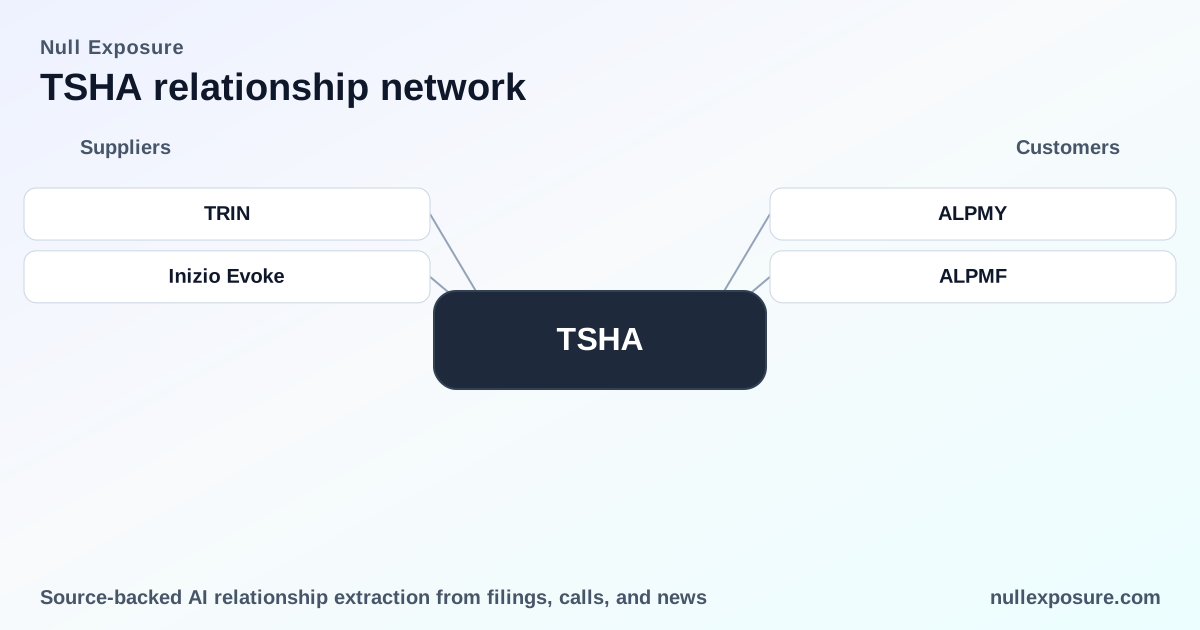
TSHA — How Astellas shapes revenue, rights and strategic optionality
Taysha Gene Therapies develops adeno‑associated virus (AAV) gene therapies for monogenic central nervous system disorders and monetizes through equity investments, option and license arrangements, and research‑related revenue tied to collaborator programs. The company’s recent revenue and strategic posture are concentrated around a single, high‑profile counterparty — Astellas — whose 2022 investment and option arrangement produced both funding and restrictions that have now lapsed, restoring Taysha’s control of its lead Rett program. For investors evaluating customer relationships, the Astellas interaction defines both near‑term cash flows and longer‑term commercial optionality.
Visit the firm homepage for context: NullExposure homepage
Why the Astellas relationship is the operative lens for TSHA today
From a commercial perspective, Taysha’s cash and contract profile over the last two fiscal years reflect a high‑concentration, strategic partnership that delivered non‑recurring and milestone‑like revenue while ceding certain commercialization rights. In 2022 Astellas invested $50 million for roughly 15% of Taysha and acquired an exclusive option to license TSHA‑102 for Rett syndrome; that arrangement produced both funding and a conditional limitation on Taysha’s freedom to transact around its lead asset. According to Taysha’s public disclosures and subsequent press coverage, the option expired in October 2025, and the company recognized Astellas‑related revenue in FY2026 that was material relative to its small revenue base (reported $9.8 million for FY2026).
- Contracting posture: Historically asymmetric — Astellas held an exclusive option that constrained TSHA‑102’s commercialization path; expiration restored unilateral control.
- Concentration: Astellas accounted for a meaningful share of revenue and strategic capital; this is a single‑counterparty dependency signal for a biopharma developer with limited commercial revenues.
- Criticality and maturity: TSHA‑102 is Taysha’s lead clinical program and the locus of the partnership rights; the option’s expiration marks a maturation event that shifts value capture back to Taysha.
Chronology and evidence — every recorded relationship mention
Below I list every relationship record extracted from public reports. Each line is a concise, plain‑English summary with a source reference so analysts can follow the original reporting.
-
A TradingView news item dated May 4, 2026 reported Taysha recorded $9.8 million in revenue for FY2026, driven primarily by Astellas‑related transactions tied to Rett R&D activities and an option expiry, while net loss widened to reflect higher R&D and G&A. Source: TradingView (May 4, 2026) — https://www.tradingview.com/news/tradingview:727ac6c722e16:0-taysha-gene-therapies-10-k-9-8m-revenue-0-34-eps/
-
A GlobeNewswire release (Oct 16, 2025) states the 2022 Option Agreement between Astellas and Taysha expired, returning exclusive rights to TSHA‑102 to Taysha and ending Astellas’s negotiation option. Source: GlobeNewswire (Oct 16, 2025) — https://www.globenewswire.com/news-release/2025/10/16/3168291/0/en/Taysha-Gene-Therapies-Regains-Full-Rights-to-Lead-TSHA-102-Program-in-Clinical-Evaluation-for-the-Treatment-of-Rett-Syndrome.html
-
The same GlobeNewswire release (Oct 16, 2025) was republished and re‑reported identifying the expired option and restored rights to TSHA‑102. Source: GlobeNewswire (Oct 16, 2025) — https://www.globenewswire.com/news-release/2025/10/16/3168291/0/en/Taysha-Gene-Therapies-Regains-Full-Rights-to-Lead-TSHA-102-Program-in-Clinical-Evaluation-for-the-Treatment-of-Rett-Syndrome.html
-
Manila Times carried the GlobeNewswire text on Oct 17, 2025 noting that the 2022 Option Agreement that granted Astellas an exclusive negotiation period has expired, with rights reverting to Taysha. Source: ManilaTimes/TMT Newswire (Oct 17, 2025) — https://www.manilatimes.net/2025/10/17/tmt-newswire/globenewswire/taysha-gene-therapies-regains-full-rights-to-lead-tsha-102-program-in-clinical-evaluation-for-the-treatment-of-rett-syndrome/2202678
-
The Manila Times reprint repeated the same headline and text about the option expiration and rights return. Source: ManilaTimes/TMT Newswire (Oct 17, 2025) — https://www.manilatimes.net/2025/10/17/tmt-newswire/globenewswire/taysha-gene-therapies-regains-full-rights-to-lead-tsha-102-program-in-clinical-evaluation-for-the-treatment-of-rett-syndrome/2202678
-
BioWorld (March 10, 2026) reported background that Astellas had invested $50 million in Taysha in 2022 for about 15% ownership and an exclusive option to license TSHA‑102, establishing the origin of the capital and option. Source: BioWorld (Mar 10, 2026) — https://www.bioworld.com/articles/725232-bring-it-back-home-taysha-regains-gene-therapy-as-option-expires
-
Investing News (March 10, 2026) covered the GlobeNewswire announcement, confirming the 2022 Option Agreement expired, restoring full rights to Taysha for TSHA‑102. Source: InvestingNews (Mar 10, 2026) — https://investingnews.com/taysha-gene-therapies-regains-full-rights-to-lead-tsha-102-program-in-clinical-evaluation-for-the-treatment-of-rett-syndrome/
-
GlobeNewswire’s Nov 4, 2025 corporate update reiterated that Taysha regained full rights to TSHA‑102 in October 2025 after the 2022 Option Agreement’s expiration. Source: GlobeNewswire (Nov 4, 2025) — https://www.globenewswire.com/news-release/2025/11/04/3180164/0/en/Taysha-Gene-Therapies-Reports-Third-Quarter-2025-Financial-Results-and-Provides-Corporate-Update.html
-
That same Nov 4, 2025 GlobeNewswire release was reported under the Astellas name in some syndications, again noting rights reversion in October 2025. Source: GlobeNewswire (Nov 4, 2025) — https://www.globenewswire.com/news-release/2025/11/04/3180164/0/en/Taysha-Gene-Therapies-Reports-Third-Quarter-2025-Financial-Results-and-Provides-Corporate-Update.html
-
InvestingNews republished the option‑expiration news in March 2026, restating that the 2022 option granted Astellas exclusive negotiation rights which have now lapsed. Source: InvestingNews (Mar 10, 2026) — https://investingnews.com/taysha-gene-therapies-regains-full-rights-to-lead-tsha-102-program-in-clinical-evaluation-for-the-treatment-of-rett-syndrome/
-
BioWorld’s March 10, 2026 article also summarized the 2022 financing terms — $50 million for 15% and an exclusive option on TSHA‑102 — providing the capital and contractual context for subsequent revenue recognition. Source: BioWorld (Mar 10, 2026) — https://www.bioworld.com/articles/725232-bring-it-back-home-taysha-regains-gene-therapy-as-option-expires
-
TradingView ran another item (Mar 10, 2026) framing the TSHA‑102 rights reversion as restoring strategic flexibility to Taysha after the Astellas option expired. Source: TradingView (Mar 10, 2026) — https://www.tradingview.com/news/tradingview:4abcc7e5c7dcc:0-b-taysha-gene-therapies-regains-full-rights-to-tsha-102-program-b/
-
The TradingView report was syndicated under the Astellas label in some feeds, repeating the restoration of flexibility for TSHA‑102. Source: TradingView (Mar 10, 2026) — https://www.tradingview.com/news/tradingview:4abcc7e5c7dcc:0-b-taysha-gene-therapies-regains-full-rights-to-tsha-102-program-b/
-
InvestingNews also distributed the Nov 4, 2025 corporate update that Taysha regained full rights to TSHA‑102 following option expiration. Source: InvestingNews (Nov 4, 2025) — https://investingnews.com/taysha-gene-therapies-reports-third-quarter-2025-financial-results-and-provides-corporate-update/
-
Another InvestingNews repost of the same corporate update used the ALPMY/ALPMF ticker reconciliation in syndication while describing the rights reversion. Source: InvestingNews (Nov 4, 2025) — https://investingnews.com/taysha-gene-therapies-reports-third-quarter-2025-financial-results-and-provides-corporate-update/
-
BioWorld’s coverage was repeated in syndications, again documenting the 2022 investment terms and option structure that governed TSHA‑102 until expiration. Source: BioWorld (Mar 10, 2026) — https://www.bioworld.com/articles/725232-bring-it-back-home-taysha-regains-gene-therapy-as-option-expires
-
TradingView’s March 10, 2026 piece appeared again in feeds, characterizing the program’s rights as regained and strategic flexibility restored to Taysha. Source: TradingView (Mar 10, 2026) — https://www.tradingview.com/news/tradingview:4abcc7e5c7dcc:0-b-taysha-gene-therapies-regains-full-rights-to-tsha-102-program-b/
-
InvestingNews’s March 2026 article reiterated the option expiration language and the reversion of TSHA‑102 rights to Taysha in multiple reposts. Source: InvestingNews (Mar 10, 2026) — https://investingnews.com/taysha-gene-therapies-regains-full-rights-to-lead-tsha-102-program-in-clinical-evaluation-for-the-treatment-of-rett-syndrome/
Investment implications and one‑page takeaway
- Revenue concentration risk is material. FY2026 revenue ($9.8M) came largely from Astellas‑related items; with limited commercial revenue, single‑partner events dominate reported top line.
- Strategic optionality improved in Oct 2025. The lapse of Astellas’s exclusive option returns full development and licensing discretion for TSHA‑102 to Taysha, improving potential upside capture for future deals or commercialization.
- Capital and governance effects persist. Astellas’s 2022 $50M investment for ~15% ownership influenced governance and economics during the option period; legacy ownership and any residual rights or collaboration mechanics remain factors for deal structuring.
- Catalysts to watch: licensing activity for TSHA‑102, any follow‑on revenue recognition tied to Astellas, and disclosures on partner ownership and board influence.
For a broader view of counterparties and commercial signals across small biotech issuers, see our platform: NullExposure homepage
This review compiles every public mention in our sample set relating to Taysha’s customer/partner interactions with Astellas and syndications thereof; follow the cited news links for full text and original dates.