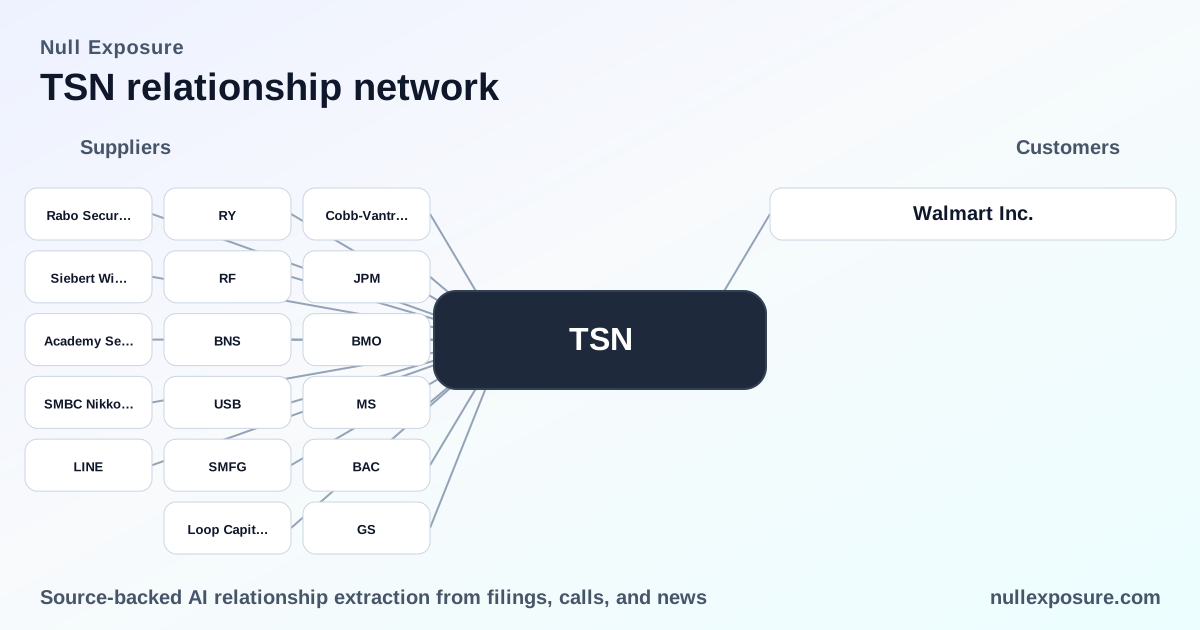
Tyson Foods (TSN) — Customer Relationships, Concentration, and Operational Implications
Tyson Foods operates as a vertically integrated protein supplier that procures livestock, processes poultry, pork and beef, and sells finished and value‑added meat products through grocery retailers, wholesalers, foodservice distributors and export channels. The company monetizes through high-volume product sales across branded and commodity lines, with pricing driven by short‑term commercial contracts and commodity markets; large retail partners like Walmart represent a critical volume anchor that drives working capital, production planning and margin exposure. For a deeper look at counterparty exposures and customer dynamics, visit https://nullexposure.com/.
Why customer concentration defines TSN's commercial posture
Tyson's customer roster is large, but its revenue flows concentrate heavily into a handful of retail chains. Walmart alone accounted for 18.7% of consolidated sales in fiscal 2025, making that relationship material to overall revenue and operational continuity. Tyson also reports that its customer agreements are generally short‑term, reflecting industry practice and sensitivity to supply, demand and price cycles; this contracting posture creates structural earnings volatility and forces continuous repricing and supply reallocation.
At the same time, Tyson sells in roughly 140 countries, but the majority of operations and roughly 95% of external sales are sourced from the United States — a dual signal of global distribution reach with domestic production concentration. Sales channels include grocery retailers, wholesalers, warehouse clubs, military commissaries and foodservice distributors, and the company recognizes revenue when control transfers (generally on shipment or delivery). These characteristics position Tyson as a high-volume seller operating under short‑term contracts to a concentrated set of powerful buyers.
Relationship-by-relationship: what investors need to price in
Walmart Inc.
Tyson identifies Walmart as its largest customer, representing 18.7% of consolidated sales in fiscal 2025 and similar shares in the prior two years; the filing warns that extended discontinuance of sales to Walmart would have a material impact if not replaced. According to Tyson’s FY2025 10‑K, Walmart’s share of sales is persistent and strategically meaningful to planning and liquidity.
KR (LegalReader article)
A LegalReader report (May 2026) covering a false‑advertising lawsuit against Kroger documents that frozen displays marked “No Antibiotics” were filled with Tyson chicken products and Butterball turkey, indicating Tyson product presence in contested retail signage and labeling contexts. The article connects Tyson products to the retail placement cited in the complaint.
The Kroger Company (Abasto)
An article at Abasto (May 2026) covering the same Kroger lawsuit quotes investigators who found “well‑raised” and “no antibiotics” claims above meat counters and states that conventional products from major processors including Tyson were sold beneath those signs, per Animal Outlook’s investigation. This positions Tyson as a supplier implicated in downstream retailer claims and potential litigation narratives.
Ralphs Grocery Company (Abasto)
Abasto’s reporting on the Ralphs locations in Southern California highlights that products from large processors such as Tyson were present under in‑store signage challenged by the suit, meaning Tyson‑sourced products were part of the retail assortments identified by investigators. The article frames the issue as retailer labeling and in‑store presentation rather than a direct contractual dispute between Tyson and Ralphs.
Operational constraints and how they shape financial outcomes
Tyson’s customer and contract characteristics create several binding constraints on the business model:
- Short‑term contracting posture: Tyson reports that customer agreements are generally short‑term, which forces recurring price negotiation and exposes margins to commodity swings and seasonal demand. This accelerates revenue cyclicality and increases working capital churn.
- Buyer concentration and materiality: With Walmart representing nearly one‑fifth of sales, a single counterparty’s purchasing decisions materially affect production schedules, utilization and cash flow. Management’s bargaining leverage is limited by the strategic importance of scale and the ease with which retailers reallocate shelf space among suppliers.
- Domestic production concentration with global reach: Tyson sells in ~140 countries but sources roughly 95% of external sales from the U.S., creating exposure to U.S. input costs, labor dynamics and regulatory conditions while retaining export exposure as a secondary avenue for demand smoothing.
- Government and broker channels: Sales to military and certain international markets flow through brokers and trading companies, introducing third‑party intermediation that affects margin capture and contractual clarity.
- Point‑in‑time revenue recognition: Revenue is recognized when control transfers (typically on shipment/delivery), which ties reported revenue to fulfillment timing and elevates the importance of logistics and inventory management.
Each constraint translates into concrete levers for investors to monitor: procurement costs, inventory turns, debtor days, retail slotting outcomes, and the tenor of trade promotions and rebates.
Risks from retail labeling and reputational spillover
Recent litigation and press coverage around Kroger and Ralphs focus on retailer signage describing animal‑welfare claims; reporting specifically references Tyson products being sold beneath those signs. That issue is a reputational and compliance risk that primarily targets retailer practices and in‑store presentation, but it has downstream implications for suppliers’ brand positioning, tranche contracts and promotional programs. A sustained retail litigation wave or stricter labeling enforcement could force retailers to tighten supplier certifications and documentation requirements, increasing compliance cost for processors like Tyson. See the LegalReader and Abasto articles (May 2026) for the contemporaneous reporting.
Investment implications and what to watch
- Earnings sensitivity is structural: Short‑term contracts and commodity exposure mean quarter‑to‑quarter operating performance will track feed and livestock costs and retail buying patterns.
- Concentration is the biggest single counterparty risk: Walmart’s ~18.7% share is the clearest measurable concentration; any change in volume or pricing terms with Walmart will directly affect throughput and margin absorption.
- Compliance and retail relations are active risk vectors: Retail labeling disputes, like the Kroger/Ralphs coverage referencing Tyson products, are distribution‑level risks that can accelerate retailer demands for documentation or shift promotional dynamics.
- Operational levers matter more than narrative: Inventory management, procurement discipline, and contract terms with large buyers will determine realized margins.
For a consolidated view of TSN customer exposures and to track changes in retailer relationships, see our research platform at https://nullexposure.com/.
Bottom line
Tyson is a high‑volume, margin‑sensitive protein processor operating under short‑term commercial contracts, significant buyer concentration (Walmart ~18.7% of sales), and a largely U.S. production base with global distribution reach. Those structural characteristics demand active monitoring of retail purchase behavior, commodity cost trends, and any regulatory or reputational developments in retailer labeling — all of which translate directly into near‑term earnings volatility and long‑term contractual pressure.