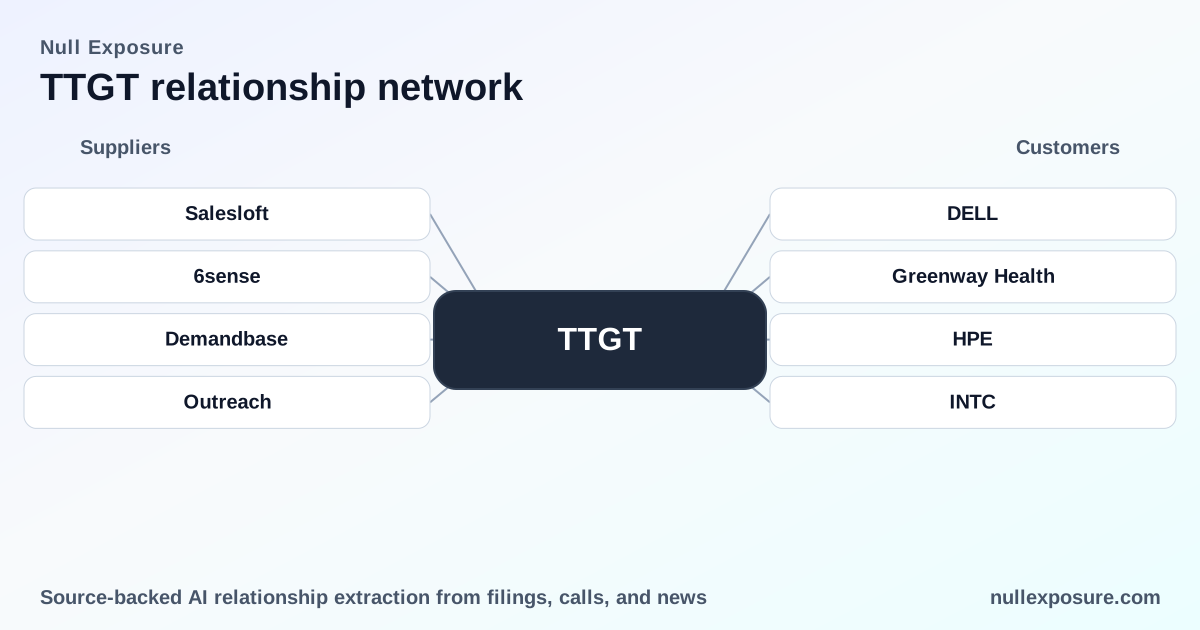
TechTarget (TTGT) — Customer Relationships and What They Mean for Investors
TechTarget operates as a B2B growth accelerator that monetizes first‑party intent data, intelligence subscriptions, and demand generation services for technology vendors. Revenue mixes include annual intelligence subscriptions (paid in advance), short‑term campaign contracts for content syndication and display advertising, and integrated longer‑term contracts that bundle multiple products, giving the company a blend of recurring cash and programmatic, quota‑based sales. Learn more about our coverage at https://nullexposure.com/.
Why customer relationships are central to valuation
TechTarget’s business model is driven by two monetization levers: predictable subscription cash flows from intelligence services and higher‑variance, short‑duration revenue from lead generation and sponsored content. For investors, that duality creates both upside (high gross margins on data and subscriptions) and cyclical exposure (campaign spend and sponsored placements). The customer evidence below is consistent with a platform that sells to large enterprise vendors and vertical buyers via both sponsored editorial and subscription channels.
What the relationship signals tell you about operating posture
- Contracting mix: Company disclosures describe a deliberate split between short‑term program contracts (often 1–3 months for lead/impression‑based products), integrated contracts exceeding 270 days, and annual subscriptions paid in advance. This indicates a hybrid contracting posture: subscription backbone with programmatic campaign overlays, and revenue recognition aligned to delivery or straight‑line subscription terms.
- Counterparty breadth and concentration: TechTarget calls out both the largest technology vendors and SMEs as customers, implying broad horizontal exposure but important concentration risk where top vendor spend can swing quarterly demand.
- Geography and scale: The firm reports a material North America revenue base and meaningful international operations; for the year ended December 31, 2024 it reported North America $200,849; United Kingdom $16,606; Rest of World $67,442 and disclosed that ~32% of revenues were billed outside the United States.
- Role and criticality: The company functions as a service provider and distributor — distributing white papers, webcasts, and virtual events while supplying buyer intent data — which makes it a strategic marketing partner for vendors but not an irreplaceable systems supplier.
- Spend profile: Related‑party billing examples and disclosed revenue amounts place many engagements in a $100k–$1m spend band, indicating mid‑sized program budgets for single clients are common. Related‑party revenue was immaterial in aggregate.
- Maturity and activity: Contract liabilities are generally current and expected to be recognized within 12 months, which is consistent with active, short renewal cycles for many products rather than long locked‑in enterprise contracts.
Detailed customer mentions observed on TechTarget properties
Dell — TechTarget feature on business intelligence (March 10, 2026)
TechTarget published a feature on the future of business intelligence that included Dell’s messaging on “Flexible IT: When Performance and Security Can’t Be Compromised,” showing Dell uses TechTarget for thought‑leadership and sponsored content to position infrastructure solutions to an analytics audience (TechTarget, March 10, 2026).
Dell Technologies — duplicate mention in the same feature (March 10, 2026)
A separate listing of Dell Technologies in the same March 10, 2026 feature underscores repeated placement and targeted editorial exposure for the vendor across TechTarget channels (TechTarget, March 10, 2026).
Greenway Health — vertical AI content (March 10, 2026)
TechTarget’s BI trends piece also carried a Greenway Health contribution titled “AI & Healthcare: Truth Behind the Buzz and a Path Forward,” reflecting TechTarget’s role as a vertical publishing vehicle where healthcare IT vendors and buyers engage on AI topics (TechTarget, March 10, 2026).
HPE — sponsored AI at the edge content (March 10, 2026)
A sponsored segment in the same feature — “Harness AI at the Edge to Enhance Business Success – HPE & Intel” — signals HPE’s use of TechTarget as a paid channel to reach IT decision makers with edge/AI narratives (TechTarget, March 10, 2026).
Intel — co‑sponsored edge/AI content with HPE (March 10, 2026)
Intel’s presence alongside HPE in the March feature confirms that chip and infrastructure vendors use TechTarget for joint sponsored thought leadership, aligning product messaging to enterprise AI initiatives (TechTarget, March 10, 2026).
Dell Technologies — sponsored opinion on end‑user AI (May 4, 2026)
An opinion piece on TechTarget addressing “The promise and concern around end‑user AI” included sponsored content from Dell promoting “AI Everywhere” client solutions, indicative of Dell’s strategic messaging and spend on TechTarget channels to influence CIO and desktop audiences (TechTarget, May 4, 2026).
Dell Technologies — sponsored CIO guidance on AI policies and storage (May 4, 2026)
A TechTarget CIO feature titled “A lawyer’s advice for CIOs creating AI use policies” contained a sponsored Dell insert on legacy storage hindering AI adoption, demonstrating Dell’s targeted sponsored content tied to practical buyer pain points (TechTarget, May 4, 2026).
Pure Storage — sponsored trend piece on Enterprise Data Cloud (May 4, 2026)
Pure Storage ran sponsored content in the same CIO feature promoting three trends driving IT leaders toward Enterprise Data Cloud, showing storage vendors leverage TechTarget for product and market‑trend positioning (TechTarget, May 4, 2026).
Dell Technologies — sponsored backup and cyber‑resilience content (May 4, 2026)
A TechTarget backup strategy tip piece included sponsored Dell material titled “Your backups are now the target,” reinforcing Dell’s multi‑topic sponsorship strategy across resilience and infrastructure narratives (TechTarget, May 4, 2026).
Investor implications from customer evidence
- Commercial mix creates revenue stability tempered by campaign cyclicality. The subscription base provides predictable cash flow and favorable gross margins; campaign and sponsored content revenue remains lumpy and correlated with vendor marketing budgets.
- Go‑to‑market exposure to large vendors is strategic but concentration risk exists. Frequent sponsored placements by major vendors (Dell, HPE, Intel, Pure Storage) demonstrate the platform’s attractiveness to enterprise spend — losing or failing to renew a few large vendor programs could materially compress near‑term revenue.
- International reach is non‑trivial. With roughly one‑third of revenues billed outside the U.S., macroeconomic or currency shifts in EMEA/APAC are meaningful underwriting factors for growth.
- Contracts favor short delivery cycles for lead‑gen and longer, prepaid subscription terms for intelligence services. This structure benefits cash conversion yet requires continued investment in content and platform relevance to sustain renewals.
Conclusion — what to watch next
Focus on subscription retention rates, renewal pricing on annual products, and the pipeline of large sponsored programs from major vendors. Monitor customer concentration and quarterly campaign revenue variance; these two metrics will drive volatility around otherwise stable intelligence income. For a concise deep dive into customer relationships and commercial signals around TTGT, visit https://nullexposure.com/.
Key takeaway: TechTarget is a subscription‑anchored marketing platform that monetizes its audience through recurring intelligence sales plus higher‑variance sponsored programs; investor risk is concentrated on vendor campaign spend and top‑counterparty renewals.