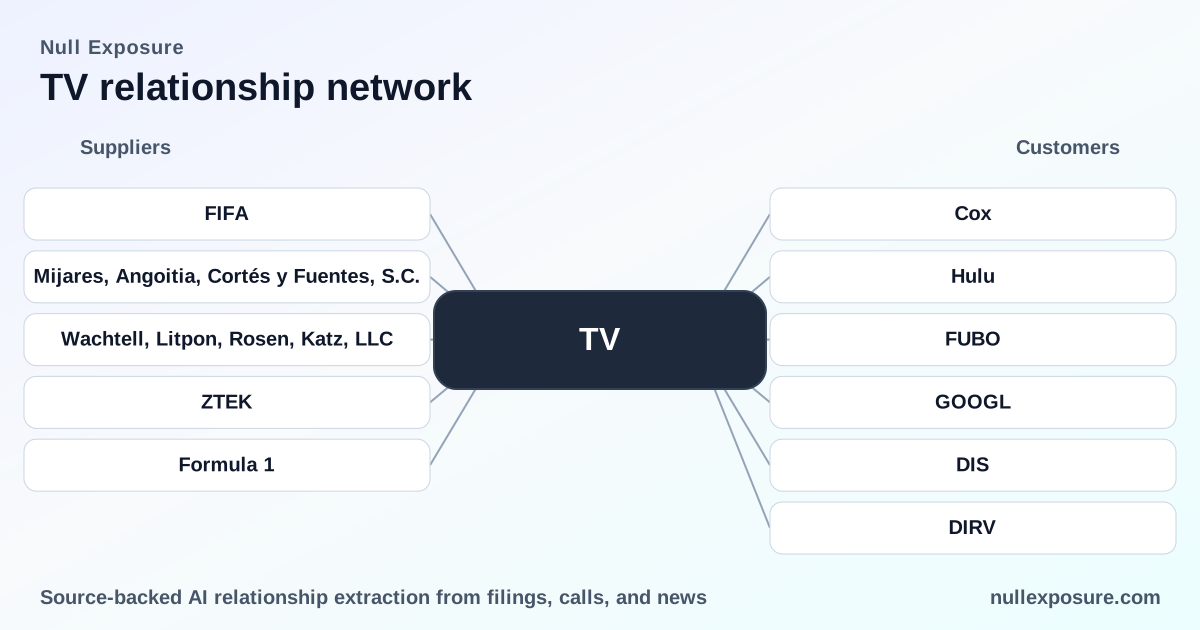
Televisa (TV): Distribution relationships that drive revenue — and where the risk lives
Grupo Televisa monetizes Spanish-language content through a blended model of broadcast concessions, cable and satellite carriage, content licensing, and targeted advertising. The company generates recurring cash flow from long-term broadcasting rights and carriage agreements while extracting incremental margin from U.S. and international licensing deals and streaming placements. For investors, the core thesis is simple: value derives from content ownership plus the stability of distribution contracts — evaluate exposure to carriage losses, the pace of U.S. streaming monetization, and counterparty concentration when sizing risk. Learn more at https://nullexposure.com/.
How to read Televisa’s operating posture: contracts, concentration and criticality
Televisa’s business is contract-driven: revenue depends on carriage and licensing agreements that convert content assets into predictable cash flows. The company retains government concessions for terrestrial broadcasting in Mexico, which anchors a legacy revenue base, while incremental growth and margin improvements flow from licensing to U.S. platforms and renewals with MVPDs and streaming aggregators.
- Contracting posture: agreements are a mix of long-term concessions (broadcast spectrum) and negotiated carriage/licensing deals with private distributors — those commercial contracts determine near-term cash flow volatility.
- Concentration and counterparty risk: the firm’s results reference a handful of major distributors and platforms; loss or dispute with a large U.S. distributor has measurable P&L impact.
- Criticality and maturity: core broadcast assets are mature and defensive in Mexico; U.S. distribution is dynamic and tied to streaming aggregation, producing both upside (licensing fees) and downside (subscriber and carriage volatility).
These points are company-level signals drawn from public filings and earnings commentary rather than discrete constraint documents. For more investor-oriented analysis, visit https://nullexposure.com/.
Customer and distribution relationships to monitor
Below are the relationships cited in recent filings and calls; each entry contains a plain-English summary and the source reference.
GTAC
Grupo Televisa reported a long-term loan and interest receivable from GTAC totaling Ps. 1,030,233 in its FY2026 disclosures, indicating material financial exposure as a creditor to this related party. (Grupo Televisa FY2026 annual report, MarketScreener, May 2026 — https://www.marketscreener.com/news/grupo-televisa-b-annual-report-financial-statements-televisa-2025-ef-eng-ce7f58d9d98af226)
TelevisaUnivision, Inc.
The Group holds Mexican government concessions that authorize it to broadcast programming for the signals of TelevisaUnivision, Inc., as well as its own cable and satellite networks, highlighting formal distribution arrangements and cross-border content flows. (Grupo Televisa FY2026 annual report, MarketScreener, May 2026 — https://www.marketscreener.com/news/grupo-televisa-b-annual-report-financial-statements-televisa-2025-ef-eng-ce7f58d9d98af226)
Fubo (FUBO)
Management disclosed that the loss of Fubo subscribers was a measurable headwind alongside a temporary carriage dispute with YouTube TV and ongoing net subscriber declines, underscoring the sensitivity of revenue to OTT distribution dynamics. (Q4 2025 earnings call transcript, InsiderMonkey, March 2026 — https://www.insidermonkey.com/blog/grupo-televisa-s-a-b-nysetv-q4-2025-earnings-call-transcript-1708119/)
YouTube TV (Google / GOOGL)
Televisa flagged a temporary carriage dispute with YouTube TV in the same commentary that mentioned subscriber losses, showing that even short-term carriage interruptions with major aggregators can depress subscriber metrics and licensing revenue. (Q4 2025 earnings call transcript, InsiderMonkey, March 2026 — https://www.insidermonkey.com/blog/grupo-televisa-s-a-b-nysetv-q4-2025-earnings-call-transcript-1708119/)
Hulu (Disney / DIS)
Televisa has launched its U.S. networks on Hulu and later cited benefits from a new Hulu agreement, indicating a shift toward U.S. streaming placements that generate licensing and distribution income beyond traditional pay-TV. (Q2 2025 earnings call transcript, InsiderMonkey, March 2026 — https://www.insidermonkey.com/blog/grupo-televisa-s-a-b-nysetv-q2-2025-earnings-call-transcript-1574464/; Q4 2025 transcript, InsiderMonkey, March 2026 — https://www.insidermonkey.com/blog/grupo-televisa-s-a-b-nysetv-q4-2025-earnings-call-transcript-1708119/)
Cox
Televisa reported a renewal of carriage deals with Cox, which represents continued distribution through traditional U.S. MVPD channels and reduces short-term risk of lost pay-TV carriage revenue. (Q2 2025 earnings call transcript, InsiderMonkey, March 2026 — https://www.insidermonkey.com/blog/grupo-televisa-s-a-b-nysetv-q2-2025-earnings-call-transcript-1574464/)
Disney (DIS)
Commentary referenced benefits from a new Hulu agreement and higher content licensing, which investors should read as an endorsement of negotiated streaming terms with Disney’s platforms as a growth and stabilization lever for international licensing income. (Q4 2025 earnings call transcript, InsiderMonkey, March 2026 — https://www.insidermonkey.com/blog/grupo-televisa-s-a-b-nysetv-q4-2025-earnings-call-transcript-1708119/)
DIRECTV / DIRV
Televisa noted renewals of deals with DIRECTV, signaling that legacy satellite MVPD relationships remain part of the distribution mix and continue to provide contractual revenue anchors in the U.S. market. (Q2 2025 earnings call transcript, InsiderMonkey, March 2026 — https://www.insidermonkey.com/blog/grupo-televisa-s-a-b-nysetv-q2-2025-earnings-call-transcript-1574464/)
What this relationship map means for valuation and risk
- Revenue durability depends on contract renewals and carriage stability. A pattern of renewals with DIRECTV and Cox offsets OTT pressure, but carriage disputes (YouTube TV) and subscriber losses (Fubo) materially affect near-term results.
- Streaming placements are now a primary growth lever. New Hulu agreements and U.S. network launches convert content into licensing revenue, making licensing terms and platform penetrations critical input variables for forecasting.
- Counterparty concentration is a real risk vector. A small set of U.S. platforms and MVPDs account for outsized distribution; investors should apply scenario analysis that stresses a large distributor dispute or a prolonged subscriber decline.
Key takeaway: price Televisa as a content-owner with legacy stability in Mexico and execution-sensitive upside in U.S. licensing; monitor carriage renewals, Hulu monetization, and any further credit exposure tied to related parties such as GTAC.
Actionable signals for investors
- Track quarterly disclosures for carriage renewal terms and the recognition schedule of new Hulu/licensing fees.
- Stress-test models for a prolonged YouTube TV dispute and the revenue impact of sustained Fubo subscriber loss.
- Watch receivables and related-party balances (GTAC) in annual reports for signs of balance-sheet risk.
For a concise dashboard of these relationship signals and ongoing monitoring tools, visit https://nullexposure.com/.
Bold, contract-driven relationships and clear renewal timelines will determine whether Televisa remains a stable cash generator or experiences episodic volatility tied to distribution partners.