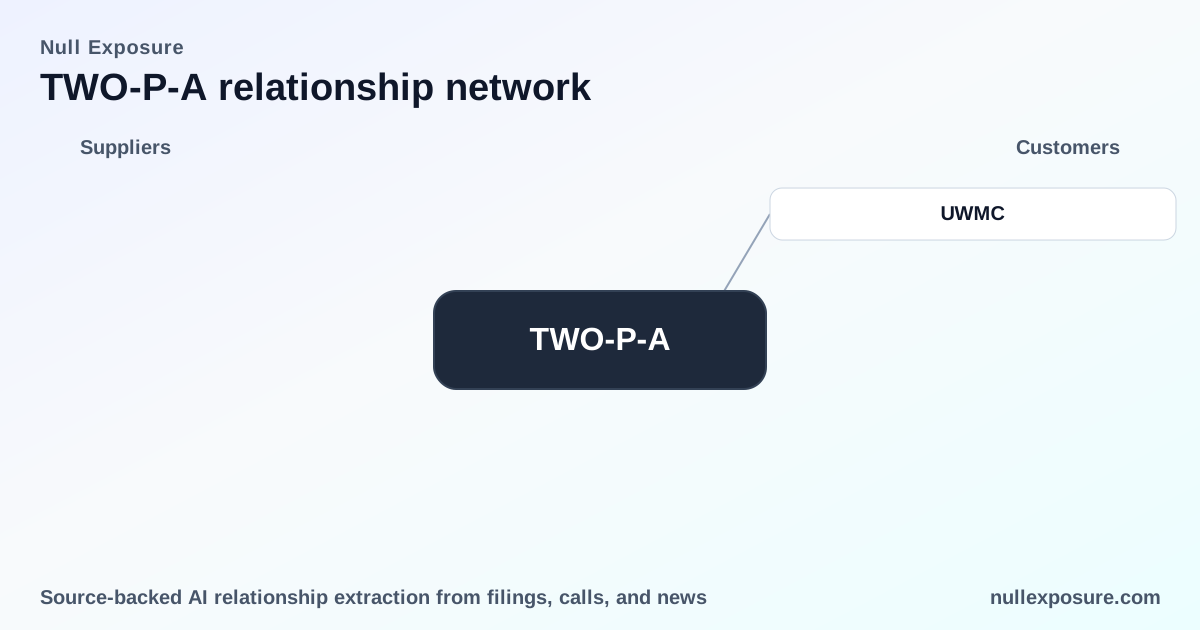
TWO-P-A: What the UWM Acquisition Means for Customers and Preferred Holders
Two Harbors Investments Corp historically operated as a mortgage-focused REIT that monetized through ownership of mortgage-related assets and the economics of mortgage servicing, delivering fixed-income returns to equity and preferred holders. The March 2026 acquisition by UWM Holdings (parent of United Wholesale Mortgage) reconfigures Two Harbors’ role from an independent mortgage servicer and asset manager into a platform asset for a mortgage origination and servicing consolidator — a shift that materially changes counterparty risk, revenue concentration and contractual leverage for customers and holders of the TWO‑P‑A preferred series. For a quick gateway to relationship mapping and counterparty intelligence, see NullExposure’s research hub: https://nullexposure.com/.
Executive summary
- Transaction: All‑stock acquisition of Two Harbors by UWM Holdings valued at $1.3 billion.
- Strategic effect: Two Harbors’ servicing and mortgage-asset platform is now part of UWM’s vertically integrated mortgage ecosystem, altering the counterparty profile for counterparties and preferred holders.
- Investor focus: Monitor integration cadence, servicing retention, and any preferred-holders’ structural protections under the new corporate structure.
How Two Harbors made money — and how that changes under UWM Two Harbors’ business model rested on two revenue pillars: interest spread and servicing economics. As a mortgage‑servicing REIT, the company earned yield from mortgage-backed securities and cash flows tied to servicing rights and fees. The UWM acquisition converts these cash flows into assets within a broader mortgage-finance holding company, where commercial priority and capital allocation will be driven by UWM’s origination and servicing strategy rather than Two Harbors’ prior standalone mandate.
Operationally, expect changes in contracting posture (counterparties contracting with a larger, vertically integrated buyer), concentration (greater exposure to UWM’s balance-sheet decisions), and criticality (servicing operations gain strategic priority inside a mortgage originator). These are company-level signals to customers and investors rather than attributes of a single client relationship.
Deal details in plain language
-
UWM Holdings / United Wholesale Mortgage — UWM Holdings, the parent of United Wholesale Mortgage, completed an all‑stock acquisition of Two Harbors valued at approximately $1.3 billion, folding Two Harbors’ mortgage‑servicing and asset positions into UWM’s platform. This transaction was reported by American Banker on March 10, 2026: https://asreport.americanbanker.com/news/united-wholesale-mortgage-acquired-two-harbors-for-1-3-billion.
-
UWM Holdings (alternate naming in coverage) — The same March 10, 2026 report described the buyer as “UWM Holdings (parent of United Wholesale Mortgage)” and reiterated the deal structure as an all‑stock transaction at a $1.3 billion enterprise value. Source: American Banker, March 10, 2026: https://asreport.americanbanker.com/news/united-wholesale-mortgage-acquired-two-harbors-for-1-3-billion.
(Notes: both entries in the reporting set reference the same acquisition; each item above is a discrete mention in the press feed.)
What this means for customers and counterparties
-
Contracting posture: Counterparties that previously negotiated with Two Harbors as a standalone mortgage‑servicing REIT now transact within a UWM‑led corporate structure that emphasizes origination‑to‑servicing integration. Expect standardization of contracts and an increased use of master agreements that reflect UWM’s scale and origination priorities.
-
Concentration and counterparty risk: The consolidation increases concentration risk for counterparties who rely on Two Harbors as a buyer, servicer, or financing counterparty. UWM’s balance‑sheet decisions will now indirectly govern cash flows historically attributable to Two Harbors.
-
Criticality of servicing flows: Servicing platforms become more strategically critical inside a vertically integrated originator. That raises the operational importance of service-level continuity and retention clauses in contracts, and increases the value of operational resilience and data continuity.
-
Maturity and integration risk: Two Harbors’ assets and servicing operations are mature financial businesses; the key near-term risk is integration execution rather than product-market fit. Customers should focus on continuity provisions and transition plans during ownership change.
Constraints and company‑level signals investors should track While there are no explicit constraint excerpts naming specific counterparties in the sourced items, the acquisition itself implies several company-level operating characteristics worth monitoring:
-
Contracting posture: Transition from an independent counterparty to a unit within a larger corporate parent changes negotiation leverage and standardizes contract terms. Investors should treat future counterparty agreements as negotiated with UWM’s procurement and legal frameworks.
-
Concentration: Asset and revenue concentration increases under the parent’s control. The parent’s capital-allocation priorities will determine the reinvestment and payout profile for assets formerly managed by Two Harbors.
-
Criticality: Mortgage servicing becomes more critical inside the combined firm because it directly supports origination economics — this elevates operational risk if integration fails.
-
Maturity: The underlying mortgage‑servicing and asset-management businesses are established lines of business, which reduces product development risk but raises the emphasis on cost synergies and operational scale.
Key takeaways for investors and operators
- Preferred‑holders should reassess counterparty exposure: The preferred series TWO‑P‑A now sits inside a different capital structure and corporate governance regime; track any changes to redemption, dividend covenants or subordination effects communicated by the new parent.
- Customers must renegotiate or confirm continuity terms: Servicing continuity, data-transfer clauses, and payment flow mechanics deserve priority in renegotiations or confirmations with the new owner.
- Integration execution is the near‑term alpha/beta driver: The market event is complete; value realization depends on how effectively UWM integrates Two Harbors’ servicing operations and realizes cost or revenue synergies.
For a structured map of counterparties and to track how these relationship dynamics evolve post‑close, NullExposure maintains ongoing coverage and updates: https://nullexposure.com/.
Conclusion The UWM acquisition of Two Harbors transforms an independent mortgage‑servicing REIT into an asset within a vertically integrated mortgage platform, shifting the levers that determine cash flow and counterparty risk. Investors and operators should pivot attention from standalone asset performance to integration risk, contracting posture under UWM, and any structural shifts in capital allocation that affect preferred security economics.