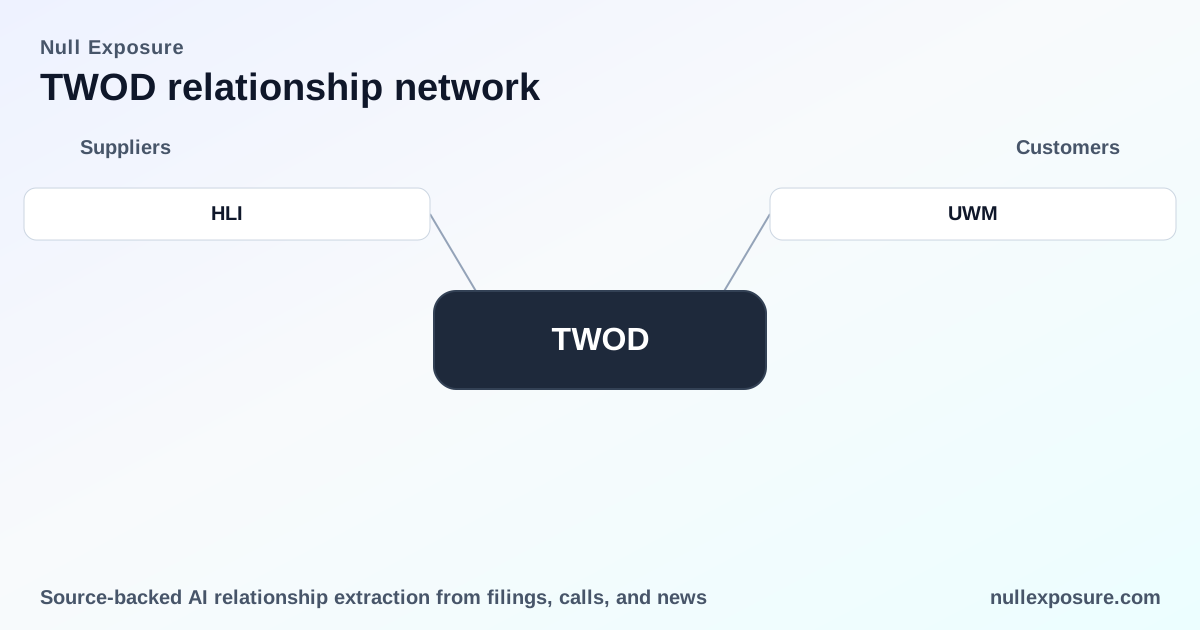
Two Harbors (TWOD): Who the REIT Services, Sells To and Negotiates With
Two Harbors is an MSR- and Agency‑RMBS‑focused mortgage REIT that monetizes through a combination of owning mortgage servicing rights (MSR), collecting servicing fees via its RoundPoint servicing platform, and selling originated residential loans to government-sponsored enterprises (GSEs) and other third‑party investors. Two Harbors generates recurring cash flow from servicing operations while capturing capital returns from RMBS and MSR valuation movements; its strategic value is driven by scale in servicing and regulatory approvals that allow it to own and operate MSR. Learn more about our counterparty mapping at https://nullexposure.com/.
Why counterparties define Two Harbors' value
Two Harbors’ economics are a hybrid of asset management and operational services. The firm’s MSR holdings produce fee income and float; its RoundPoint platform performs servicing for both its own MSR and third‑party MSR, which creates dual revenue streams — retained servicing income and third‑party subservicing fees. Two Harbors’ contracting posture is oriented toward GSE compliance and third‑party service arrangements, so counterparty approvals and servicing scale are critical to its business model.
Key company-level signals drawn from public excerpts:
- GSE approvals and national servicing footprint. Two Harbors holds approvals to own and manage MSR from the GSEs and describes itself as one of the country’s largest servicers — a structural advantage for MSR monetization and funding access.
- Seller role in the mortgage lifecycle. The company originates loans intended for sale to GSEs or third‑party investors, typically on a servicing‑retained basis, pointing to recurring interaction with the secondary market.
- Subservicer / service provider posture. Two Harbors operates as a subservicer for loans owned by third parties, creating operational dependency on servicing platform performance and compliance.
- Active servicing operations. The firm services substantially all loans underlying its MSR and also services third‑party MSR, indicating an active operational stage rather than passive asset ownership.
How counterparties appear in the record (each result covered)
Fannie Mae — GSE approvals for MSR ownership (TradingKey, FY2026)
Two Harbors’ TH MSR Holdings LLC holds the necessary approvals from Fannie Mae to own and manage MSR, enabling the company to hold and monetize servicing assets at scale. Source: TradingKey company summary (FY2026) — https://www.tradingkey.com/markets/stocks/nasdaq-two/company
Freddie Mac — GSE approvals also extend to Freddie Mac (TradingKey, FY2026)
The same subsidiary, TH MSR Holdings LLC, holds approvals from Freddie Mac to own and manage MSR, which secures Two Harbors’ ability to participate across both major agency channels. Source: TradingKey company summary (FY2026) — https://www.tradingkey.com/markets/stocks/nasdaq-two/company
Federal Home Loan Mortgage Corporation (Freddie Mac) — historical servicer approval (Yahoo, 2013)
Two Harbors’ history includes a public notice that a wholly‑owned subsidiary received approval as a Freddie Mac servicer under the agency’s single‑family mortgage program, establishing a precedent for agency servicing relationships. Source: Yahoo News (press release, March 2013) — https://www.yahoo.com/2013-03-14-two-harbors-investment-corp-subsidiary-named-feder.html
United Wholesale Mortgage (UWM) — strategic bidder and contested acquirer (Mortgage Professional America, FY2026)
UWM pursued Two Harbors primarily for its MSR portfolio, framing the acquisition as scale expansion in a market where servicing assets drive profitability even as originations slow. Source: Mortgage Professional America report on contested servicing deal (FY2026) — https://www.mpamag.com/us/mortgage-industry/industry-trends/uwm-slams-two-harbors-board-over-contested-mortgage-servicing-deal/570229
United Wholesale Mortgage (UWM) — announced acquisition terms (Scotsman Guide, Mar 2026)
UWM and Two Harbors previously announced a December agreement for an all‑stock transaction valued at $1.3 billion, underscoring the market valuation ascribed to Two Harbors’ servicing platform and MSR. Source: Scotsman Guide (March 2026) — https://www.scotsmanguide.com/news/two-harbors-shareholder-sues-to-block-uwm-merger/
CrossCountry Mortgage — rival bidder with all‑cash offer (National Mortgage Professional, FY2026)
CrossCountry Mortgage surfaced as an alternative buyer, filing a definitive agreement to acquire Two Harbors via an all‑cash transaction at $10.80 per share, triggering shareholder litigation over the sale process. Source: National Mortgage Professional (May 2026) — https://nationalmortgageprofessional.com/news/shareholder-sues-two-harbors-over-proposed-sale-crosscountry
CrossCountry Intermediate Holdco — legal vehicle for the CrossCountry bid (Mortgage Professional America, FY2026)
CrossCountry Intermediate Holdco was identified as the vehicle that agreed to buy Two Harbors in an all‑cash deal, effectively displacing the rival UWM proposal and highlighting competing strategic interest in the MSR asset base. Source: Mortgage Professional America (May 2026) — https://www.mpamag.com/us/mortgage-industry/industry-trends/uwm-slams-two-harbors-board-over-contested-mortgage-servicing-deal/570229
CrossCountry Mortgage — deal framing and strategic rationale (MPA, FY2026)
CrossCountry framed the acquisition as a move to scale MSR operations and take Two Harbors private, signaling that mortgage originators see vertical integration of servicing as a defense against tightening origination margins. Source: Mortgage Professional America coverage (May 2026) — https://www.mpamag.com/us/mortgage-industry/industry-trends/crosscountry-moves-to-buy-two-harbors-as-mortgage-players-chase-scale/570056
United Wholesale Mortgage (UWM) — proxy and governance scrutiny (National Mortgage Professional, FY2026)
Shareholder litigation around the sale references prior insider stock transactions and questions about management timing, with UWM at the center of contested governance and disclosure themes in the M&A process. Source: National Mortgage Professional analysis (May 2026) — https://nationalmortgageprofessional.com/news/shareholder-sues-two-harbors-over-proposed-sale-crosscountry
CrossCountry Mortgage — definitive agreement price confirmation (MPA, FY2026)
Public coverage confirms CrossCountry’s definitive agreement to pay US$10.80 per share in cash for Two Harbors, quantifying the market’s valuation of the REIT’s servicing and MSR assets. Source: Mortgage Professional America (May 2026) — https://www.mpamag.com/us/mortgage-industry/industry-trends/uwm-slams-two-harbors-board-over-contested-mortgage-servicing-deal/570229
Investment implications and operational constraints
Two Harbors’ counterparty map reveals a company whose core value flows from regulated GSE access and operational servicing scale. The presence of both Fannie Mae and Freddie Mac approvals is a structural moat: it enables ownership and direct servicing of agency loans and supports liquidity in the secondary market. The competing bids from UWM and CrossCountry drive two key conclusions for investors:
- Strategic value of MSR is high and liquid. Multiple acquirers pursued Two Harbors primarily for MSR, which supports a transaction multiple for the company above book for an operationally capable servicer.
- Operational and governance risk is now material. Litigation and questions about insider sales and proxy disclosures raise governance risk that can affect transaction timing and bidder outcomes.
Operationally, the company signals a seller posture in originations and a service provider posture in servicing — a mixed business model that amplifies revenue diversification but increases operational complexity and regulatory exposure. The active servicing stage means near‑term cash flows are driven by servicing fee captures and the quality of the RoundPoint platform.
For a deeper counterparty and counterparty‑risk map, review our research home page at https://nullexposure.com/.
Bottom line: concentrated, service‑driven value with transaction catalysts
Two Harbors is a servicing‑centered REIT whose asset value is anchored in GSE approvals and an operational servicing engine. The company’s value is concentrated in MSR and agency RMBS, with strategic bidders confirming the portfolio’s market value; governance and execution risk from contested M&A are the primary near‑term downside. Investors evaluating TWOD should prioritize counterparty approvals, servicing performance metrics, and clarity around the M&A process when assessing downside protection and upside realization.