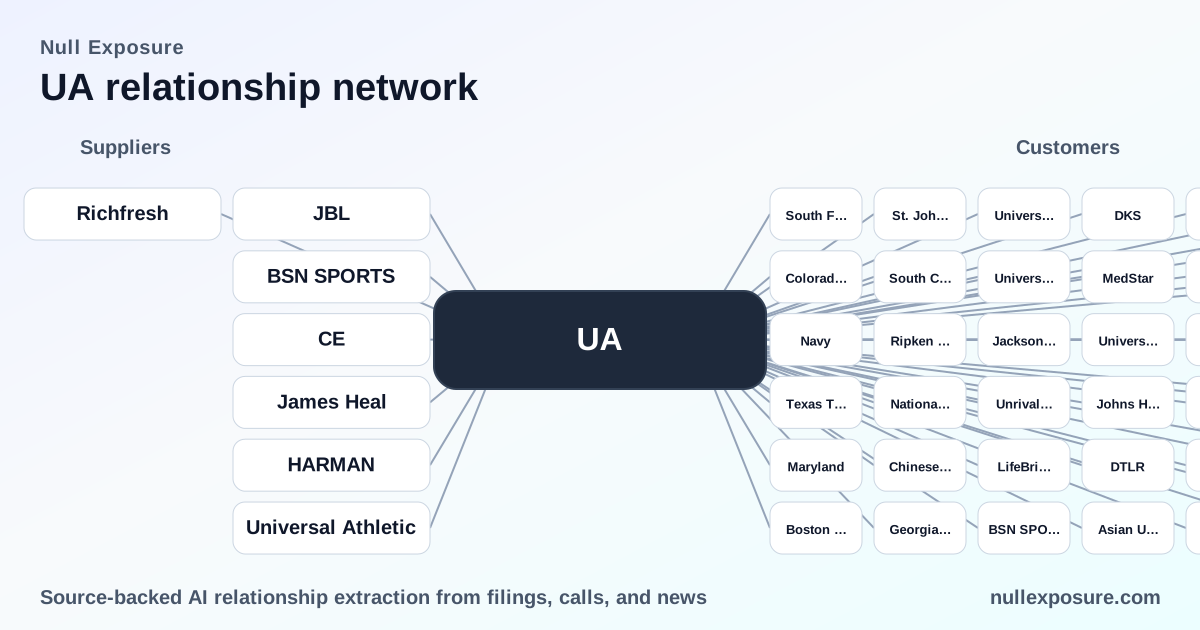
Under Armour’s customer map: durable collegiate deals, wholesale concentration, and retail distribution exposure
Under Armour is a branded athletic apparel, footwear and accessories company that monetizes through direct-to-consumer sales, wholesale distribution and long-term outfitting contracts with collegiate, professional and event partners. Revenue derives from three levers: owned retail and e-commerce, large wholesale relationships, and recurring institutional outfitting agreements that deliver merchandise plus licensing and co‑branded product sales. For investors evaluating customer counterparty risk, the mix implies steady recurring revenue from institutional deals but concentrated receivables exposure to large wholesale partners and regional dependency on North America. Learn more about our relationship coverage at https://nullexposure.com/.
How Under Armour wins commercial relationships and where that matters
Under Armour signs multi-year outfitting and licensing deals with universities, leagues and event operators while also selling through national and specialty retailers. Outfitter agreements (universities, leagues, event series) are strategic marketing assets with long duration and high brand visibility, while wholesale accounts drive volume and working capital exposure. Public filings confirm North America generated roughly 60% of net revenue in FY2025, underlining geographic concentration and the importance of U.S. wholesale partners (Under Armour FY2025). (https://about.underarmour.com/en/stories/2022/10/introducing-ua-slipspeed--under-armour-s-most-versatile-training.html)
Company-level operating signals and constraints
- Concentration of receivables: Under Armour discloses that the majority of accounts receivable is due from large wholesale customers, which creates credit concentration risk within the wholesale channel rather than the outfitting channel (company filing excerpt on concentration of credit risk).
- Geographic concentration: North America accounts for roughly 60% of revenues; EMEA/APAC/LatAm are material but secondary to U.S. sales (FY2025 regional reporting).
- Business model posture: The company operates primarily as a seller of branded goods and outfitting services; no single customer exceeded 10% of net revenues in the most recent fiscal years, indicating diversified revenue on a per-customer basis even as receivables concentrate.
- Segment focus and maturity: Products are core performance apparel and footwear with a mature distribution ecosystem (owned retail, wholesale, licensing) and long-standing collegiate partnerships that act as durable marketing channels. (Company disclosures and segment notes, FY2025).
Catalog of named customer relationships
Below is a concise, itemized view of every customer relationship captured in the results, with one-sentence commercial summaries and source references.
-
Auburn University (AUBN / Auburn) — Under Armour holds schoolwide outfitting relationships with Auburn as part of a national roster of NCAA partnerships; the connection is cited in coverage of Under Armour’s college deals. (ESPN report on collegiate contracts, FY2014: https://www.espn.com/college-football/story/_/id/10328133/notre-dame-fighting-irish-armour-agree-most-valuable-apparel-contract-ncaa-history)
-
Asian University Basketball League (AUBL) — UA serves as the league’s official performance outfitter and game-ball partner under a landmark partnership that extends the brand’s footprint in Asian university sports. (Under Armour press release, FY2021: https://about.underarmour.com/en/stories/2021/08/yum--brands-ceo-david-gibbs-appointed-to-under-armour-board-of-d.html)
-
Boston College — Listed among the university customers with schoolwide apparel deals, Boston College is part of Under Armour’s collegiate outfitting roster. (ESPN collegiate deal summary, FY2014: https://www.espn.com/college-football/story/_/id/10328133/notre-dame-fighting-irish-armour-agree-most-valuable-apparel-contract-ncaa-history)
-
BSN SPORTS — Under Armour expanded its wholesale partnership with BSN SPORTS to include licensing and manufacturing of UA team uniforms, formalizing a distribution channel for team-sports apparel. (Company announcement, FY2019: https://about.underarmour.com/en/stories/2019/05/under-armour-reports-br-first-quarter-2019-results.html)
-
Colorado State — Included in Under Armour’s list of schoolwide collegiate deals, Colorado State is a customer under multi-school college agreements. (ESPN collegiate deal summary, FY2014: https://www.espn.com/college-football/story/_/id/10328133/notre-dame-fighting-irish-armour-agree-most-valuable-apparel-contract-ncaa-history)
-
DICK’S Sporting Goods (DKS) — DICK’s functions as a key retail partner and distribution channel for new UA footwear launches, with coordinated product drops and inventory planning. (UA product launch release, FY2022: https://about.underarmour.com/en/stories/2022/10/introducing-ua-slipspeed--under-armour-s-most-versatile-training.html)
-
DTLR — A Baltimore lifestyle retailer that co‑creates local school-spirit products with UA, reflecting a community-focused retail partnership. (Under Armour corporate stories, FY2022: https://about.underarmour.com/en/stories/2022/12/under-armour-announces-stephanie-linnartz-as-president-and-ceo.html)
-
Endomondo — Part of the Under Armour Connected Fitness platform suite (alongside MapMyFitness and MyFitnessPal), Endomondo supports UA’s consumer engagement and data-driven marketing initiatives. (Company platform announcement, FY2024: https://about.underarmour.com/en-us/stories/press-releases/release.12241.html)
-
Foot Locker — Foot Locker is a national retail channel carrying UA footwear and was named among retailers in third‑party recall coverage; it represents a strategic wholesale customer. (7News recall coverage, FY2022: https://7news.com.au/lifestyle/huge-range-of-sneakers-urgently-recalled-from-hundreds-of-stores-amid-serious-health-risk-c-9046820)
-
Georgia Tech (Yellow Jackets) — Under Armour signed a multi-year agreement to be the official provider of uniforms, footwear and accessories for Georgia Tech beginning July 1, 2026, marking a high-visibility collegiate outfitting win. (UA announcement, FY2018 / FY2025 mentions: https://about.underarmour.com/en/stories/2018/08/el-erian-joins-under-armour-board-of-directors.html and https://about.underarmour.com/en/stories/2025/01/under-armour-launches-shadow-3.html)
-
Hawaii — Named among UA’s collegiate schoolwide deals in historical coverage of UA’s early college roster. (ESPN collegiate deal summary, FY2014: https://www.espn.com/college-football/story/_/id/10328133/notre-dame-fighting-irish-armour-agree-most-valuable-apparel-contract-ncaa-history)
-
Jackson State University — UA renewed outfitting rights for all varsity sports through 2029, reflecting long-term collegiate contract strategy. (Under Armour announcement, FY2021/FY2022: https://about.underarmour.com/en/stories/2021/08/yum--brands-ceo-david-gibbs-appointed-to-under-armour-board-of-d.html and https://about.underarmour.com/en/stories/2022/10/introducing-ua-slipspeed--under-armour-s-most-versatile-training.html)
-
Johns Hopkins Medicine / Health System — Under Armour has manufactured and donated tens of thousands of face masks and discussed supplies with Johns Hopkins during crisis response, showing capacity to repurpose manufacturing for institutional supply. (Company corporate governance/stories, FY2020–FY2022: https://about.underarmour.com/en/investors/corporate-governance.html and https://about.underarmour.com/en/stories/2020/07/how-under-armour-is-working-through-covid-19.html)
-
LifeBridge — UA provided face masks to this regional healthcare organization, illustrating local institutional partnerships in Baltimore. (Company governance/stories, FY2022: https://about.underarmour.com/en/investors/corporate-governance.html)
-
MapMyFitness — A connected fitness product in the UA digital portfolio that underpins consumer engagement and retention. (Platform announcement, FY2024: https://about.underarmour.com/en-us/stories/press-releases/release.12241.html)
-
MedStar — UA engaged with MedStar on supply needs during pandemic response, another example of institutional medical relationships. (Corporate stories, FY2020–FY2022: https://about.underarmour.com/en/investors/corporate-governance.html and https://about.underarmour.com/en/stories/2020/07/how-under-armour-is-working-through-covid-19.html)
-
Morgan State University — UA expanded partnership with Morgan State as part of a strategy to elevate engagement with HBCUs. (Product launch / corporate story, FY2022: https://about.underarmour.com/en/stories/2022/10/introducing-ua-slipspeed--under-armour-s-most-versatile-training.html)
-
MyFitnessPal — Another component of the Connected Fitness platform that feeds UA’s consumer insights and engagement strategy. (Platform announcement, FY2024: https://about.underarmour.com/en-us/stories/press-releases/release.12241.html)
-
National Football League (NFL) — UA established a long-term partnership as an official footwear and glove partner, positioning the brand in professional sport apparel. (UA announcement, FY2018 / FY2022 mentions: https://about.underarmour.com/en/stories/2018/08/el-erian-joins-under-armour-board-of-directors.html and https://about.underarmour.com/en/stories/2022/12/under-armour-announces-stephanie-linnartz-as-president-and-ceo.html)
-
Naval Academy Athletic Association / Navy — UA extended and maintains a multiyear outfitter agreement with the Naval Academy, reinforcing long-term collegiate ties. (UA and UMD news, FY2018–FY2021: https://about.underarmour.com/en/stories/2018/08/el-erian-joins-under-armour-board-of-directors.html and https://umdbulldogs.com/news/2021/9/30/general-umd-athletics-extends-partnership-with-under-armour-through-2028.aspx)
-
Northwestern University — UA is the official outfitter for Northwestern’s varsity programs and has extended that partnership multiple times. (Company announcements, FY2012–FY2022: https://about.underarmour.com/en/stories/2021/08/yum--brands-ceo-david-gibbs-appointed-to-under-armour-board-of-d.html and https://about.underarmour.com/en/stories/2022/10/introducing-ua-slipspeed--under-armour-s-most-versatile-training.html)
-
Notre Dame — Cited in historic reporting as part of a marquee, high-value 10-year apparel deal that elevated UA’s collegiate profile. (ESPN report on Notre Dame deal, FY2014: https://www.espn.com/college-football/story/_/id/10328133/notre-dame-fighting-irish-armour-agree-most-valuable-apparel-contract-ncaa-history)
-
Pace Athletic — Named among Australian retailers carrying shoes in recall coverage, indicating international retail channel presence. (7News recall coverage, FY2022: https://7news.com.au/lifestyle/huge-range-of-sneakers-urgently-recalled-from-hundreds-of-stores-amid-serious-health-risk-c-9046820)
-
Rebel Sport — Australian retail partner included in international retail mentions tied to product recalls and distribution. (7News recall coverage, FY2022: https://7news.com.au/lifestyle/huge-range-of-sneakers-urgently-recalled-from-hundreds-of-stores-amid-serious-health-risk-c-9046820)
-
Ripken Baseball — A multi‑year exclusive apparel partner for Ripken Baseball’s events and properties, representing UA’s event/outfitter channel in youth and tournament baseball. (UA press stories FY2018–FY2025: https://about.underarmour.com/en/stories/2021/08/yum--brands-ceo-david-gibbs-appointed-to-under-armour-board-of-d.html and https://about.underarmour.com/en/stories/2025/01/under-armour-launches-shadow-3.html)
-
South Carolina / University of South Carolina — UA supplies game‑day uniforms and training gear under a long-term outfitter agreement. (Local report and UA announcements, FY2016: https://www.abccolumbia.com/2016/02/19/usc-signs-10-year-71-5-million-under-armour-deal/)
-
South Florida — Named in historical lists of schoolwide UA collegiate deals. (ESPN collegiate deal summary, FY2014: https://www.espn.com/college-football/story/_/id/10328133/notre-dame-fighting-irish-armour-agree-most-valuable-apparel-contract-ncaa-history)
-
Sports Authority — Cited in media coverage about industry distribution disruption and the retail bankruptcies that affected wholesale channels. (RetailDIVE litigation/coverage, FY2017: https://www.retaildive.com/news/investor-sues-under-armour-for-misrepresenting-sales-growth/436137/)
-
St. John’s — Listed among UA’s schoolwide collegiate customers in historical coverage. (ESPN collegiate deal summary, FY2014: https://www.espn.com/college-football/story/_/id/10328133/notre-dame-fighting-irish-armour-agree-most-valuable-apparel-contract-ncaa-history)
-
Stylerunner — Australian specialty retailer named in retail distribution coverage for product availability and recalls. (7News recall coverage, FY2022: https://7news.com.au/lifestyle/huge-range-of-sneakers-urgently-recalled-from-hundreds-of-stores-amid-serious-health-risk-c-9046820)
-
Texas Tech — Included in UA’s roster of collegiate schoolwide deals. (ESPN collegiate deal summary, FY2014: https://www.espn.com/college-football/story/_/id/10328133/notre-dame-fighting-irish-armour-agree-most-valuable-apparel-contract-ncaa-history)
-
University of Maryland (and University of Maryland Medical System / UMMS) — UA renewed a long-term 12-year extension with the University and manufactured PPE and supplies for UMMS during pandemic response, demonstrating both a high‑value outfitting contract and institutional service capacity. (Company announcements and corporate stories, FY2020–FY2022: https://about.underarmour.com/en/stories/2020/07/how-under-armour-is-working-through-covid-19.html and https://about.underarmour.com/en/stories/2022/10/introducing-ua-slipspeed--under-armour-s-most-versatile-training.html)
-
University of Minnesota Duluth — UA continues to supply competition and training gear for UMD’s varsity programs under extended partnership terms. (UMD athletics notice, FY2021: https://umdbulldogs.com/news/2021/9/30/general-umd-athletics-extends-partnership-with-under-armour-through-2028.aspx)
-
University of Wisconsin–Madison — UA extended its partnership with UW–Madison via a 10‑year extension, reinforcing marquee collegiate exposure. (Company announcement, FY2018/FY2020: https://about.underarmour.com/en/stories/2018/08/el-erian-joins-under-armour-board-of-directors.html and https://about.underarmour.com/en/stories/2020/07/how-under-armour-is-working-through-covid-19.html)
-
Utah — Named among UA’s historical collegiate outfitting roster. (ESPN collegiate deal summary, FY2014: https://www.espn.com/college-football/story/_/id/10328133/notre-dame-fighting-irish-armour-agree-most-valuable-apparel-contract-ncaa-history)
-
Wild Earth — Australian retail channel referenced in international retail coverage, showing UA’s presence across specialty partners. (7News recall coverage, FY2022: https://7news.com.au/lifestyle/huge-range-of-sneakers-urgently-recalled-from-hundreds-of-stores-amid-serious-health-risk-c-9046820)
Investment implications and risk signals
- Positive: Long-duration university and league outfitting deals generate recurring brand exposure and predictable merchandise flows, supporting gross margins and marketing ROI.
- Negative: Wholesale receivables concentration and North American revenue concentration create counterparty credit risk and geographic exposure; retail distribution shocks (e.g., retailer bankruptcies or recalls) can compress volume and increase working capital needs. (Company filings and media coverage).
For a deeper counterparty analysis or to benchmark UA’s customer concentration against peers, visit our research hub at https://nullexposure.com/.
Key takeaway: Under Armour’s business combines durable high-visibility institutional deals with concentrated wholesale receivables and North American revenue dependency — a profile that supports brand momentum but requires active monitoring of retail credit and regional macro trends.