United‑Guardian (UG): Distribution concentration shapes near‑term upside and downside
United‑Guardian manufactures cosmetic ingredients, medical lubricants, pharmaceuticals and specialty industrial products and primarily monetizes through sales to a global network of distributors that resell into cosmetics and personal‑care manufacturers. The company’s economics are driven by manufacturing margins on specialty chemistries, a meaningful dividend yield and a partner‑led commercial model—but distribution concentration (one partner represented ~41% of sales in 2024) makes top‑line variability the central investment risk. For a concise relationship map and ongoing monitoring, see https://nullexposure.com/.
Executive takeaways investors need to know
- Distribution‑led go‑to‑market: United‑Guardian sells largely to distributors rather than direct to end brands, which makes distributor order patterns the primary driver of revenue volatility.
- Concentration risk is real and measurable: One distributor accounted for roughly 41% of total sales in 2024, creating a single‑counterparty revenue sensitivity.
- Recent source mix shift: The largest distributor reduced purchases through 2025 while other distributors grew, and management has signed new distribution agreements to broaden reach.
- Dividend and profitability provide a cushion: The company reports positive margins, earnings and a material dividend yield, which supports the equity while revenue re‑mixing plays out.
Customer relationships that matter — plain English, source‑backed
Below are the principal customer/distributor relationships referenced in public materials. Each entry is a concise, investor‑oriented description with the relevant source.
-
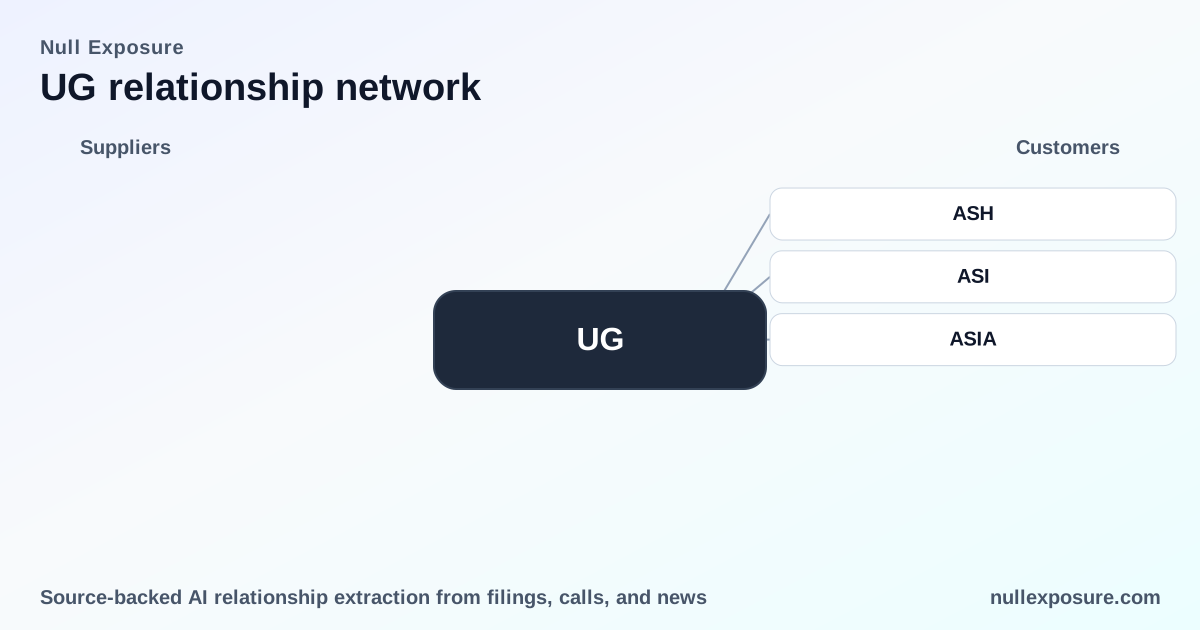
Ashland Specialty Ingredients (ASI / ASH / ASIA)
ASI is United‑Guardian’s largest distributor and accounted for approximately 41% of total sales in 2024; inventory overstock at ASI depressed order quantities and caused meaningful sales declines through 2025. According to United‑Guardian’s FY2024 10‑K, ASI represented ~41% of sales in 2024 (and ~30% in 2023), and management reiterated in its FY2025/2026 results commentary that excess ASI inventory led to reduced orders (GlobeNewswire press release and related financial coverage in 2026). (Sources: United‑Guardian FY2024 10‑K; company press release on GlobeNewswire, March 2026; related TradingView/Yahoo summary reportage, 2025–2026.) -
Brenntag / Brenntag Specialties
United‑Guardian launched a sexual‑wellness ingredient line (Natrajel) and entered a distribution agreement with Brenntag effective January 2026 to expand reach across the U.S., Canada, Mexico and France, providing a deliberate channel diversification away from legacy distributor concentration. Earlier reporting noted a Brenntag Specialties distribution agreement for Natrajel in North America (reported in industry press in 2023). (Sources: TradingView coverage of United‑Guardian filings (2026); HAPPI industry report (FY2023).)
What the relationship evidence implies for UG’s operating model
The publicly disclosed relationship excerpts produce three company‑level signals about how UG operates and how investors should read its contract posture and risk profile.
- Global distributor network: The company markets its cosmetic ingredients “through our worldwide network of distributors,” which makes sales geography global rather than direct brand penetration. This is a company‑level characteristic grounded in management commentary and the 10‑K narrative.
- Distributor role dominance: United‑Guardian’s commercial model is distributor‑centric; the company sells to distributors who in turn resell to manufacturers and marketers of cosmetic and personal‑care products. That contracting posture means UG’s commercial exposure is often one step removed from end‑market demand signals.
- Distribution segment orientation: The firm’s cosmetic ingredients are explicitly marketed through distribution partners—this is the operational segment that defines its go‑to‑market approach and product flow.
Together these signals produce a clear set of implications: contract risk is concentrated at the distributor layer, demand transmission is indirect, and geographic reach is broad but controlled by a small set of channel partners.
For deeper relationship mapping and ongoing alerts, consult https://nullexposure.com/.
How constraints translate into investor risk and opportunity
United‑Guardian’s public disclosures and the relationship evidence drive a compact risk/opportunity narrative investors can act on.
-
Concentration (risk): With ASI responsible for ~41% of revenue in 2024, order reductions from a single partner can and did depress sales materially—the company reported a steep decline in cosmetic ingredient orders in 2025 tied to ASI’s inventory position and regional geopolitical tariff pressures (management commentary in Q3 2025 and FY2025/2026 reporting). This is a first‑order downside risk for earnings and cash flow until the customer mix changes. (Source: United‑Guardian Q3 2025 earnings release and FY2025/2026 press commentary.)
-
Inventory / demand transmission (operational): Distributor inventory levels have immediate pass‑through effects on UG’s production cadence and working capital; the 2025 narrative emphasized excess inventory at ASI as a proximate cause of reduced orders. This imposes timing risk on revenue recognition and manufacturing utilization. (Sources: GlobeNewswire March 2026; TradingView summaries, 2025–2026.)
-
Diversification (opportunity): The Brenntag distribution arrangement for the Natrajel line enlarges UG’s channel footprint across North America and parts of Europe and reduces single‑counterparty exposure over time if execution captures end‑market demand. This is an identifiable source of revenue re‑mixing and upside to sales cadence as partners commercialize new product lines. (Sources: HAPPI FY2023 report; TradingView FY2026 filing coverage.)
-
Income cushion (balance): United‑Guardian reports positive operating margins and pays a dividend (the company lists a dividend yield north of 6%), which buffers equity returns while distribution re‑mixing occurs. This makes UG a candidate for income‑oriented investors willing to accept revenue cyclicality in exchange for yield and modest valuation multiples. (Source: company financial summary and metrics.)
Tactical implications for investors and operators
- Investors should treat upcoming quarters as a test of diversification: watch order patterns from ASI against sequential growth from Brenntag and other distributors. Management commentary on inventory normalization will be decisive.
- Operators should prioritize distributor inventory analytics and tighten commercial visibility into ASI’s replenishment cadence; accelerating new distributor rollouts and marketing support for Natrajel will materially de‑risk topline concentration.
Bottom line
United‑Guardian is a manufacturing firm with a distribution‑centric commercial model and measurable concentration at its largest distributor, which has driven recent revenue volatility. The combination of a reliable dividend, positive margins and active channel diversification (notably the Brenntag agreement) positions the stock as a conditional income play—returns will track how quickly distributor order flow re‑balances away from ASI and toward broader channels. For ongoing relationship intelligence and to track shifts in distributor exposure over time, visit https://nullexposure.com/.