UGI Corporation: capital-light portfolio pruning and stable utility cashflow
UGI Corporation distributes, stores, transports and markets energy products across North America and Europe, monetizing through regulated natural-gas distribution, propane retail (AmeriGas) and energy-services/infrastructure businesses that collect tariff- and commodity-linked cashflows. Recent activity shows management accelerating portfolio simplification—selling non-core European LPG assets and a Pennsylvania electric business—while retaining a core distribution footprint that generates predictable, tariff-driven earnings. Explore integrated exposure analytics at https://nullexposure.com/ for deeper counterparty mappings.
What recent deals tell investors about strategy
UGI is executing a clear reallocation of capital toward platform businesses that maximize regulated and recurring cashflow while shedding smaller, geographically dispersed assets. The company is crystallizing value in Europe and monetizing infrastructure assets in Pennsylvania, converting slower-growth or non-core units into liquidity that supports dividends and reinvestment in core segments.
Counterparty snapshots — all relationships in the public signals
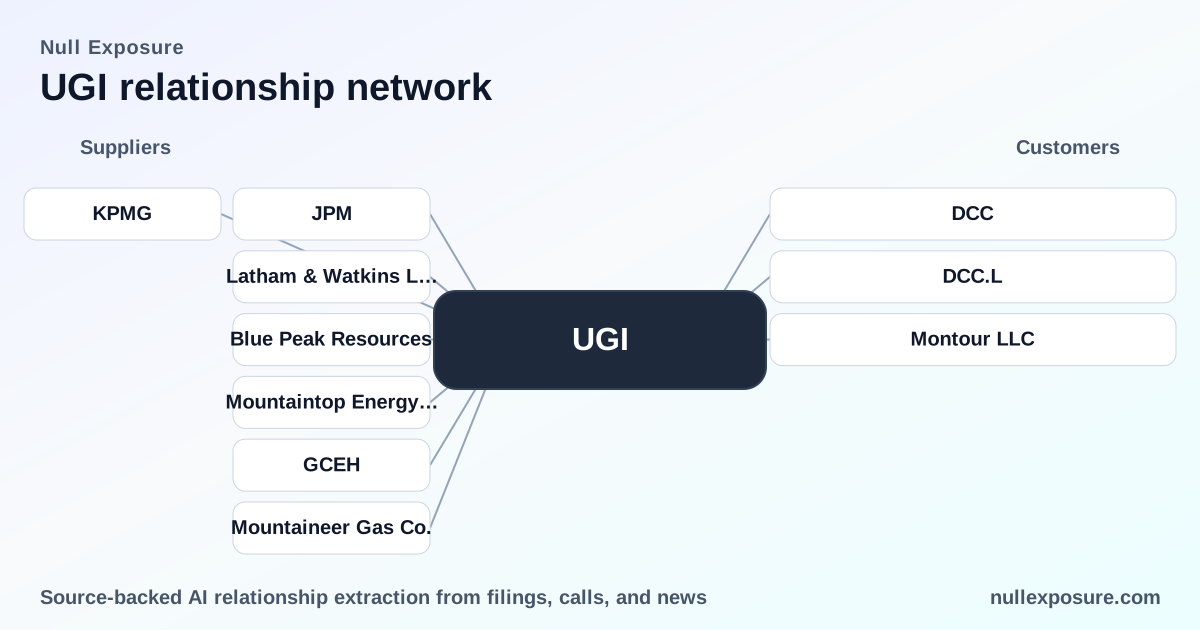
DCC plc — strategic buyer of UGI’s eastern European LPG units
UGI International agreed to sell its LPG distribution operations in the Czech Republic, Hungary, Poland and Slovakia to DCC plc for roughly €48 million (reported equivalently near $56 million in some outlets), signaling UGI’s exit from smaller EMEA LPG markets and DCC’s consolidation strategy in Europe. See the MyChesco coverage of the transaction (March 10, 2026): https://www.mychesco.com/a/news/business/public-companies/ugi-sells-central-european-lpg-units-in-e48m-deal-to-sharpen-focus/.
DCC / DCC.L — corroborating coverage and transaction context
Multiple industry and financial outlets restated the same deal value and scope, reinforcing deal size and the targeted markets being transferred to DCC’s LPG platform. PennBizReport and LPGasMagazine, among others, reported the definitive agreement and enterprise value (March 10, 2026). Example: https://pennbizreport.com/news/32019-ugi-international-to-divest-european-lpg-business/.
Argo Infrastructure Partners LP — acquirer of UGI Utilities’ Pennsylvania electric division
UGI Utilities entered a definitive agreement to sell its Pennsylvania Electric Division to funds managed by Argo Infrastructure Partners LP for approximately $470 million, reflecting UGI’s strategic focus on gas distribution and AmeriGas while monetizing regulated electric transmission assets to infrastructure capital. Financial summaries and local press reported the agreement on April 28–May 4, 2026; see PennBizReport and Finviz for transaction reporting: https://pennbizreport.com/news/32562-pennsylvania-based-ugi-corp-agrees-to-sell-its-electric-division-to-argo-infrastructure/ and https://finviz.com/news/331973/ugi-corporation-ugi-delivers-solid-start-to-fy2026-despite-lower-eps.
Montour LLC — historical divestiture of a small power plant stake
UGI previously sold a 6% (102-MW) stake in a Pennsylvania coal-fired plant to Montour LLC, an example of earlier portfolio pruning of non-core generation exposure. This sale was reported in the context of past asset repositioning (Power Engineering, cited in 2026 coverage referencing a 2020 transaction): https://www.power-eng.com/coal/plant-decommissioning/ugi-sells-small-stake-in-1-7-gw-pennsylvania-coal-fired-plant-acquires-renewable-ng-firm/.
UGI Utilities — operating partner and internal counterparty for infrastructure projects
UGI Utilities, a wholly owned subsidiary, is both an operating counterparty and a unit that sources and deploys capital; UGI Energy Services commissioned an LNG facility tied to UGI Utilities’ regional growth, illustrating the internal coordination between merchant projects and utility distribution needs. Coverage of the Carlisle LNG facility and coordination with UGI Utilities appeared in industry press (LNG Industry, November 28, 2025): https://www.lngindustry.com/regasification/28112025/ugi-energy-services-commissions-carlisle-lng-facility/.
Operating constraints and what they signal for counterparties and revenue durability
UGI’s public disclosures and signaling describe a mixed contracting posture and diversified counterparty base that supports durable cashflow while limiting single-counterparty risk.
- Contracting posture: UGI operates both long-term infrastructure contracts (natural gas transportation/gathering up to 30 years and multi-season storage agreements) and short-term retail contracts (residential agreements typically one year or less). This blended approach balances revenue stability with price-exposure flexibility.
- Counterparty mix: Revenue streams include individuals/residential customers, large commercial and industrial counterparties under fixed-term contracts, and municipal or government entities in medium-bulk segments; no single customer accounts for more than 10% of consolidated revenue, indicating low concentration risk.
- Geographic posture: The business is North America–centric for core utilities and AmeriGas retail, while UGI International historically operated across EMEA (15 countries), a unit now being streamlined through selective divestitures.
- Role and segment focus: UGI functions as seller/distributor of propane and natural gas, a service provider via midstream/marketing and storage offerings, and an infrastructure owner where transmission or electric facilities exist. The firm records most revenue from core product sales and regulated distribution services.
- Materiality and maturity: Core segments generate regulated, tariff-like returns and historically stable margins; international and generation assets are treated as lower-priority, non-core holdings that management is willing to monetize.
These constraints collectively point to an operating model that prioritizes regulated, distribution-led cashflow while opportunistically selling less strategic assets to strengthen the balance sheet and support shareholder distributions.
Investment implications — risk and return framing
- Balance-sheet optionality: Recent disposals (EMEA LPG assets and the Pennsylvania electric division) unlock capital and reduce geographic complexity; investors should view these moves as active portfolio optimization that supports the dividend profile and targeted reinvestment.
- Earnings resilience: Core regulated distribution and AmeriGas retail provide predictable revenue, insulating the business versus commodity cycles, while midstream and energy-services businesses add upside tied to regional demand and project commercialization.
- Execution risk: The company’s ability to redeploy sale proceeds into higher-return opportunities or accelerate debt reduction will govern the ultimate shareholder payoff from these transactions.
For a deeper map of UGI’s counterparty exposures and how each transaction alters credit or revenue concentration, visit https://nullexposure.com/ to see integrated customer and partner analytics.
Bottom line
UGI is executing a coordinated strategy: consolidate and strengthen regulated and retail distribution cashflows, divest small or geographically fragmented assets to infrastructure and trade buyers, and convert discrete holdings into balance-sheet optionality. For investors focused on utility-like stability with selective growth optionality, UGI’s transactions improve clarity of cashflow generation and reduce non-core operational noise.