Ultrapar (UGP): Customer relationships shaping a tighter, cash-focused strategy
Ultrapar (UGP) operates an integrated portfolio of fuel distribution, gas distribution, logistics and storage, pharmacy retail and chemicals; it monetizes through retail and wholesale fuel margins, LPG sales, logistics/storage fees and strategic asset disposals that convert operating scale into free cash flow. Recent customer and counterparty activity — asset sales and potential transactions with strategic industry buyers — signal a deliberate shift toward capital redeployment and higher-margin core operations. Explore deeper coverage at https://nullexposure.com/.
How Ultrapar’s customer posture drives cash and concentration
Ultrapar’s operating model blends high-frequency retail cash flows (fuel and pharmacy) with lower-frequency, higher-ticket transactions (chemical units, coastal shipping, storage). That mix creates a contracting posture that is operationally transactional for retail channels and relationship-driven for large industrial counterparts. The company’s recent disposals show a preference for monetizing non-core, capital-intensive businesses to reduce balance-sheet complexity and redeploy capital into core networked assets.
- Contracting posture: retail contracts deliver steady margins, while large industrial buyers and strategic acquirers determine the timing and price of divestitures.
- Concentration and criticality: Ultrapar retains critical downstream market positions in Brazil and Latin America, but the sale of specialty chemical and cabotage assets reduces product-line diversification and increases reliance on fuel and logistics earnings.
- Maturity: Ultrapar is a mature operator with established market share and predictable cash generation, enabling focused capital allocation decisions rather than growth-by-acquisition.
Customer and counterparty interactions that matter now
Indorama Ventures — Oxiteno sale (result 1)
Ultrapar completed the sale of its specialty chemicals unit Oxiteno to Indorama Ventures as part of a corporate reorganization, converting a capital-intensive business into cash and simplifying the group’s asset base. According to br.lexlatin.com (March 10, 2026), the transaction was framed as a portfolio rationalization step that materially reshaped Ultrapar’s chemicals exposure. https://br.lexlatin.com/noticias/ultrapar-vende-oxiteno-e-conclui-revisao-de-sua-carteira-de-ativos-no-brasil
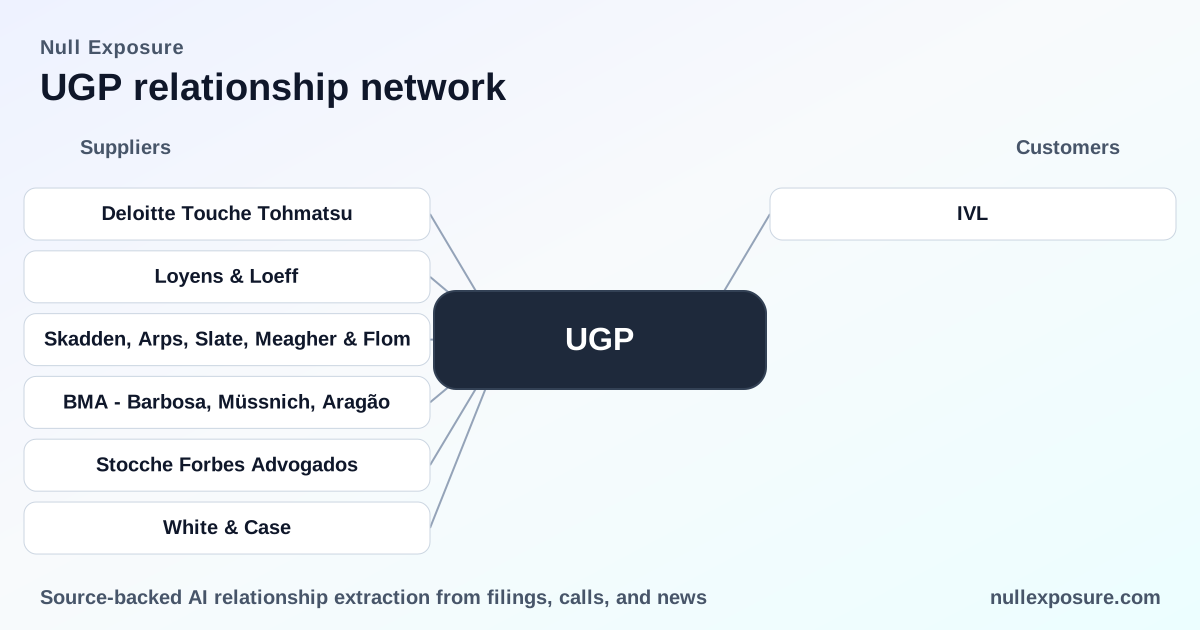
IVL (Indorama Ventures) — duplicate report (result 2)
A parallel entry confirms the same Oxiteno divestiture to Indorama Ventures, reinforcing that the chemicals exit is a completed strategic action rather than a rumor. The LexLatin item (first reported March 10, 2026) documents the finalization of the sale and the group’s repositioning away from specialty chemicals. https://br.lexlatin.com/noticias/ultrapar-vende-oxiteno-e-conclui-revisao-de-sua-carteira-de-ativos-no-brasil
Chevron — potential fuel-marketing transaction (result 3)
Press reports from Brazil Journal and Reuters cited in Investing.com indicate Ultrapar’s management is exploring a transaction that would transfer part of its fuel marketing operations to Chevron, a strategic buyer in the downstream segment; this would be a significant customer/counterparty alignment if executed. The Investing.com note (reported May 4, 2026) places Chevron in the role of a potential strategic acquirer for Ultrapar’s fuel-marketing assets, a development that would alter competitive dynamics in Brazilian retail fuel. https://m.investing.com/news/analyst-ratings/hsbc-downgrades-ultrapar-stock-rating-on-cash-deployment-concerns-93CH-4602271?ampMode=1
Hidrovias — sale of coastal navigation / cabotage (result 4)
Ultrapar closed the sale of its coastal navigation (cabotage) operation to Hidrovias for R$715 million on November 1, a transaction that strengthened liquidity while enabling management to concentrate on synergistic, higher-return businesses. InsiderMonkey’s coverage (May 4, 2026) highlights the cash proceeds and the strategic intent behind the divestiture. https://www.insidermonkey.com/blog/what-does-wall-street-think-about-ultrapar-participacoes-s-a-ugp-1656355/?amp=1
What these customer ties tell investors about strategy and valuation
The pattern is clear: Ultrapar is converting non-core, capital-intensive assets into cash and aligning its counterparty set toward large strategic industry players. Sales to Indorama and Hidrovias are executed examples; Chevron represents a potential strategic buyer that would deepen sector integration. These moves support a capital-allocation stance focused on deleveraging, share buybacks or investment in network density where margins are recurring.
From a valuation lens, Ultrapar trades at an EV/EBITDA of ~6.0 with a forward P/E around 11.8, metrics consistent with a mature downstream operator with improving cash clarity. Asset monetizations reduce operating complexity and therefore lower earnings volatility, which supports a premium on multiples relative to fragmented peers if management deploys proceeds into high-return uses.
Risks tied to customer-counterparty dynamics
- Counterparty concentration: Strategic sales create larger single buyers and reduce the number of distinct business lines, increasing exposure to bilateral negotiations and execution risk. A major transaction with Chevron would concentrate downside counterparty risk on a single strategic partner.
- Execution and timing: Divestitures are discrete events that shuffle both cash and recurring revenue; improper deployment of proceeds would undercut the intended value unlock.
- Regulatory and market risk: Transactions in Brazil and Latin America carry regulatory review and political considerations that can delay or alter deal economics, impacting projected cash flows tied to these customer relationships.
Practical takeaways for investors and operators
- Asset recycling is the core signal: Ultrapar is actively simplifying its portfolio and monetizing lower-return, capital-heavy businesses to refocus on fuel distribution, LPG and logistics cash engines.
- Watch counterparty agreements and definitive deal terms: The Chevron linkage matters only when a definitive agreement is signed; track official filings and press releases for deal structure and timing.
- Monitor capital allocation: With EV/EBITDA around 6.0 and a forward P/E near 11.8, the value case depends on disciplined use of sale proceeds to reduce leverage or fund margin-accretive network investments.
For a consolidated view of Ultrapar’s evolving counterparties and transaction activity, visit https://nullexposure.com/ to see curated coverage and real-time alerts.
Bold action items: track formal filings for any Chevron deal, follow cash deployment announcements from management, and re-assess valuation on completion of divestitures and reinvestment outcomes.