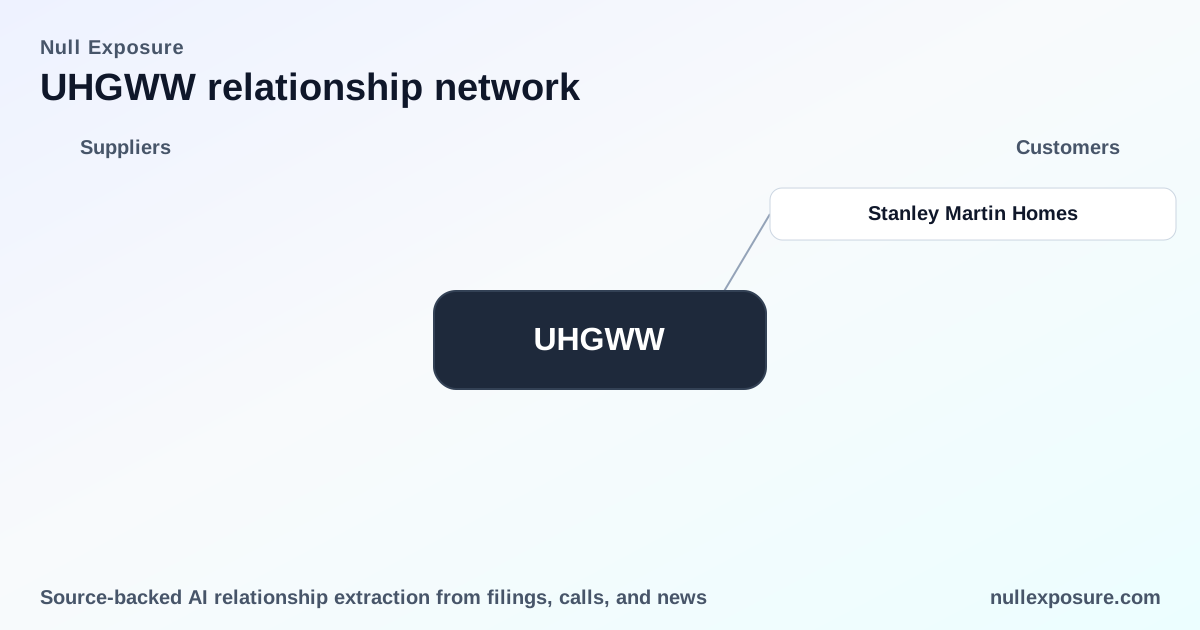
United Homes Group (UHGWW) — customer relationships, operating posture, and investor takeaways
United Homes Group is a small Southeast homebuilder that designs, builds and sells entry-level and first move-up homes primarily for buyers in South Carolina, North Carolina and Georgia. The company monetizes through home sales, including speculative inventory and related-party transactions disclosed in its consolidated statements; revenue recognition is therefore directly tied to construction completion and lot availability rather than recurring fees or services. For a concise view of coverage and signals on counterparties, visit https://nullexposure.com/.
How United Homes makes money — a concise investor thesis
United Homes is a classic local homebuilder: it acquires or controls lots, constructs single-family housing targeted at the entry-level/first-move-up market, and recognizes revenue on closings and speculative-home sales. The firm’s business model is transaction-driven, capital intensive and geographically concentrated, which magnifies execution risk and sensitivity to regional demand and financing conditions.
Where the company operates and what that implies
Public disclosures and reporting indicate a clear geographic concentration in the Southeast — specifically South Carolina, North Carolina and Georgia — positioning UHGWW to benefit from regional population and housing demand trends but also exposing it to localized market cycles. According to the company’s public statements for the year ended December 31, 2024, UHG designs, builds and sells homes in South Carolina, North Carolina and Georgia and recognized revenue tied to speculative homes purchased by related parties during that period. These facts point to a tight operational footprint and a revenue model tied to discrete development events rather than diversified, national scale.
Operating-model constraints and what they signal to investors
- Contracting posture — seller: UHG’s revenue recognition is driven by home sales; the company’s disclosures explicitly describe it as a seller that recognizes revenue from speculative homes and related-party purchases. This places counterparty risk on buyers and on the company’s ability to convert inventory into closings.
- Concentration — regional and product-focused: Sales and operational activity concentrate on entry-level and first move-up homes in three states. That concentration improves focus and local market know-how but increases sensitivity to single-region downturns.
- Criticality — single-event revenue: Homebuilding revenue is concentrated around closings. This creates revenue lumpiness and makes working capital and lot control critical for short-term liquidity.
- Maturity — early/opaque public profile: Public financial metrics are thin. Standard data fields for trailing revenue, margins and market capitalization are blank or reported as zero through the latest published quarter (2025-12-31), indicating a limited public reporting footprint and heightened reliance on discrete filings for investor diligence.
Counterparty and customer relationships you need to know
Below I cover every customer/transaction relationship surfaced in available reporting, with concise, source-linked summaries for investor diligence.
Stanley Martin Homes — transaction under regulatory scrutiny
A March 2026 legal bulletin reported that Ademi LLP is investigating United Homes for potential breaches of fiduciary duty related to a recently announced transaction with Stanley Martin Homes. This indicates a contested corporate action involving Stanley Martin as the counterparty and introduces reputational and legal risk into a material corporate transaction. According to a Markets (Financial Times) announcement in February 2026, the investigation ties to that specific transaction and is already public. (Source: Markets / Financial Times announcement, February 2026.)
What the single listed relationship implies for credit and counterparty risk
The Stanley Martin-linked inquiry is not a buyer-customer complaint over product delivery; it is a legal challenge tied to a corporate transaction. From an investor standpoint that implies two things: first, transactional counterparties in strategic deals can generate governance and fiduciary disputes that affect stockholder value, and second, even single dispute events matter for a small public profile company with thin market disclosure. The legal scrutiny around this transaction should prompt investors to review the transaction documents, board minutes and any related-party disclosures in the company’s 2024–2026 filings.
Practical due diligence checklist for investors and operators
Investors evaluating UHGWW’s customer and transaction risk should prioritize:
- Board and transaction documentation: Obtain the definitive agreement tied to the Stanley Martin transaction and any special committee materials.
- Revenue realization pathways: Confirm how speculative inventory and related-party purchases are assessed and recognized in the consolidated statements.
- Geographic exposure analysis: Stress-test performance under regional demand shocks in South Carolina, North Carolina and Georgia.
- Liquidity and lot-control metrics: For a homebuilder with lumpier revenue, verify access to construction financing and the cadence of closings.
If you want an efficient way to track these governance and counterparty signals alongside structured filing evidence, see our platform: https://nullexposure.com/.
Final investor takeaways — concise and actionable
- United Homes is a transaction-driven, regional homebuilder: revenue depends on closings and speculative inventory turnover in three Southeast states.
- Public financial visibility is limited: standard aggregator fields show blank or zero values through the latest quarter, increasing the value of detailed filings and ad hoc announcements.
- The Stanley Martin transaction introduces governance risk: the Ademi LLP investigation converts a corporate transaction into a potential source of legal and reputational downside.
- Concentration and lumpiness elevate execution and liquidity risk: investors should monitor lot position, construction financing availability, and the cadence of closings to gauge near-term solvency.
For institutional and research teams that need structured transaction signals and filing-level evidence to support investment decisions, our platform consolidates the same signals cited here into an analyst-ready view: https://nullexposure.com/.