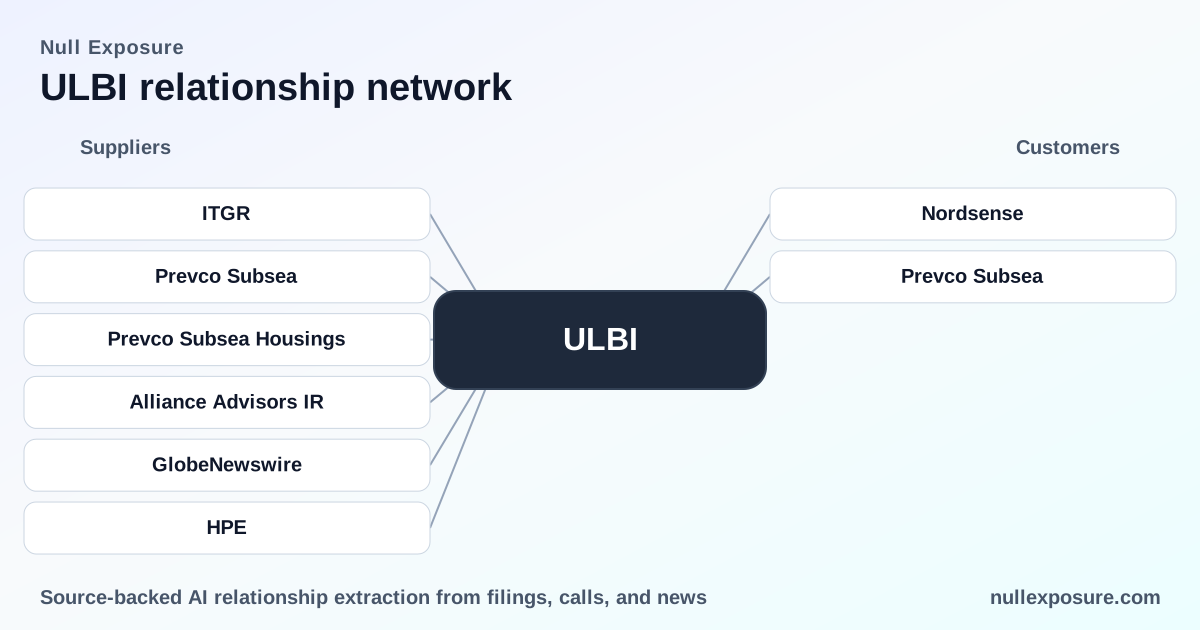
Ultralife (ULBI) — customer relationships that shape revenue durability and risk
Ultralife designs and manufactures batteries, power systems and communications electronics and monetizes through direct sales, long‑term government and OEM contracts, distributor/reseller channels, and separately priced extended warranties; revenue recognition mixes product sales, usage‑based vendor‑managed inventory recognition and multi‑year contractual streams that create both steady backlog and concentrated counterparty exposure. Learn how recent customer headlines and company‑level contract signals impact revenue concentration, product liability risk and the company’s operational posture at scale: https://nullexposure.com/
How Ultralife makes money and what that implies for investors
Ultralife sells hardware and integrated power solutions to governments, defense primes, OEMs and commercial customers worldwide, with product sales and contract revenues as the dominant cash drivers and separately accounted extended warranties contributing to recurring recognition over multi‑year periods. Financially, Ultralife generated $191.2 million in trailing revenue with $46.0 million gross profit and is loss‑making on an EPS basis (-$0.35 TTM), while trading on modest multiples (Price/Sales ~0.60, Forward P/E ~15.3) that reflect a mix of growth prospects and margin recovery expectations. A single large defense prime represented 23% of revenues in 2024, creating material customer concentration that directly links Ultralife’s top‑line visibility to defense contracting cycles.
Customer relationships on the record
Nordsense — litigation over product quality (FY2024)
Danish waste‑management firm Nordsense filed suit against Ultralife claiming up to $10 million in damages, alleging Ultralife supplied defective lithium metal batteries; the dispute is public and raises product‑liability and contract performance risk for battery lines (FingerLakes1, Nov 21, 2024: https://www.fingerlakes1.com/2024/11/21/danish-firm-sues-wayne-countys-ultralife-for-10m-over-contract-breach/).
Prevco Subsea — co‑exhibit at Oceanology International (FY2026)
Ultralife’s SeaSafe Endurance subsea battery system was shown alongside Prevco Subsea housings at Oceanology International, signaling active collaboration on subsea power demonstrations and route‑to‑market visibility in offshore and subsea OEM channels (P&CT trade coverage, FY2026: https://www.pandct.com/news/ultralife-to-demonstrate-subsea-power-at-oceanology-international).
Operating constraints that define the business model
Ultralife’s public disclosures and observed customer signals produce a coherent set of operating constraints that investors must price into any valuation.
- Contracting posture — mixed tenors. The company runs a blend of long‑term government contracts and short‑term customer orders; extended warranties up to eight years are separately priced and recognized over the warranty term, creating multi‑period revenue streams and longer cash‑flow visibility for certain product lines.
- Revenue recognition modes — transactional and usage‑based. For vendor‑managed inventory arrangements, Ultralife recognizes revenue when product consumption transfers control to the customer, introducing usage‑sensitivity into near‑term topline timing.
- Counterparty mix — government and large enterprise reliance. Direct sales to U.S. and international defense departments and distribution through industrial/defense supply channels produce high criticality relationships. At the company level, one major defense prime accounted for 23% of 2024 revenues, a concentration that materially impacts cash‑flow outlooks.
- Geographic reach and distribution role. Ultralife sells globally through OEMs, distributors and resellers; this diversified geography reduces single‑market dependency but raises complexity in compliance and logistics.
- Materiality and exposure. The company explicitly classifies its largest customer relationship as material; investors must treat any dispute, performance issue or prime‑contract shift as capable of moving reported revenue materially in the near term.
- Relationship maturity. Evidence of backlog and high‑confidence orders for Battery & Energy Products (approximately $95k at year‑end 2024) suggests product demand that is fragmented by contract size; warranty and long‑term contract structures indicate moderate maturity for some business lines but small per‑order dollar concentration in others.
These constraints point to an operating model that blends the stability of long government programs with the volatility of commercial, usage‑driven revenue, and that is exposed to both product liability and concentration risk.
(Explore a structured view of Ultralife’s customer signals at https://nullexposure.com/)
What the two recent relationship events signal for investors
The Nordsense litigation is a classic downside operational risk: allegations of defective lithium metal batteries elevate legal and remediation costs, potential recalls, and reputational friction with distributors and defense buyers that depend on safety and reliability. The Prevco Subsea exhibit, conversely, is a commercial upside signal — it demonstrates product readiness for subsea OEM integration and market positioning in offshore power systems, which are higher‑margin and strategically adjacent to defense and communications end markets. Together these events illustrate Ultralife’s dual pathway: product innovation and new channel wins, tempered by execution and quality control exposure.
Risk factors to watch and monitor closely
- Customer concentration: A loss or volume reduction from the large defense prime would compress revenues and could strain fixed overhead given the company’s scale.
- Product‑liability exposure: Litigation like the Nordsense suit can produce outsized cash outflows and contractual penalties on safety‑sensitive battery products.
- Revenue timing variability: Usage‑based recognition and a mix of contract tenors create quarter‑to‑quarter topline volatility that complicates forecasting.
- Channel complexity: Global distribution and reseller networks expand addressable markets but introduce counterparty and compliance risk across jurisdictions.
Bottom line: how to price Ultralife’s customer risk into valuation
Ultralife retains a clear commercial pathway — battery and power systems for defense, subsea and industrial customers — that supports recovery in margins if execution and product quality remain intact. Investors should value Ultralife as a concentrated, operationally complex industrial: apply a premium for growth optionality in subsea and defense electronics, and a discount for litigation and concentration risk until resolution of known disputes and evidence of scaled, repeatable order flow. Monitor litigation outcomes, backlog conversion rates, and revenue mix between government long‑term contracts and usage‑based arrangements as the principal drivers of upside versus downside.
For a deeper screening of relationship signals across customers and counterparties, visit https://nullexposure.com/ for ongoing coverage and structured intelligence.