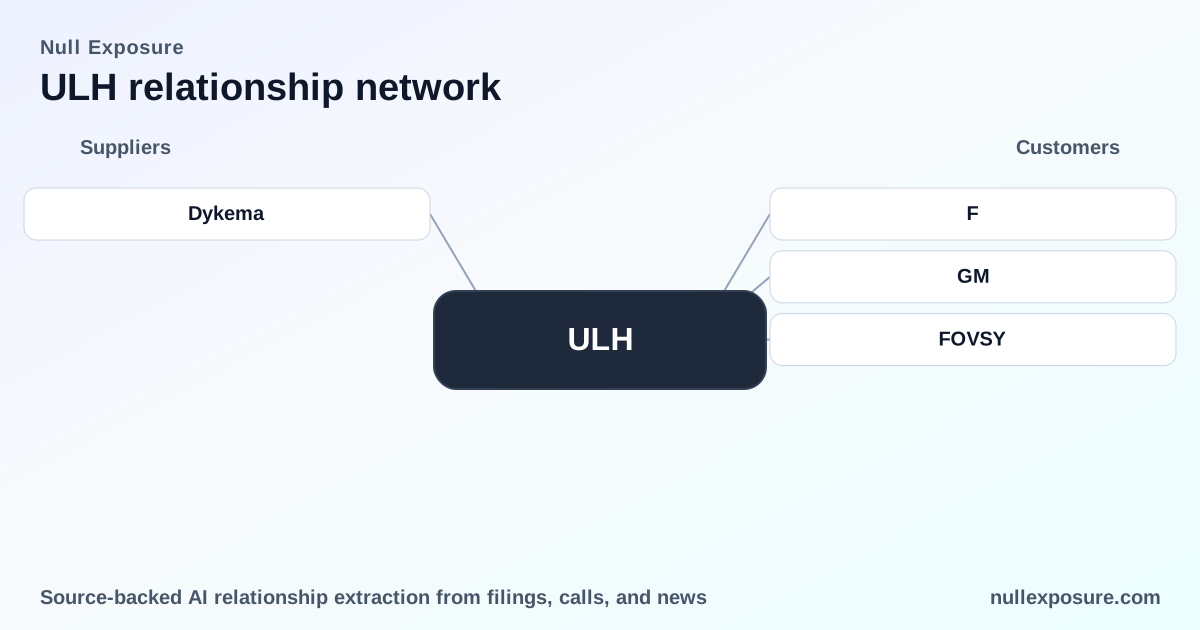
Universal Logistics (ULH): Customer Relationships, Concentration and Commercial Posture
Universal Logistics Holdings operates and monetizes a full-service transportation and logistics platform that sells truckload, intermodal and value‑added logistics to large industrial customers across North America. Revenue is generated primarily through contracted service agreements—both short‑term transportation contracts and longer‑term value‑added/dedicated logistics relationships—with a pronounced concentration in the North American automotive sector. For investors, the commercial model yields stable, service-based revenue with meaningful customer concentration and counterparty credit exposure that drives both opportunity and cyclical risk.
Explore more company relationship intelligence at https://nullexposure.com/.
The customer roster in plain English — every relationship the filings and news identify
-
Ford Motor Company (10‑K, FY2024): Universal disclosed a Composite Sublease Agreement dated August 12, 2024 between Universal Development of Tennessee, LLC and Ford Motor Company, indicating a landlord/real estate arrangement linked to ULH’s property footprint supporting operations. According to Universal’s 2024 Form 10‑K, the sublease is a documented contractual relationship with Ford.
Source: Universal Logistics Holdings 2024 Form 10‑K (Composite Sublease Agreement, Aug 12, 2024). -
F (10‑K, FY2024): The same sublease reference with Ford is also recorded under the short symbol F in company disclosures, reiterating the real‑estate contract between Universal Development of Tennessee, LLC and Ford Motor Company. The filing records the agreement verbatim.
Source: Universal Logistics Holdings 2024 Form 10‑K (Composite Sublease Agreement, Aug 12, 2024). -
GM (news coverage, FY2020 context): Trade press coverage of ULH’s Q3 results noted that the 2019 United Auto Workers strike against General Motors reduced ULH’s operating income by about $4 million, reflecting the sensitivity of ULH’s operating results to labor disputes at major automotive customers.
Source: TTNews article on Universal Logistics’ Q3 results (coverage referencing Q3 2019 / FY2020 context). -
General Motors (10‑K, FY2024): Universal reports that General Motors accounted for approximately 18% of its total operating revenues in 2024 (18% in 2024, 20% in 2023, 16% in 2022), establishing GM as a material and recurring customer in the company’s revenue mix.
Source: Universal Logistics Holdings 2024 Form 10‑K (customer concentration disclosure, FY2024). -
GM (10‑K, FY2024 duplicate entry): The 10‑K contains two mentions quantifying GM’s revenue share across the three most recent fiscal years, reinforcing the materiality of GM to ULH’s topline. The repeated disclosure underscores consistent dependency on a single large automotive counterparty.
Source: Universal Logistics Holdings 2024 Form 10‑K (customer concentration disclosure, FY2024). -
Ford (10‑K, FY2024 revenue share): Universal’s 2024 filing shows Ford accounted for approximately 17% of total operating revenues in 2024 (versus 6% in 2023 and 6% in 2022), signalling a ramp in revenue dependency on Ford in that year.
Source: Universal Logistics Holdings 2024 Form 10‑K (customer concentration disclosure, FY2024). -
FOVSY (10‑K, FY2024 symbol reference for Ford): The filing lists Ford under an alternate inferred symbol (FOVSY) while repeating the percentage revenue disclosure (17% in 2024), demonstrating the company’s internal cross‑referencing of large customers in its risk disclosures.
Source: Universal Logistics Holdings 2024 Form 10‑K (customer concentration disclosure, FY2024). -
FOVSY (10‑K duplicate entry): The duplicate mention under the FOVSY label replicates the earlier Ford revenue percentage statements, further documenting Ford’s elevated contribution to 2024 operating revenues.
Source: Universal Logistics Holdings 2024 Form 10‑K (customer concentration disclosure, FY2024).
What the relationship set reveals about ULH’s operating model
-
Dual contract posture: Universal operates a hybrid commercial model. Transportation services are transactional and short‑term, while its contract logistics and value‑added offerings are generally multi‑year. This mix produces recurring revenue from long‑term contracts alongside high‑turnover revenue that fluctuates with freight volumes.
-
Concentration risk is explicit and material: Automotive customers make up roughly 47% of revenue across the sector, and the company discloses single‑customer contributions of ~18% (GM) and ~17% (Ford) in 2024. That concentration drives revenue predictability when volumes are stable but creates outsized exposure to OEM demand shocks, strikes, or supply‑chain disruptions.
-
Counterparty profile and strategic fit: The customer base skews to large enterprises, particularly major OEMs in North America, reflecting a targeted go‑to‑market that leverages scale and industry expertise to win dedicated logistics and value‑added mandates.
-
Geographic footprint: Operations are North America‑centric (United States, Mexico, Canada, and Colombia), aligning ULH’s risk and growth profile with regional manufacturing and cross‑border trade dynamics.
-
Service provider role and balance sheet exposure: Universal is the primary obligor when providing services, which concentrates credit risk on ULH even where large, creditworthy customers are involved; this structure affects working capital and contract performance risk.
-
Maturity and integration: The company signals mature, long‑standing customer relationships and an integrated service suite that supports cross‑sell and retention, positioning ULH to extract higher lifetime value from key accounts.
Investment implications — risks and upside in the customer book
-
Upside: Long‑term, value‑added contracts provide a base of stable, higher‑margin revenue and create barriers to entry for competitors. The company’s deep ties to OEMs and an integrated North American footprint generate repeatable work and cross‑sell opportunities.
-
Risk: Customer concentration is the principal financial risk—loss or volume reduction at GM or Ford would have an outsized earnings impact. Operational events at OEMs (e.g., plant shutdowns, strikes) translate quickly into ULH earnings volatility, as prior UAW actions proved.
-
Operational leverage: The mix of short‑term transportation revenue and longer‑term logistics contracts creates earnings cyclicality but also the potential for margin expansion when utilization is high and contract logistics conversions increase.
Bottom line and actionable view
Universal Logistics runs a service‑led, contract‑weighted logistics business with meaningful exposure to a small set of large automotive customers. For investors, the story combines stable contracted revenue streams with concentration risk that requires active monitoring of OEM demand and labor dynamics. Evaluate ULH on both its execution of value‑added contracts and the durability of its top customer relationships.
For an investor‑grade breakdown of customer relationships and disclosure‑level source documentation, visit https://nullexposure.com/.
— End of analysis and relationship catalogue.